
Starting a vegetable garden is achievable on almost any scale, from containers on a balcony to raised beds in a backyard. This guide gives clear, practical steps to plan, plant, and maintain a productive garden that fits your space and schedule.
Planning to Start a Vegetable Garden
Begin by deciding what you want to grow and why. Are you aiming for fresh salad greens, tomatoes for canning, or year-round herbs?

Consider your available time and space before committing. Choose a few reliable crops to start instead of many unfamiliar varieties.
Choose Vegetables for Success
- Easy starters: lettuce, radishes, bush beans, cherry tomatoes, herbs.
- High maintenance: melons, corn, climbing beans—require more space and support.
- Perennials: asparagus and rhubarb need long-term commitment.
Site and Soil When You Start a Vegetable Garden
Pick a site with at least 6 hours of sun a day for most vegetables. Morning sun is especially good for drying dew and reducing disease risk.
Good drainage is essential. Avoid low spots that collect water or places shaded most of the day.
Soil Preparation
Test the soil pH and nutrient levels with a home kit or local extension service. Most vegetables prefer a pH between 6.0 and 7.0.
Improve poor soil by adding organic matter like compost or well-rotted manure. Work 2–4 inches into the top 6–8 inches of soil.
Design and Layout
Decide between in-ground rows, raised beds, or containers. Raised beds warm faster and drain better, making them a good choice for many gardeners.

Keep paths narrow and beds accessible. A common layout: 3–4 foot wide beds with 12–18 inch paths for easy reach.
Planting: Timing and Techniques to Start a Vegetable Garden
Use the last frost date for your area to schedule planting. Many seed packets and plant labels list whether to start indoors or sow directly.
Stagger plantings of quick crops like lettuce every 2–3 weeks for continuous harvests.
Seeds vs. Transplants
- Seeds: cheaper and more variety, good for root vegetables and lettuces.
- Transplants: save time and extend season for tomatoes, peppers, and eggplants.
Watering and Fertility
Consistent moisture is key. Water deeply and less frequently rather than frequent light sprinkling.
Drip irrigation or soaker hoses reduce disease by keeping foliage dry and deliver water efficiently to roots.
Fertilizing
Apply a balanced fertilizer at planting if compost is low. Follow package rates; over-fertilizing can reduce fruiting and encourage leafy growth.
Side-dress heavier feeders like tomatoes with compost or a low-dose fertilizer during the growing season.
Pest, Disease, and Weed Management
Use integrated pest management: monitor plants, remove pests by hand, and encourage beneficial insects.
Rotate crops yearly to reduce soil-borne disease buildup. Avoid planting tomatoes in the same place each year.
Common Problems and Quick Fixes
- Yellowing leaves: check water and nutrient levels.
- Slugs and snails: use beer traps, diatomaceous earth, or hand removal at night.
- Powdery mildew: improve air circulation and avoid overhead watering.
Harvesting and Storage
Harvest vegetables at peak ripeness for best flavor. For many crops, regular picking encourages more production.
Store produce properly: cool and dry for root crops, refrigerated for leafy greens, and room temperature for tomatoes to retain flavor.
Small Real-World Example
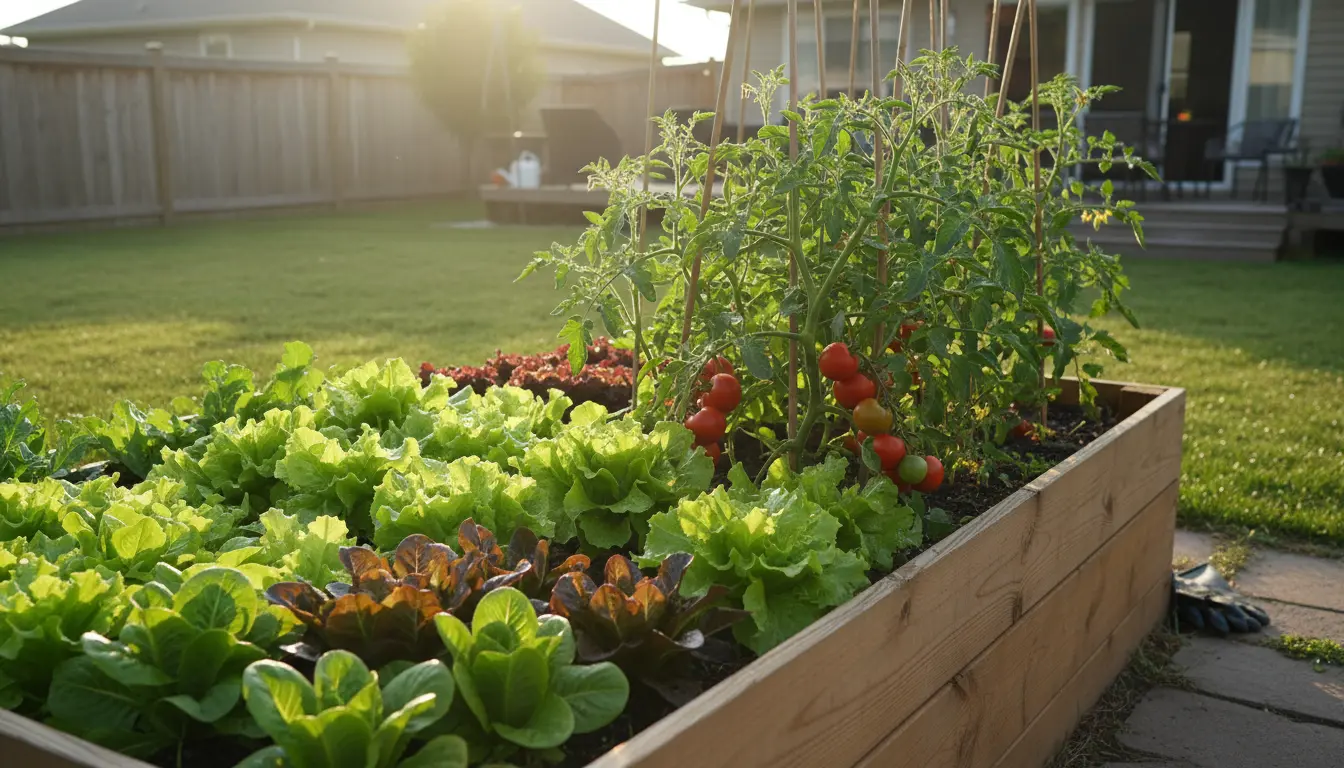
Case study: A 10×6 foot raised bed started by a new gardener yielded continuous salads and tomatoes in the first season. They planted lettuce and radishes in early spring, staggered more lettuce, and set tomatoes in late spring.
Using compost, drip irrigation, and a simple trellis for tomatoes, they reported low pest pressure and harvested nearly every week for four months.
Seasonal Checklist to Start a Vegetable Garden
- Early spring: prepare soil, start cool-season seeds indoors or sow directly.
- Late spring: transplant warm-season crops after frost risk passes.
- Summer: maintain watering schedule and harvest regularly.
- Fall: plant cover crops or mulch beds for winter protection.
Planting marigolds near tomatoes can help reduce some soil nematodes and attract beneficial insects that prey on common garden pests.
Final Tips for Beginners
Start small and expand as you gain confidence. A few successful crops build skills and motivation for the next season.
Keep simple records: planting dates, varieties, and harvest notes. This helps improve yields year to year.
With basic planning, proper soil, and regular care, anyone can start a vegetable garden that provides fresh produce and enjoyment. Begin with a manageable plan and learn as you grow.