
Why starting a vegetable garden is a good first step
Growing your own vegetables saves money and improves food quality. For beginners, a small, well-planned plot reduces mistakes and increases success.
This guide focuses on practical steps you can take this season to get reliable harvests with minimal fuss.
Planning your vegetable garden
Good planning takes about as much time as the planting. Start by assessing space, sun, and how much time you can commit each week.
Decide whether you will use in-ground beds, raised beds, or containers. Each option has trade-offs in cost, soil control, and mobility.
Choose the right spot for a vegetable garden
Most vegetables need 6–8 hours of direct sun. Observe your yard for a few days to map sunlight patterns.
Also consider water access and proximity to your kitchen to make harvesting easier.
Size and layout
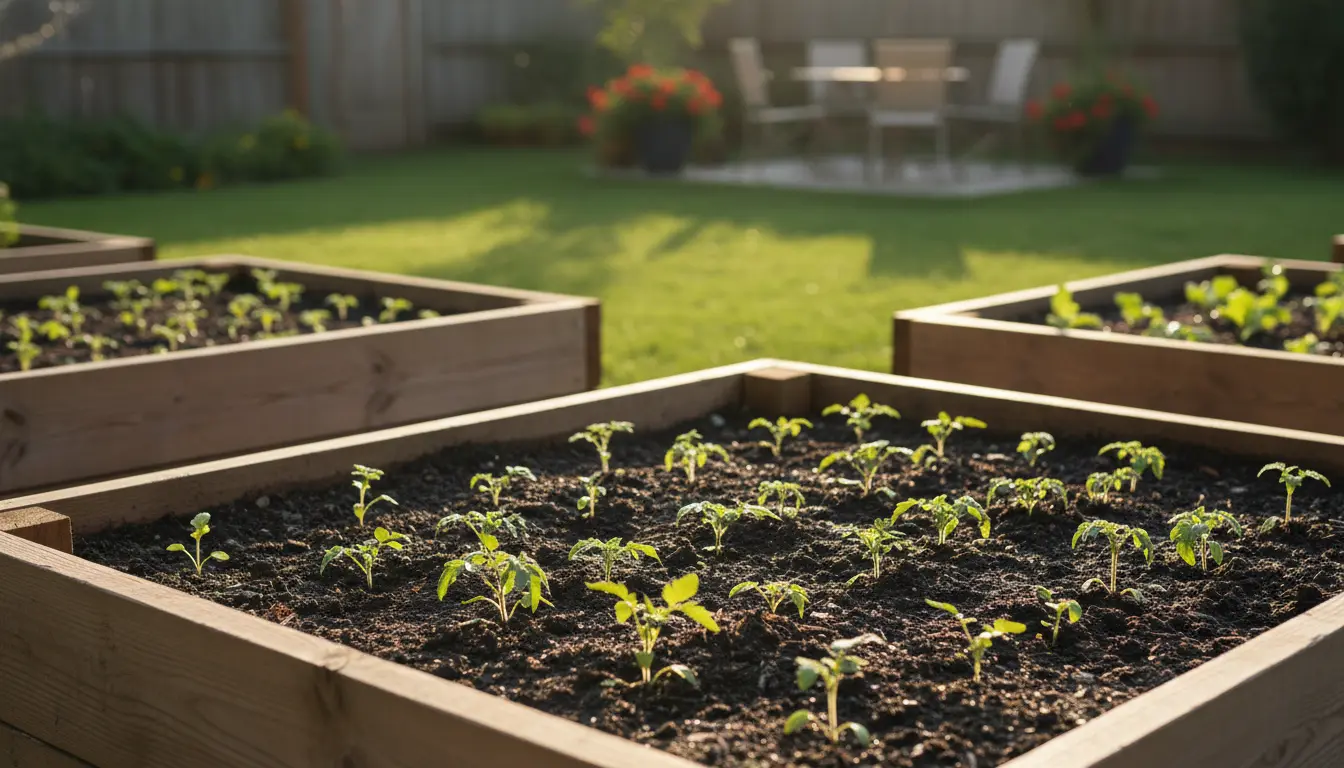
Keep the first garden small. A 4×8 foot raised bed or four 2×2 containers is enough for a family to learn and see results.
Use paths at least 18 inches wide so you can reach plants without stepping on soil.
Soil and bed preparation for starting a vegetable garden

Soil quality matters more than variety choices. Good soil holds moisture and provides nutrients for roots.
If you use raised beds or containers, fill them with a blend of topsoil, compost, and a light potting mix for best results.
Simple soil test and improvement
Do an informal soil test by squeezing a handful. Good soil crumbles and holds shape; heavy clay forms a sticky ball.
- Add compost to sandy soils to increase water retention.
- Add coarse sand or gypsum to heavy clay to improve drainage.
- Mix 2–3 inches of compost into the top 6–8 inches for raised beds.
Choosing plants for your first vegetable garden
Start with easy, fast crops that tolerate beginner mistakes. Good choices include lettuce, radishes, bush beans, zucchini, and cherry tomatoes.
Check your USDA hardiness zone and local frost dates before planting seeds or seedlings.
Companion planting and spacing
Plant tall crops on the north side to avoid shading smaller plants. Use companion pairs like tomatoes and basil to improve space use and flavor.
Follow seed packet spacing; for small gardens, focus on bush or compact varieties to maximize yield.
Planting schedule and methods
Some vegetables prefer cool weather (lettuce, peas), while others need warmth (tomatoes, peppers). Use a simple planting calendar.
- Find your last expected frost date online.
- Plant cool-season crops 3–4 weeks before last frost.
- Direct sow warm-season seeds or transplant seedlings after last frost when soil warms.
Watering and basic maintenance
Consistent watering is crucial. Aim for 1–2 inches of water per week via rainfall plus irrigation.
Water at the soil level early in the morning to reduce disease and evaporation.
Weeding, staking, and mulching
Pull weeds when small and use 2–3 inches of organic mulch to retain moisture and suppress weeds.
Stake tall plants like tomatoes and peas at planting time to prevent root disturbance later.
Pest and disease control for beginner gardeners
Start with prevention: healthy soil, proper spacing, and crop rotation reduce many problems.
Use physical barriers (row covers), hand-pick pests, and introduce beneficial insects when needed.
Practical organic options
- Use insecticidal soap for soft-bodied pests like aphids.
- Rotate families (nightshades, brassicas, legumes) yearly to disrupt pests.
- Remove and compost diseased plants rather than leaving them in the bed.
Harvesting and planning next season
Harvest frequently to encourage continued production, especially for beans, tomatoes, and greens.
Take notes on what succeeded and what didn’t. Small records help you refine plant choices and timing next year.
Planting diversity in a small garden can reduce pests and increase overall yield. Mixing quick crops like radishes with slower crops like tomatoes makes efficient use of bed space.
Small real-world example: a simple case study
Case Study: Laura, a new gardener, used a 4×8 raised bed and three containers. She planted lettuce, radishes, bush beans, cherry tomatoes, and basil.
She added 3 inches of compost, mulched, and watered twice weekly. By mid-season she harvested greens every week and had continuous beans and tomatoes by July.
Her keys to success: small size, regular watering, and choosing compact varieties.
Quick start checklist for starting a vegetable garden
- Pick a sunny site and plan a 4×8 bed or several containers.
- Amend soil with 2–3 inches of compost and mix into topsoil.
- Choose 4–6 easy crops and check planting dates for your area.
- Mulch, stake as needed, and water consistently in the morning.
- Keep a simple log of planting dates and yields to improve next season.
Starting a vegetable garden is mostly about good choices and consistent care. Begin small, learn from the season, and expand as your confidence grows.