
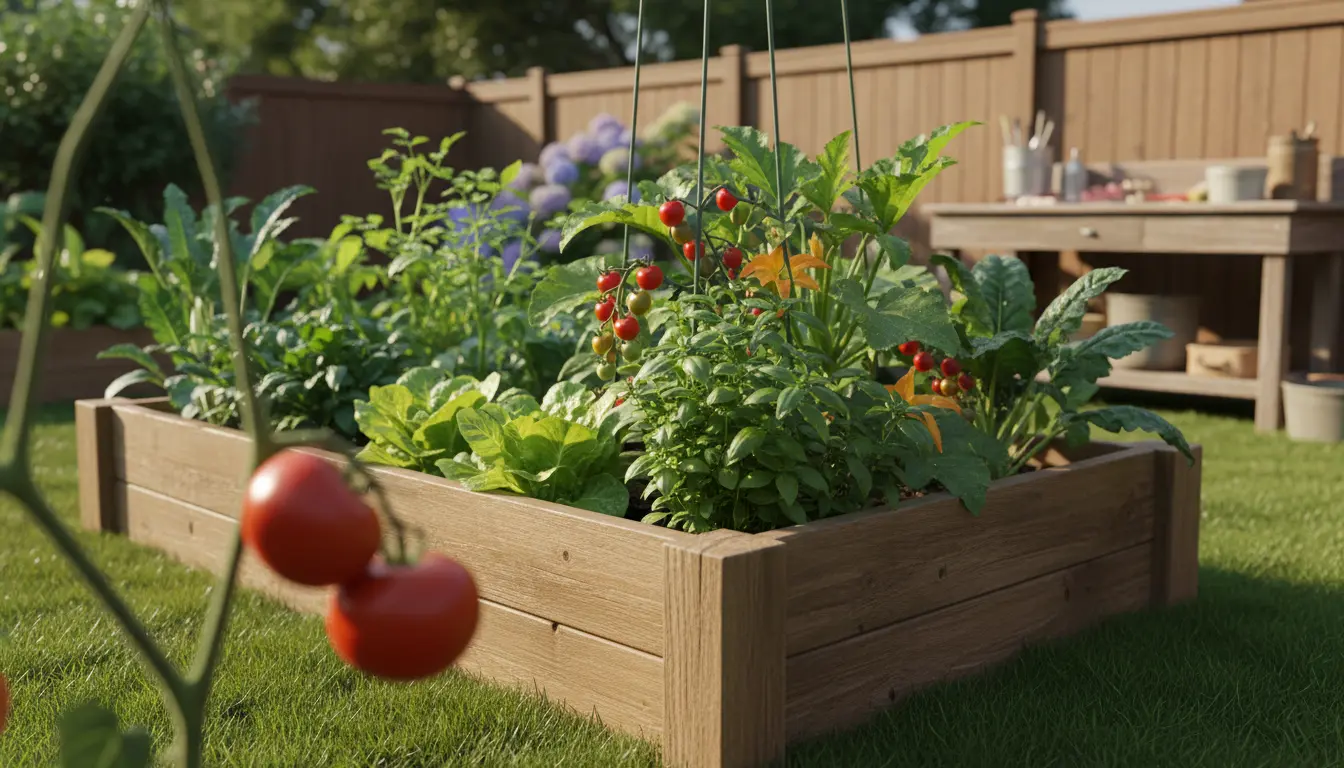
Why Choose a Raised Bed Vegetable Garden
Raised bed vegetable gardens are a practical choice for beginners and experienced gardeners. They improve drainage, reduce soil compaction, and let you control soil quality more easily than in-ground beds.
Raised beds also fit small spaces, allow easier access for planting and harvesting, and can extend the growing season by warming earlier in spring.
Planning Your Raised Bed Vegetable Garden
Start by picking a sunny location that gets at least 6 hours of sunlight per day. Most vegetables need full sun to thrive.
Decide on bed size and layout based on available space and access. A common and manageable size is 4 feet wide by 8 feet long.
Choosing Bed Dimensions
- Width: 3–4 feet so you can reach the center from either side without stepping on the bed.
- Length: Any length works; 8 feet is common for ease of material cutting and planting plans.
- Depth: 12–18 inches of quality soil is ideal for most vegetables; root crops may need deeper soil.
Materials and Costs
Common materials include cedar, redwood, composite boards, or galvanized steel. Treated lumber can leach chemicals, so avoid it for edible beds unless sealed.
Estimate costs by measuring lumber, soil, and amendments. A simple 4×8 cedar bed often costs $150–$350 depending on region and soil quality.
Building the Raised Bed and Preparing Soil
Level the site and place the frame directly on the ground. You can add cardboard or weed fabric underneath to suppress grass and weeds.
Fill the bed with a balanced soil mix that drains well and holds moisture.
Recommended Soil Mix for Raised Bed Vegetable Garden
- 40% topsoil or screened soil
- 40% high-quality compost
- 20% aeration material (coir, peat, or aged bark)
This mix provides nutrients, structure, and water retention. Amend annually with compost to maintain fertility.
Planting Strategies for a Raised Bed Vegetable Garden
Plan a planting layout that uses space efficiently. Combine tall and short crops so taller plants don’t shade smaller ones.
Consider succession planting and intercropping to maximize yield from a single bed through the season.
Examples of Planting Layouts
- Row planting: Good for straightforward beds with larger crops like tomatoes and peppers.
- Square-foot gardening: Divide the bed into 1-foot squares and plant based on crop size — ideal for small spaces.
- Mixed planting: Pair fast-growing greens with slower-growing root crops to use space efficiently.
Watering and Fertility Management
Raised beds dry faster than in-ground plots, so consistent watering is crucial. Aim for even moisture without waterlogging.
Install a drip irrigation line or soaker hose to conserve water and reduce leaf wetness that leads to disease.
Feeding Your Vegetables
- Start with a soil test to identify nutrient needs.
- Top-dress with compost midseason or use a balanced organic fertilizer according to label rates.
- Rotate crops each year to reduce pest and nutrient pressure.
Pest, Weed and Disease Tips for Raised Bed Vegetable Garden
Raised beds reduce weeds but don’t eliminate them. Mulch with straw or wood chips to suppress weeds and retain moisture.
Use physical barriers like row covers to protect young plants from insects. Monitor early and remove pests by hand when possible.
Season Extension and Maintenance
Raised beds warm earlier in spring, which lets you plant sooner. To extend the season into fall and spring, add cold frames or hoop tunnels over the beds.
Maintain beds by adding compost each year and checking soil pH and nutrient levels every 1–2 years.
A well-built raised bed can increase vegetable yields by up to 20 percent compared with traditional in-ground rows because of improved drainage and soil structure.
Small Real-World Example: Urban 4×8 Bed Case Study
Case: A city apartment owner built a 4×8 cedar raised bed on a sunny balcony. They filled it with the recommended soil mix and planted tomatoes, basil, lettuce, and carrots.
Outcome: With drip irrigation and monthly compost top-dressing, the bed produced enough salad greens and herbs for a household of two and several tomato harvests through late summer.
Quick Checklist to Start Your Raised Bed Vegetable Garden
- Choose a sunny, level site with good access.
- Decide bed size: 4×8 by 12–18 inches deep is ideal.
- Select materials that are safe for edible crops.
- Mix soil: 40% topsoil, 40% compost, 20% aeration material.
- Plan plant layout and succession planting.
- Install drip irrigation or water consistently.
- Mulch, rotate crops, and add compost annually.
Starting a raised bed vegetable garden is straightforward and scalable. With a clear plan, quality soil, and routine care, even small raised beds can deliver fresh produce throughout the growing season.