
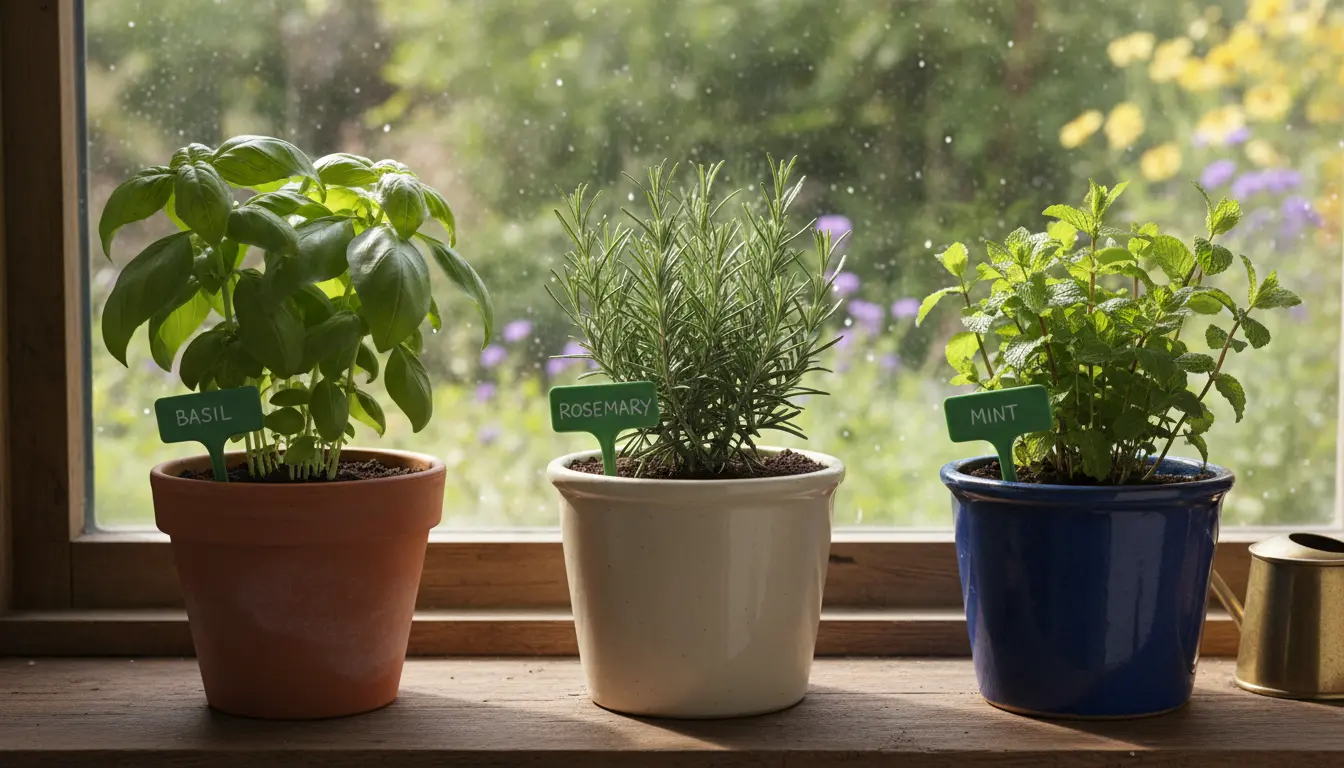
Starting an indoor herb garden is a practical way to keep fresh flavors at hand and brighten a small space. This guide explains planning, choosing herbs, containers, soil, light, watering, and simple maintenance steps you can follow today.
Planning Your Indoor Herb Garden
Decide where you will place your indoor herb garden before buying supplies. Common spots include sunny windowsills, a kitchen counter beneath a grow light, or a dedicated shelf near a south- or west-facing window.
Consider temperature and airflow. Most herbs prefer steady indoor temperatures between 65°F and 75°F (18°C to 24°C) and moderate airflow to avoid mold or fungal issues.
Essential items for an indoor herb garden
- Small pots or containers with drainage holes
- Quality potting mix for herbs (well-draining)
- Lighting: natural sun or a full-spectrum LED grow light
- Small tray to catch runoff and a watering can
- Labels and a small pair of scissors for harvest
Best Herbs for an Indoor Herb Garden
Choose herbs that adapt well to containers and lower light than outdoor beds. Start with easy growers to build confidence and steady supply.
Top beginner herbs for an indoor herb garden
- Basil — loves warmth and bright light; harvest leaves regularly
- Mint — vigorous and forgiving; use separate pots to prevent spreading
- Parsley — slower to start but steady; needs consistent moisture
- Chives — compact and hardy with frequent snips
- Thyme & Rosemary — prefer drier soil and bright light
Soil, Pots, and Drainage
Use a lightweight potting mix formulated for containers. Avoid garden soil, which compacts and drains poorly in pots.
Ensure every pot has drainage holes. If a pot lacks holes, add a layer of gravel at the bottom and monitor watering carefully to prevent root rot.
Pot size and spacing
Start with 4–6 inch pots for most herbs. Larger pots work well for basil or mint to support fuller root growth. Leave 2–4 inches between pots on a windowsill to allow airflow.
Light Requirements for an Indoor Herb Garden
Light is the most crucial factor. Herbs need 6–8 hours of bright light daily for healthy growth. South- and west-facing windows provide the best natural light in the northern hemisphere.
If natural light is insufficient, use a full-spectrum LED grow light positioned 6–12 inches above plants. Set a timer for 12–14 hours of light when starting seeds or growing more light-demanding herbs like basil.
Watering and Feeding
Watering is about rhythm, not volume. Check soil moisture with your finger; water when the top inch feels dry for most herbs. Overwatering is the common mistake in indoor herb care.
Use a balanced, water-soluble fertilizer at half strength every 3–4 weeks during active growth. For herbs like rosemary and thyme, reduce feeding to avoid overly lush growth that weakens flavor.
Pruning, Harvesting, and Pest Control
Regular harvesting encourages bushy growth. Pinch or snip leaves from the top; never remove more than one-third of a plant at a time. This keeps herbs productive and healthy.
Watch for common indoor pests: aphids, spider mites, and fungus gnats. Control them with gentle methods first: wipe leaves, use insecticidal soap, or allow topsoil to dry to discourage gnats.
Simple pruning routine
- Harvest small amounts regularly rather than large cuts.
- Trim leggy stems back to a pair of leaves or a node.
- Remove yellow or crowded leaves to improve airflow.
Many herbs, like basil and mint, release stronger aroma and flavor when harvested in the morning after the dew has dried. Regular harvesting also increases essential oil production.
Common Problems and Quick Fixes for an Indoor Herb Garden
- Leggy growth — move plants to brighter light and pinch tops.
- Yellowing leaves — check for overwatering and poor drainage.
- Slow growth — consider repotting into larger containers or refresh potting mix.
Small Case Study: A Kitchen Windowsill Herb Garden
Anna, a busy home cook, began with three 4-inch pots for basil, chives, and parsley on a south-facing windowsill. She used a basic potting mix and an inexpensive LED on a 12-hour timer for cloudy weeks.
Within six weeks, Anna harvested daily sprigs of chives and basil for meals. She solved a mildew issue by improving airflow and reducing watering frequency. Her upfront investment was under $60 and yielded fresh herbs year-round.
Tips to Keep Your Indoor Herb Garden Thriving
- Rotate pots weekly for even light exposure and growth.
- Use separate pots for invasive herbs like mint to prevent crowding.
- Label pots with planting date and herb name to track progress.
- Try cut-and-come-again harvesting for continuous supply.
Starting an indoor herb garden is low-cost and high-reward. With the right light, soil, and regular care, you can enjoy fresh herbs for cooking and a greener indoor space. Begin with a few easy herbs, learn their needs, and expand as you gain confidence.