
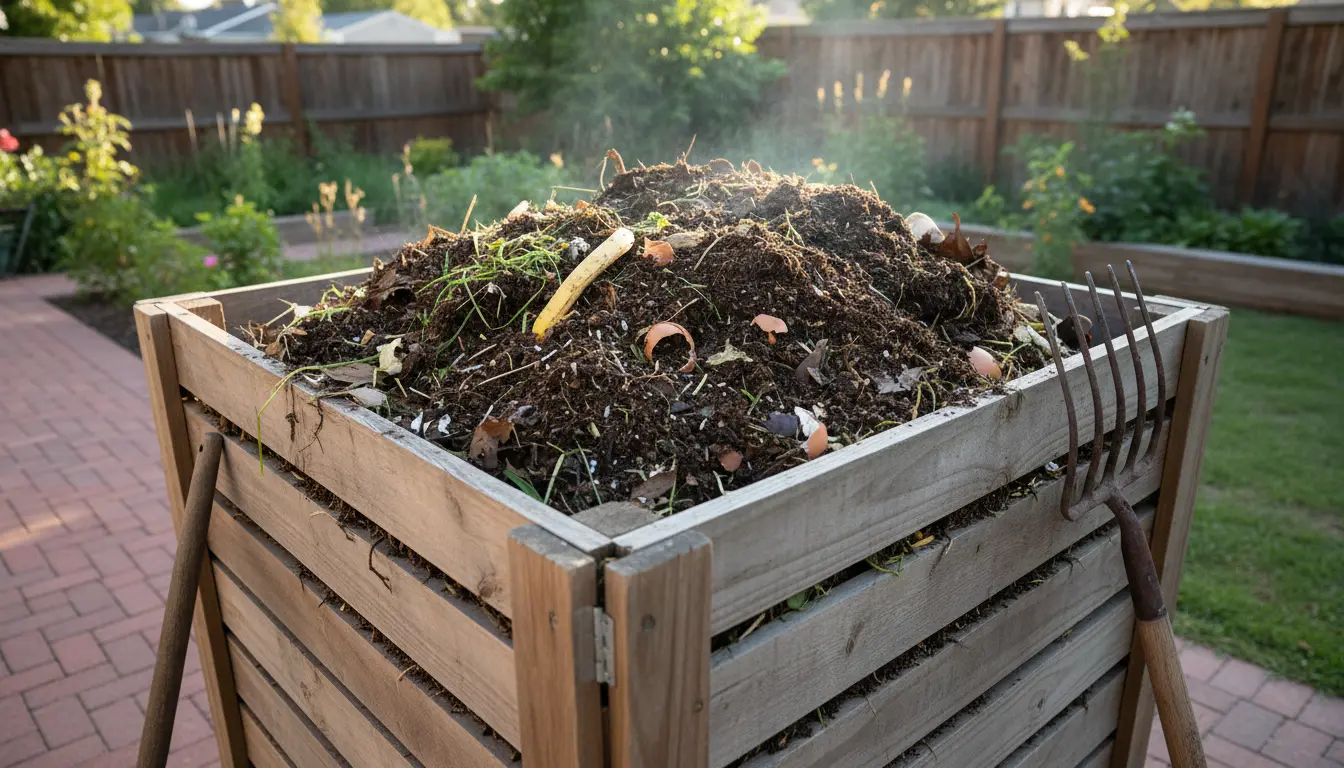
Home composting turns kitchen scraps and yard waste into rich soil you can use in container plants or garden beds. This guide gives clear, practical steps and troubleshooting tips so you can start composting successfully this week.
Why Home Composting Works
Composting is a controlled decomposition process where microbes break down organic matter into humus. Home composting captures nutrients, reduces landfill waste, and improves soil structure for healthier plants.
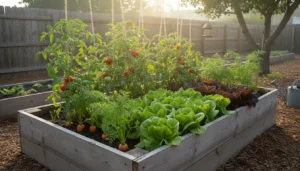
You don’t need special training or equipment—just a basic understanding of materials, balance, and aeration.
Essential Materials for Home Composting
Gather a few simple items before you start. You can compost on a small scale in an apartment or scale up in a backyard bin.
- Compost bin or tumbler (or a simple pile or worm bin)
- Kitchen scrap container with a lid for collecting food waste
- Garden fork or aerator for turning the pile
- Moisture meter or simple touch test (optional)
What to Add: Browns and Greens
Composting needs a balance of carbon-rich “browns” and nitrogen-rich “greens.” Aim for roughly 25–30 parts carbon to 1 part nitrogen by weight.
- Greens (nitrogen): vegetable peels, fruit scraps, coffee grounds, fresh grass clippings
- Browns (carbon): dry leaves, straw, shredded paper, cardboard
- Avoid: meat, dairy, oils, diseased plants, pet waste
Choosing a Bin for Home Composting

Pick a bin that fits your space and commitment. Common choices include enclosed plastic bins, tumblers, open piles, and worm bins for indoor use.
- Backyard compost bin: good for larger volumes and faster heating
- Tumbler: speeds mixing and reduces pests
- Worm bin (vermicompost): ideal for apartment kitchens and small spaces
Step-by-Step Home Composting Process
Follow these steps to build and maintain a healthy compost pile.
- Start with a layer of coarse browns (twigs or straw) to help airflow.
- Add alternating layers of greens and browns, chopping large items to speed breakdown.
- Keep the pile moist like a wrung-out sponge; water occasionally if dry.
- Turn the pile every 1–2 weeks to introduce oxygen and distribute heat.
- Monitor temperature: active piles heat to 120–160°F (50–70°C), but cold composting works too and just takes longer.
Troubleshooting Common Home Composting Issues
Problems are usually easy to fix once you identify the cause.
- Bad smell: pile is too wet or has too many greens. Add browns and turn.
- Slow decomposition: not enough nitrogen or moisture. Add greens and water.
- Pests: secure bin, bury food scraps, avoid meat and oily foods.
- Dry pile: add water and greens, then turn to mix moisture through the pile.
How Long Does Home Composting Take?
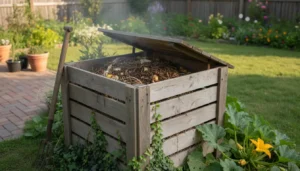
Time varies by method. Hot composting can produce finished compost in 2–3 months with regular turning. Cold composting may take 6–12 months.
Finished compost is dark, crumbly, and has an earthy smell. Sift it and use it as a soil amendment or mulch.
Composting a ton of food scraps can save roughly one ton of CO2-equivalent greenhouse gas emissions compared with sending the same waste to landfill. Even small household efforts add up.
Small Real-World Example: A Family Turns Scraps into Garden Gold
Case study: The Rivera family started a 3×3 ft backyard bin and a countertop scrap bucket. They composted vegetable peels, coffee grounds, and yard trimmings while adding shredded cardboard from deliveries.
Within six months they had enough finished compost to top-dress their vegetable beds. Their tomatoes improved noticeably, and household trash volume decreased by 30%.
Tips for Success with Home Composting
Follow a few practical habits to keep the system working smoothly.
- Chop large items to speed decomposition.
- Maintain a balance of browns and greens.
- Turn the pile regularly for oxygen and heat distribution.
- Keep a small stash of dry leaves or shredded paper on hand.
- Label your compost bin and keep it accessible to all household members.
Using Finished Compost
Blend finished compost into potting mixes, spread it as top dressing, or mix into garden beds to improve water retention and nutrient content.
A general application is 1–2 inches of compost over beds each season or 10–20% compost mixed into potting soil.
Home composting is low-cost and flexible. Start small, learn by doing, and scale up when you’re comfortable. Over time you’ll produce valuable soil that supports healthier plants and reduces household waste.