
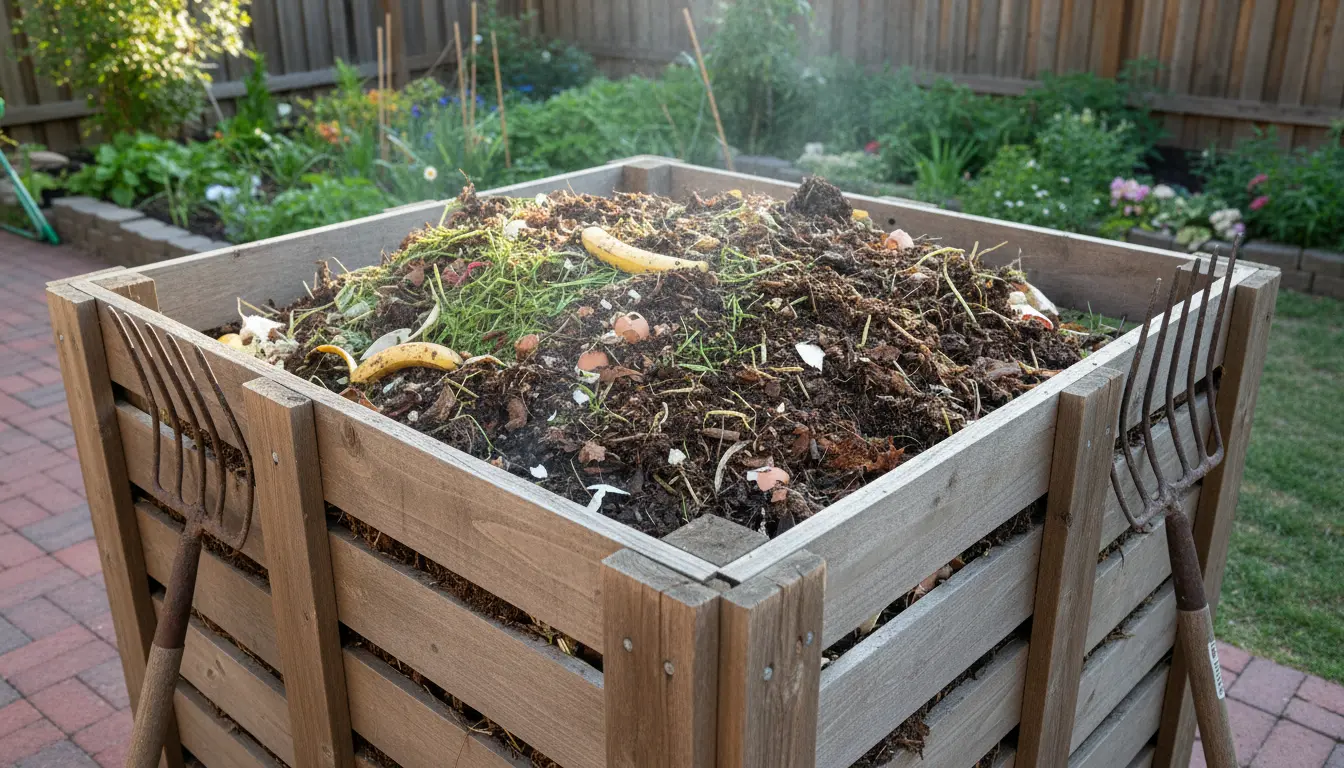
Home composting turns kitchen scraps and yard waste into nutrient-rich material you can use to improve soil and reduce trash. This guide covers practical, step-by-step actions you can take today to start a successful compost system at home.
Why Choose Home Composting
Home composting reduces landfill waste and lowers methane emissions from organic trash. It also creates a free soil amendment that improves water retention and plant health.

Whether you have a small balcony or a backyard, composting methods exist for every space and skill level. The key is a consistent process and simple maintenance.
How to Start Home Composting
Starting home composting involves choosing a container, collecting the right materials, and maintaining a balance between green and brown inputs. Follow the steps below to set up a reliable system.
Step 1: Choose a Compost System
Pick a method that fits your space and needs. Options include open piles, tumblers, bins, or worm composting (vermicomposting).
- Open pile: best for large yards and bulky material.
- Tumbler: faster turning and less odor, good for small yards.
- Bin: neat and simple, available from many suppliers or DIY.
- Vermicompost: ideal for indoor or small-space composting using worms.
Step 2: Gather Materials for Home Composting
Balance carbon-rich ‘browns’ and nitrogen-rich ‘greens’ for efficient decomposition. Aim for roughly a 3:1 ratio of browns to greens by volume.
- Greens (nitrogen): fruit and vegetable scraps, coffee grounds, fresh grass clippings.
- Browns (carbon): dry leaves, straw, shredded paper, cardboard.
- Avoid: meat, dairy, oils, diseased plants, and pet waste to prevent pests and odors.
Step 3: Build and Maintain the Pile
Start with a layer of coarse browns for airflow, then add alternating layers of greens and browns. Keep the pile moist like a wrung-out sponge.
Turn or mix the compost every 1–2 weeks to add oxygen and speed decomposition. For tumblers, rotate according to manufacturer instructions.
Step 4: Monitor and Troubleshoot
Common issues include bad odors, slow breakdown, and pests. Bad smells usually mean too much green or excess moisture; add more browns and aerate.
If the pile is dry and slow, add water and more greens. For pests, cover food scraps with a layer of browns and use a closed bin or tumbler.
Practical Tips for Faster Home Composting
Small actions speed up decomposition and reduce problems. Chop materials into smaller pieces and keep a good surface area to volume ratio.
- Shred cardboard and paper before adding.
- Keep a sealed kitchen caddy for scraps to avoid fruit flies.
- Mix when adding large amounts of fresh grass or food waste.
- Use a thermometer if you want to monitor internal pile temperature; 131–160°F supports fast composting when safe to do so.
Harvesting and Using Compost
Finished compost is dark, crumbly, and smells earthy. It usually takes 2–12 months depending on method and maintenance.
Use finished compost as a soil amendment, top dressing for lawns, or a component of potting mixes. Blend 1 part compost with 2–3 parts soil for planting beds.
Composting can reduce household waste by up to 30 percent. Backyard compost returns valuable nutrients to the soil and cuts the need for synthetic fertilizers.
Small Real-World Example: A Neighborhood Garden
A community garden in Portland started a home-composting program with 10 volunteer bins. After six months, volunteers reported a 50 percent reduction in hauled green waste and richer raised bed soil.
Tomato yields improved in beds amended with the compost, and the program encouraged neighbors to divert kitchen scraps from the trash.
Common Questions About Home Composting
How much space do I need for home composting?
You can compost in as little as a small bin on a balcony using worms, or in a larger outdoor bin. Choose the method that matches your available space.
Will compost attract pests?
Pests are rare with proper management. Avoid adding meat, cover fresh food with browns, and use closed bins or tumblers if wildlife is a concern.
Can I compost in winter?
Yes. Compost slows in cold weather but continues to break down. Insulate outdoor bins or bring indoor worm bins into sheltered spaces to maintain activity.
Checklist to Start Home Composting
- Choose a compost system (bin, tumbler, pile, or worm bin).
- Collect a steady mix of greens and browns.
- Layer materials and keep the pile moist and aerated.
- Turn regularly and troubleshoot odors or pests.
- Harvest finished compost and apply to soil.
Home composting is a low-cost, high-impact practice that benefits your garden and the environment. Start with simple steps, learn from small experiments, and scale the system to fit your needs.