
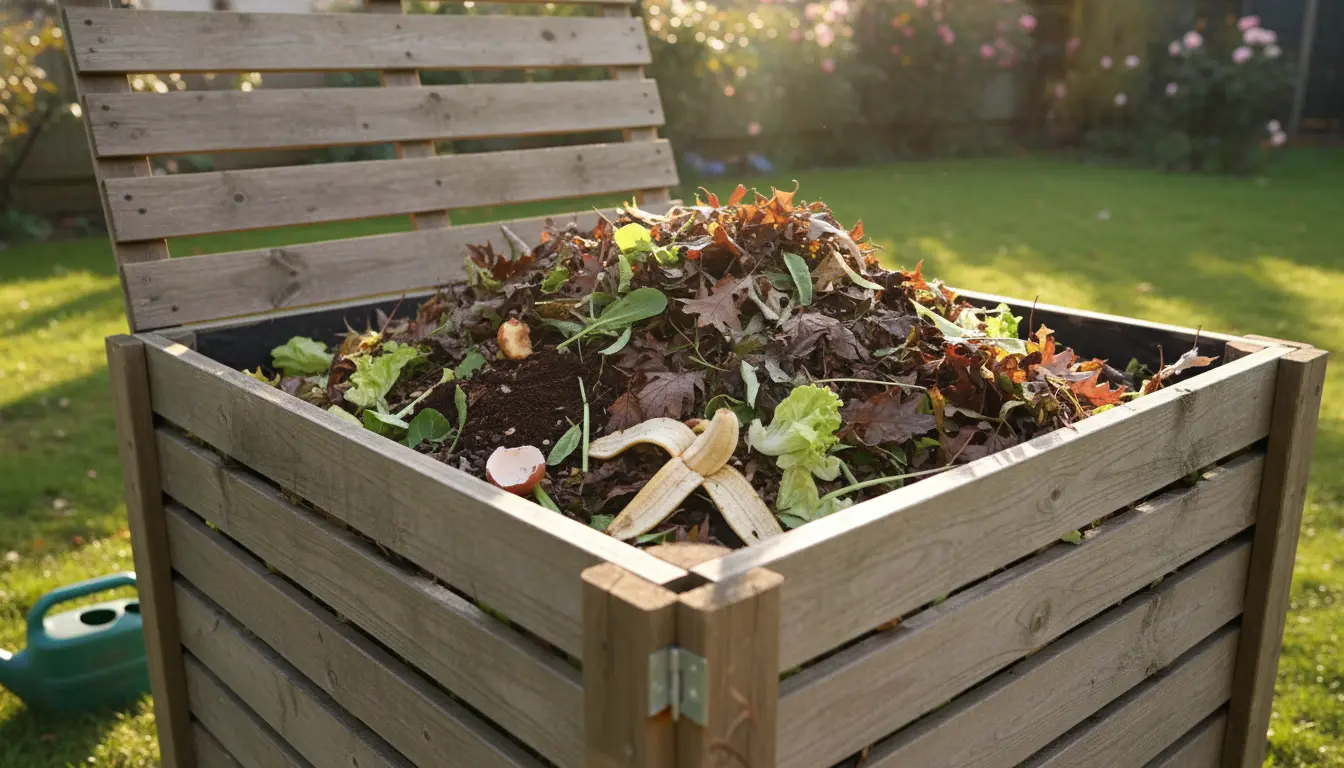
Home composting turns food scraps and yard waste into rich soil material you can use in pots and garden beds. A home compost bin reduces household waste, improves soil health, and saves money on fertilizer.
Choosing the Right Home Compost Bin
Select a bin that fits your space and lifestyle. Small households often prefer a simple kitchen collection plus a 60 to 120 liter outdoor bin, while larger families may need a tumbler or a larger stationary bin.

Consider these options when picking a compost system:
- Open bin: inexpensive and simple to manage for yard waste
- Tumbler: faster mixing and fewer pests, good for small yards
- Worm bin (vermicompost): ideal for indoor or apartment composting of kitchen scraps
- Bay or three-bin system: good for serious gardeners processing large volumes
Placement and basics for a home compost bin
Place the bin on bare soil in partial shade to allow drainage and access for soil organisms. Make sure it is easily reachable from the kitchen to encourage regular use.
Setting Up Your Home Compost Bin
Start by adding a base layer of coarse material like small twigs or straw to promote airflow. Layering green and brown materials helps maintain balance and speed decomposition.

Follow these simple steps to begin:
- Collect kitchen scraps in a covered container to minimize odors.
- Chop larger items so they break down faster.
- Alternate thin layers of green materials and brown materials in the bin.
- Maintain moisture similar to a wrung-out sponge.
What to add and what to avoid
Good additions include fruit and vegetable peels, coffee grounds, tea bags, garden trimmings, shredded paper, and dry leaves. These provide a mix of nitrogen and carbon.
- Avoid meats, dairy, oily foods, diseased plants, and pet waste to prevent pests and pathogens.
- Avoid large woody branches unless chipped or shredded first.
Balancing Moisture, Aeration, and Temperature
Three factors control how well a home compost bin works. Keep moisture, aeration, and temperature within practical ranges to speed decomposition and prevent problems.
- Moisture: Compost should be damp but not dripping. Add water in dry spells and mix in dry browns if too wet.
- Aeration: Turn or mix the pile every 1 to 2 weeks for faster, aerobic decomposition.
- Temperature: A well-mixed pile warms as microbes work. Home compost piles often run 40 to 60°C (104 to 140°F) in the core; lower temperatures are fine for backyard use.
Simple turning methods
Use a garden fork, a compost aerator tool, or a tumbler. If you have a static bin, move material from the center to the outside and vice versa to introduce air.
Troubleshooting Your Home Compost Bin
Common issues have simple fixes. Early detection keeps the system working smoothly without heavy effort.
- Smelly compost: Add brown materials like dry leaves or shredded paper and turn to introduce air.
- Fruit flies: Bury fresh food scraps under a brown layer and keep the kitchen container sealed.
- Pests like rodents: Avoid meat and grease, use a closed bin or wire mesh below the bin.
- Slow decomposition: Chop materials finer, add more greens or a source of nitrogen, and increase turning frequency.
Did You Know? A balanced home compost bin can reduce household waste by up to 30 percent. Proper composting returns nutrients to the soil and helps retain moisture in garden beds.
Using Finished Compost from a Home Compost Bin
Finished compost looks dark, crumbly, and earthy. Screen it if you want a fine texture for potting mixes, or use the larger pieces directly in garden beds where they will continue to break down.
Practical uses include:
- Mixing into vegetable beds at planting time
- Top-dressing lawns or flower beds
- Blending with potting soil for container plants
How to tell compost is ready
It should no longer smell like the original waste, and identifiable scraps should be minimal. A small handful will feel cool and crumbly.
Small Real-World Example: A Family Compost Case Study
The Martinez family started a 120-liter tumbler in their backyard. Their goals were to cut food waste and improve the vegetable patch.
Actions they took included collecting kitchen scraps in a small covered bin, chopping larger veg waste, and tumbling the bin twice a week. They added dry leaves and shredded paper when meals were heavier in greens.
After four months they produced roughly 30 liters of finished compost. Their tomato yields improved and their weekly garbage volume dropped by about one bag every two weeks.
Quick Home Compost Bin Checklist
- Choose a bin that fits your space and waste volume
- Balance greens and browns, and keep the pile moist but not wet
- Turn the pile regularly to add air
- Avoid meat, dairy, and pet waste
- Use finished compost to improve soil and reduce fertilizer needs
Starting a home compost bin is a low-cost, practical way to transform household waste into a useful resource. With simple setup, routine checks, and occasional turning, most households can produce valuable compost while cutting waste and supporting healthier plants.