
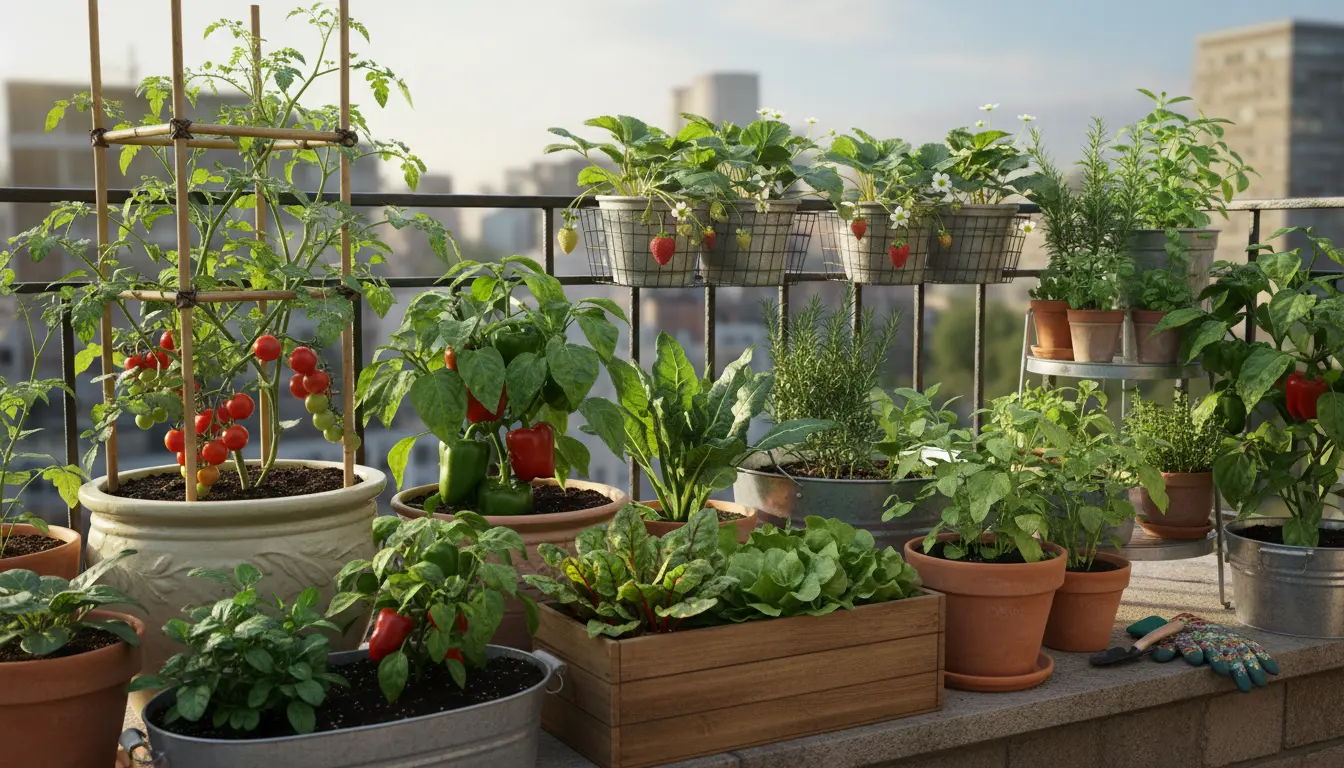
Why a Container Vegetable Garden Works
A container vegetable garden is a practical way to grow food when space is limited. It fits balconies, patios, and small yards while giving you control over soil and drainage.
Containers can be moved for sunlight, protected from pests more easily, and adjusted by season. This flexibility makes container gardening ideal for beginners and urban gardeners.
Planning Your Container Vegetable Garden
Start by assessing light, space, and weight limits. Most vegetables need 6–8 hours of direct sun per day, so note sunny spots on your balcony or patio.
Decide which vegetables you want to grow based on space and harvest frequency. Prioritize high-yield, compact plants for small spaces.
Choosing Vegetables for a Container Vegetable Garden
Select varieties bred for containers or dwarf types. Good choices include cherry tomatoes, leaf lettuce, radishes, peppers, bush beans, and herbs.
Consider growth habits: determinate tomatoes and bush varieties use less space than indeterminate vines.
Container Selection and Soil
Choose containers that hold 5–20 liters for most vegetables; larger crops like tomatoes or peppers prefer 15–20+ liters. Ensure containers have drainage holes.
Use a high-quality potting mix, not garden soil. Potting mixes are lighter, drain better, and are formulated for containers.
- Materials: plastic, fabric, terracotta, or wood each have pros and cons.
- Size matters: deeper pots for root crops, wider pots for vining plants.
- Drainage: add coarse gravel at the bottom only if mix drains too slowly.
Planting and Spacing in a Container Vegetable Garden
Follow label spacing but reduce a bit for containers. Planting too densely causes disease and slower growth.
Use vertical supports like cages or trellises for vining plants to save floor space. Interplant fast-growing greens with slower crops to maximize yield.
Example Planting Layout
In a 20-liter container, place one small tomato plant with a basil plant at the base and some marigolds on the edge. This combination saves space and offers companion benefits.
Watering, Feeding, and Maintenance
Containers dry out faster than beds, so check moisture daily in hot weather. Water deeply until water drains through the bottom to encourage deep roots.
Fertilize regularly with a balanced, water-soluble fertilizer or slow-release pellets. Vegetables in containers need consistent nutrients because of limited soil volume.
- Water tips: morning watering reduces evaporation and disease risks.
- Feeding: use a higher-potassium feed during fruiting for better yields.
- Mulch: a thin layer of mulch on top of the soil helps retain moisture.
Many vegetables grown in containers will produce earlier than those in the ground because roots warm faster and can be moved to catch sun.
Pest and Disease Management in a Container Vegetable Garden
Inspect plants frequently for pests like aphids, whiteflies, and slugs. Containers can reduce some soil-borne diseases but are not immune to airborne or insect problems.
Use cultural controls first: remove affected leaves, avoid overhead watering, and rotate crops between seasons.
- Biological controls: introduce beneficial insects or use insecticidal soap.
- Sanitation: clean pots and tools between uses to prevent disease spread.
Seasonal Care and Winter Tips
Move containers to protected areas before frost or wrap pots with insulating material. Some containers can be stored empty indoors to avoid freeze damage.
For year-round growing, choose cold-hardy crops in cooler months or use portable cold frames and row covers.
Small Real-World Case Study
Case Study: A two-person household on a third-floor apartment balcony grew a container vegetable garden using four 20-liter pots and two 10-liter pots. They planted a determinate tomato, two pepper plants, a pot of mixed salad greens, and herbs.
After optimizing watering and using a morning-sun location, they harvested fresh salads and two months of tomatoes in the first season. Regular feeding and switching lettuce to partial shade in mid-summer extended harvests.
Troubleshooting Common Problems
If plants are leggy, they need more light; move containers to a sunnier spot. Yellowing leaves often indicate overwatering or nutrient deficiency.
Slow growth may be due to root-bound plants; repot into a larger container or prune roots lightly and refresh soil.
Quick Checklist to Start Your Container Vegetable Garden
- Assess light and space for 6–8 hours of sun.
- Choose appropriately sized, well-draining containers.
- Fill with quality potting mix and plant suitable varieties.
- Establish a regular watering and feeding routine.
- Monitor pests and rotate crops between seasons.
Starting a container vegetable garden is an achievable way to grow fresh produce in small spaces. With the right containers, soil, and routine care, you can enjoy reliable harvests and learn season after season what works best for your location.