
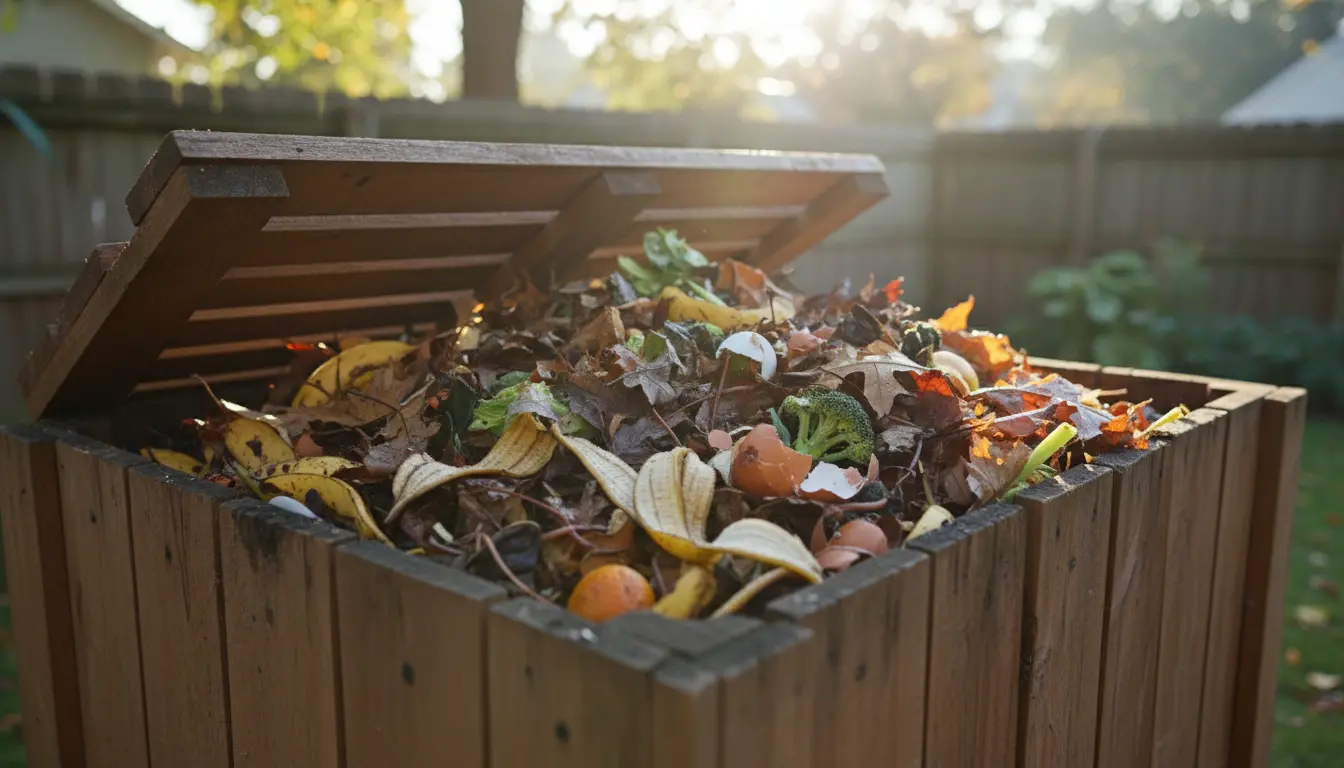
Why start composting at home
Composting at home turns kitchen scraps and yard waste into a valuable soil amendment. It reduces landfill waste and helps your plants by returning nutrients to the soil.
Starting is simple when you follow a few basic rules about materials, balance, and maintenance. This guide gives practical steps you can use right away.
How to start composting at home: essential steps
Follow these core steps to set up a functioning compost system. Each step keeps the process manageable and effective for beginners.
1. Choose a composting system for composting at home
Pick a system that fits your space and lifestyle. Options include a backyard bin, tumbler, or indoor worm bin (vermicompost).
- Backyard bin: low cost, good capacity.
- Tumbler: faster turning, less manual work.
- Worm bin: ideal for apartments and kitchen-only waste.
2. Select a location for composting at home
Place your compost where it gets some air and partial sun. For bins, a level, well-drained spot near a water source works best.

Keep access easy so you actually use it. If you live in an apartment, place a worm bin under the sink or on a balcony.
3. Balance greens and browns in composting at home
Successful compost needs a balance of ‘greens’ (nitrogen) and ‘browns’ (carbon). A simple rule is roughly 1 part greens to 2–3 parts browns by volume.
- Greens: fruit peels, vegetable scraps, coffee grounds, fresh grass clippings.
- Browns: dry leaves, shredded paper, cardboard, straw, wood chips.
Chop or shred large pieces to speed decomposition. If the pile smells, add more browns; if it dries out, add water and greens.
4. Maintain and troubleshoot composting at home
Turn the pile every 1–2 weeks to add oxygen and speed breakdown. Monitor moisture: aim for a damp sponge feel.
Common issues include bad odors, pests, and slow decomposition. Address odor with more browns and aeration. Keep pests out by burying food scraps inside the pile and using a closed bin.
Composting at home timeline and expectations
Decomposition time varies by method and management. Hot, well-aerated piles can finish in 2–3 months. Cooler, rarely turned piles may take 6–12 months.
Look for dark, crumbly material that smells earthy. That indicates finished compost ready for garden use.
Home composting can divert up to 30% of household waste from the garbage bin, depending on diet and yard care habits.
Common mistakes when composting at home
Avoid these typical errors to improve results and reduce frustration.
- Putting meat, dairy, or oily foods in a regular compost pile — attracts pests.
- Too much of one material — large volumes of grass clippings or leaves can compact and slow composting.
- Neglecting moisture and aeration — dry or anaerobic piles are slow and smelly.
Small case study: apartment worm bin composting
Case study: A two-person apartment household started a 40-liter worm bin for kitchen scraps. They added shredded newspaper and a handful of garden soil on setup.
Within six weeks, the worms had processed about 30% of weekly scraps. After three months, the household used worm castings to pot herbs, cutting store-bought potting soil by half and saving money.
Key actions: regular feeding once or twice per week, maintaining moisture, and harvesting castings every 2–3 months.
Practical tips and examples for composting at home
- Example mix for a backyard pile: 10 buckets of leaves (browns) + 4 buckets of kitchen scraps (greens) + water to dampen.
- Use a garden fork to turn a medium-sized pile; a tumbler saves time for small yards.
- Keep a small sealed container for kitchen scraps if you cannot visit the bin daily. Empty it every 2–3 days.
What to add and what to avoid
- Add: fruit and vegetable scraps, coffee grounds, tea bags (without staples), eggshells, shredded paper.
- Avoid: meat, dairy, bones, diseased plants, pet waste from carnivores.
Quick checklist to start composting at home
- Choose a bin type that fits your space.
- Select a location with good access and drainage.
- Gather brown materials before you begin.
- Layer greens and browns and keep the pile moist.
- Turn or aerate regularly and monitor progress.
Composting at home is a low-cost, high-impact habit that benefits your garden and the environment. Start small, observe the process, and adjust your mix and maintenance as you learn.
With a little attention, you can convert kitchen and yard waste into rich compost that feeds your plants and reduces household waste.