
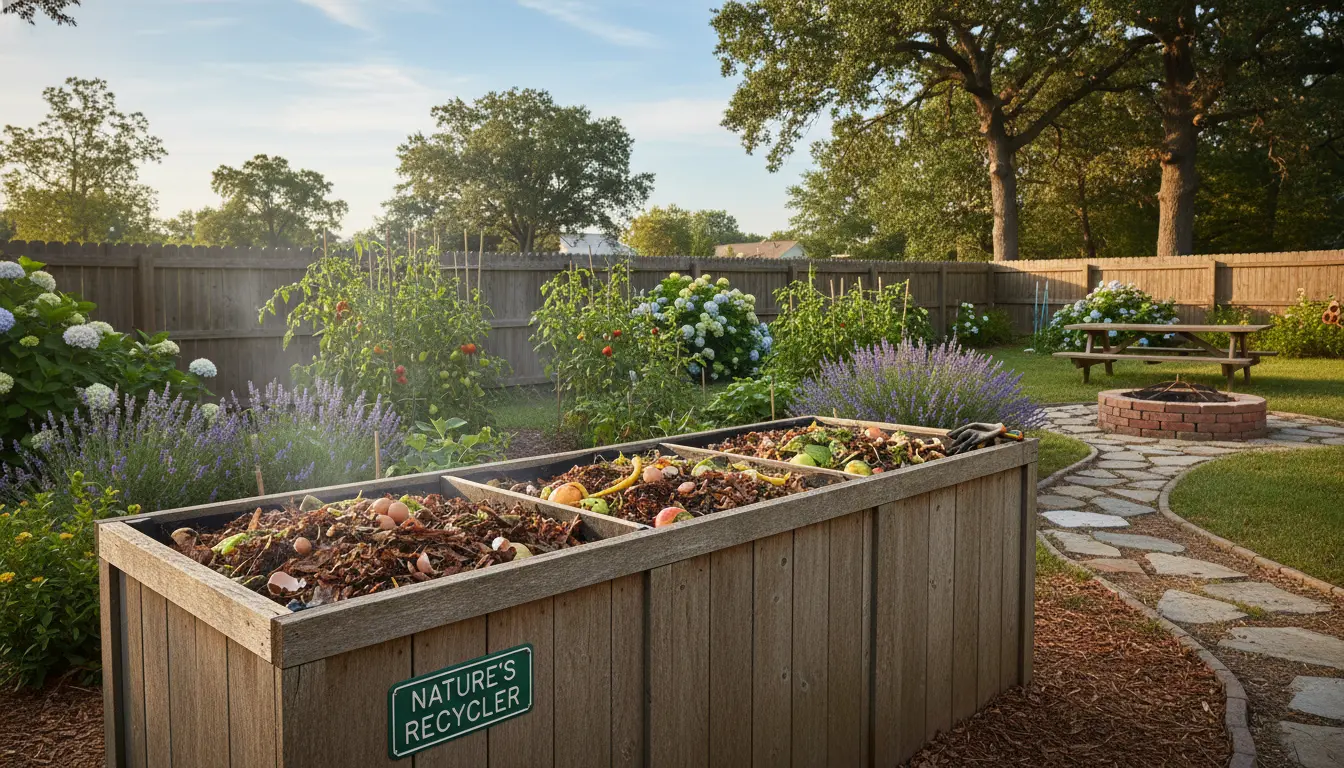
Why Home Composting Matters
Home composting turns kitchen and yard waste into nutrient-rich material you can use in your garden. It reduces landfill waste and cuts methane emissions while improving soil structure and plant health.
This guide gives practical steps for beginners to set up and maintain a home compost system that fits small yards, balconies, or community gardens.
How to Start Home Composting: Basic Principles
Composting is a controlled decomposition process that balances carbon rich and nitrogen rich materials. The two groups are often called browns and greens.
Good home composting needs three things: the right materials, airflow, and moisture. Follow a simple routine and you can have usable compost in a few months.
Choosing a Bin for Home Composting
Pick a bin that fits your space and volume of waste. Options include tumblers, plastic bins, wooden pallets, or an open pile for larger yards.
Consider these factors when selecting a bin:
- Size: 3x3x3 feet is a good target for an active pile in a small yard.
- Access: Make sure you can turn or remove compost easily.
- Material: Plastic retains heat and moisture; wood breathes better and looks natural.
What to Compost at Home
Balance greens (nitrogen) and browns (carbon). Greens are wet and high in nitrogen, while browns are dry and high in carbon.
- Greens: vegetable scraps, fruit peels, coffee grounds, grass clippings.
- Browns: dry leaves, shredded paper, cardboard, small wood chips.
- Avoid: meat, dairy, diseased plants, pet waste, and oily foods that attract pests.
Step-by-Step Home Composting Routine
Follow a simple weekly routine to keep the pile active. This routine works well whether you use a bin or a pile.
- Add a mix of greens and browns rather than large amounts of one type.
- Turn the pile every 1–2 weeks to add oxygen and speed decomposition.
- Keep moisture like a wrung-out sponge; add water or dry material to adjust.
- Harvest finished compost from the bottom or side when it is dark, crumbly, and earthy-smelling.
Troubleshooting Common Home Composting Problems
Many issues are easy to fix with small adjustments. Below are common problems and solutions you can apply quickly.
Pile Smells Bad
A strong foul odor usually means too many greens or poor aeration. Increase browns and turn the pile to introduce air.
Pile Is Too Dry or Too Wet
If decomposition slows because the pile is dry, add water and more greens. If it is soggy and compacted, add bulky browns and turn to improve airflow.
Pests Are Attracted
To reduce pests, bury kitchen scraps in the middle of the pile or use a closed bin. Avoid adding meat, dairy, and oily foods.
How to Use Finished Compost at Home
Finished compost is a multipurpose soil amendment that improves nutrients and structure. Use it in garden beds, potted plants, and lawn topdressing.
Tips for application:
- Mix 1–2 inches of compost into the top 6–8 inches of garden soil when planting.
- Topdress houseplants with a thin layer to refresh potting mix.
- Combine with mulch to retain moisture and reduce erosion.
Home composting can reduce household waste by up to 30 percent and return nutrients to your garden in the form of rich organic matter.
Real World Example: Small Yard, Big Results
Case study: A two-person household started a 60-gallon tumbler in spring. They added kitchen scraps and shredded leaves in a 1:2 greens-to-browns ratio and turned the tumbler twice a week.
In six months they produced about 20 gallons of finished compost. They mixed it into a vegetable bed each season and reported healthier tomatoes and improved soil moisture retention.
Tips for Success with Home Composting
- Chop larger items before adding them to speed breakdown.
- Keep a small kitchen caddy with a lid to collect scraps and reduce trips outside.
- Use a thermometer (optional) to monitor internal pile temperature; 120–150°F indicates active decomposition.
- Start small and scale up as you get comfortable with the process.
Conclusion: Start Simple and Learn
Home composting is a low-cost, practical way to reduce waste and improve your garden. Begin with a manageable bin, maintain a balanced mix of materials, and adjust based on simple observations.
With a little routine—adding, turning, and monitoring—you can convert everyday organic waste into a valuable soil amendment that benefits plants and the planet.