
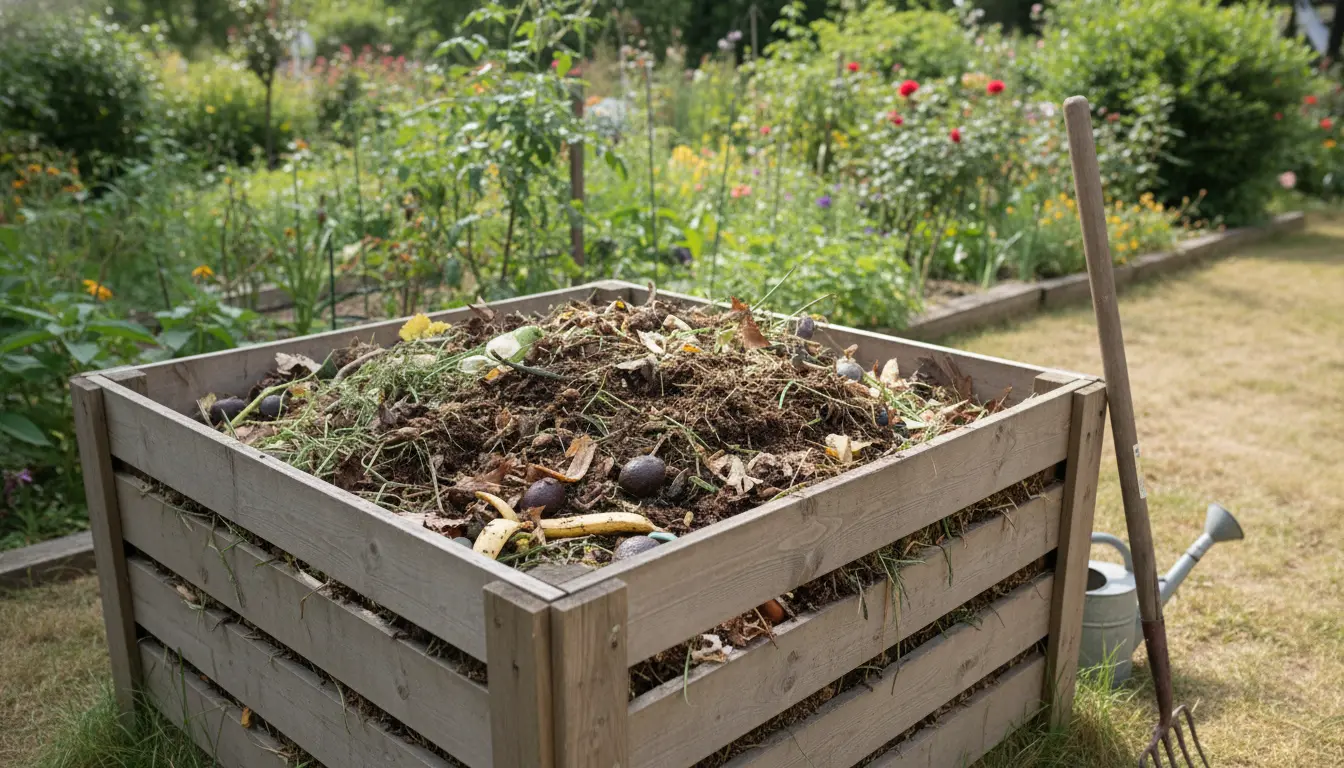
Composting at home turns kitchen scraps and yard waste into rich soil that benefits plants and reduces household waste. This guide gives clear, step-by-step instructions and practical tips so you can start a compost system that fits your space and schedule.
Why Composting at Home Matters
Composting reduces garbage, lowers methane emissions from landfills, and returns nutrients to soil. It is an effective way to reduce your environmental footprint while improving garden health.
Benefits of composting at home
- Reduces household waste and trash costs.
- Produces nutrient-rich amendment for lawns and plants.
- Improves soil structure and water retention.
- Supports local biodiversity by feeding soil organisms.
Materials for Composting at Home

Successful composting requires a balance of carbon-rich and nitrogen-rich materials. Knowing which items go in the pile makes the process faster and less smelly.
What to compost
- Greens (nitrogen): fruit and vegetable peels, coffee grounds, tea bags, fresh grass clippings.
- Browns (carbon): dry leaves, shredded paper, cardboard, straw, wood chips.
- Small amounts of garden trimmings and plant-based leftovers.
What to avoid
- No meat, fish, bones, or dairy — these attract pests and cause odors.
- No diseased plants or invasive weeds unless you use a very hot composting method.
- Avoid coal ash, pet waste, and processed foods with oils and sauces.
Step by Step: How to Start Composting at Home
Choose the right system for your space: a backyard bin, tumbler, or indoor worm (vermicompost) setup. Each method has simple rules to follow.
1. Select a composting method
For yards: a stationary bin or open pile is low-cost. For small patios: a tumbler or sealed bin works well. For apartments: vermicomposting with red wiggler worms is efficient and odor-controlled.
2. Set up the base and location
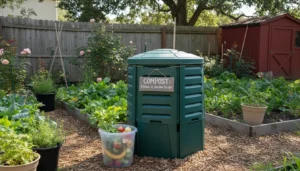
Place bins on soil or a well-drained area. A partly shaded spot prevents drying while keeping moderate temperatures. For tumblers, ensure easy access to turn and harvest the compost.
3. Build layers and maintain balance
Start with a layer of coarse browns to help airflow. Alternate greens and browns, aiming for roughly a 1:2 ratio by volume (greens to browns). Chop or shred large pieces to speed decomposition.
4. Turn and monitor
Turning the pile every 1–2 weeks aerates microbes and speeds composting. If using a tumbler, rotate it regularly. For worm bins, avoid frequent turning and maintain a moist, breathable environment.
5. Check moisture and temperature
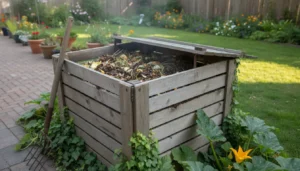
The compost should feel like a damp sponge. Add water if dry, and add browns if it becomes soggy. For hot composting, internal temperatures of 130–160°F (55–70°C) indicate active decomposition and pathogen killing.
Troubleshooting Common Problems
Many issues are easy to fix once you know the signs. Regular checks prevent setbacks and keep the process steady.
- Bad smell: Add more brown materials and turn the pile. Odors usually mean too much nitrogen or poor aeration.
- Slow breakdown: Chop materials smaller, increase moisture slightly, and turn more often.
- Pests: Bury food scraps in the pile, use a closed bin or tumbler, and avoid meat/dairy.
- Too dry: Water lightly and add greens to boost activity.
Small Real-World Example: Urban Apartment Composting
Case study: Maria, a two-bedroom apartment resident, started a 10-gallon worm bin under her sink. She collected fruit and vegetable scraps in a sealed counter pail and fed worms twice weekly.
After three months she harvested dark, crumbly castings and used them to top-houseplant soil. Her weekly trash volume dropped by nearly 40 percent, and her plants showed better growth with regular worm tea feedings.
Did You Know? One ton of food waste sent to landfill can produce 0.5 to 1 ton of carbon dioxide equivalent in methane and other greenhouse gases. Composting at home keeps those nutrients cycling locally.
Practical Tips and Next Steps
Start small and scale up. Keep a small kitchen pail with a tight lid for daily scraps and empty it into the bin every few days. Label your compost bin or keep a simple log to track what you add and when you turn it.
- Use a thermometer for hot composting to ensure temperatures are in the right range.
- Shred cardboard and paper before adding to speed decomposition.
- Use finished compost as a soil top-dressing, mix into potting soil, or make compost tea for plants.
Composting at home is adaptable for any living situation. With a little setup and routine, you can reduce waste, improve soil health, and contribute to a circular household system. Try one method for a season, observe results, and adjust materials and turning frequency to match your local climate and needs.