
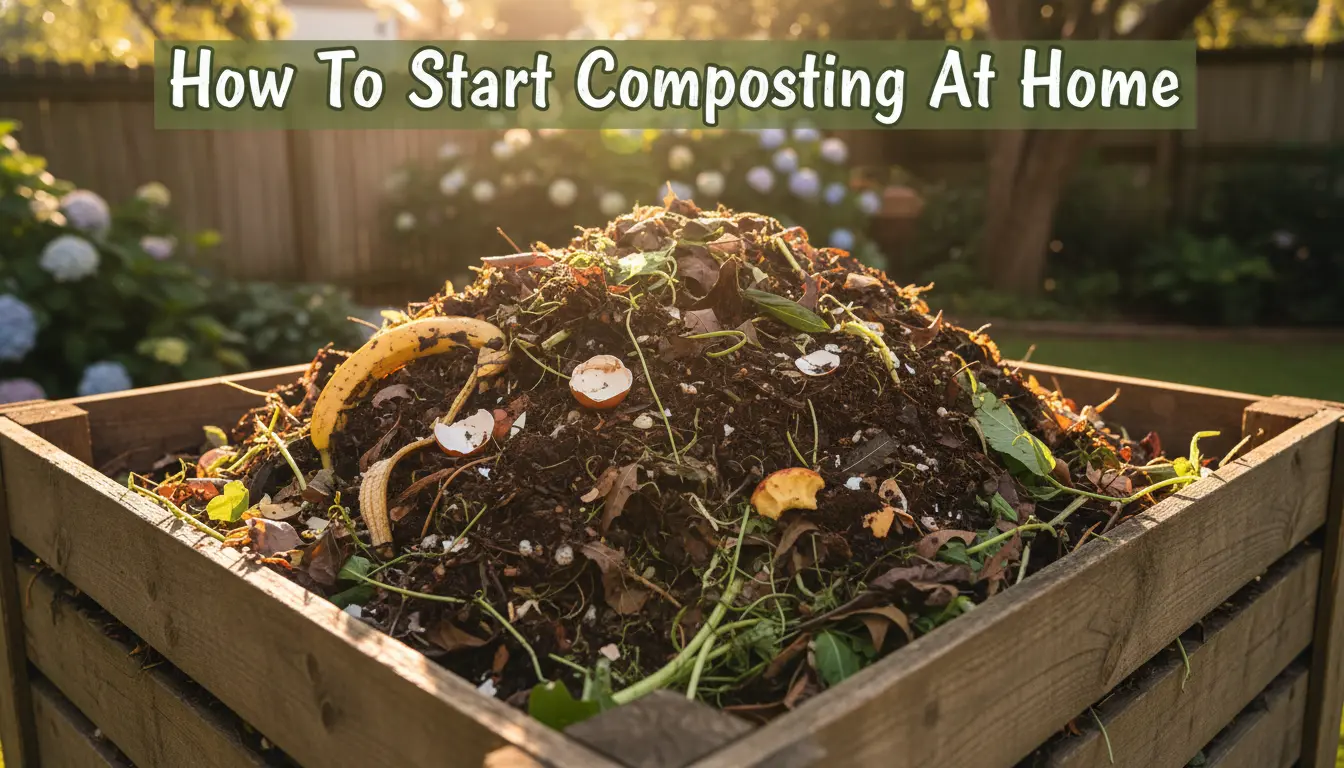
Composting at home is a low-cost way to reduce waste and create nutrient-rich soil. This guide gives clear, practical steps you can follow, whether you have a backyard or a small balcony.
How to Start Composting at Home: Step-by-Step
Decide on a method first: backyard pile, compost bin, or vermicomposting with worms. Each approach has simple rules that help decomposition and keep odors away.
Choose a location and container
Pick a spot with partial shade and good drainage. For small spaces choose a compact bin or a tumbling composter that fits your balcony or patio.
- Backyard pile: no container needed, just a designated corner.
- Closed bin: keeps pests out and retains heat.
- Tumbler: speeds up mixing and decomposition.
- Worm bin (vermicompost): ideal for apartments and small kitchens.
Layering and ratios to start composting at home
Balance green (nitrogen) and brown (carbon) materials. A good rule is roughly 2:1 or 3:1 browns to greens by volume, adjusted as needed for moisture and smell.
Examples:
- Greens: vegetable scraps, coffee grounds, fresh grass clippings.
- Browns: dry leaves, shredded paper, cardboard, straw.
Materials You Need to Start Composting at Home
You do not need fancy tools. A few basic items make the process easier and cleaner.
- Bin or tumbling composter (optional but helpful)
- Pitchfork or compost aerator for turning
- Kitchen caddy for collecting scraps
- Water source or spray bottle to adjust moisture
- Thermometer (optional) to monitor pile heat
What not to add
Avoid meat, dairy, oily foods, diseased plants, and pet waste. These items attract pests and slow down safe decomposition.
Simple Routine for Ongoing Success
Follow this routine to keep compost working well:
- Add kitchen scraps and yard waste in layers.
- Cover fresh greens with browns to control odor.
- Keep the pile as moist as a wrung-out sponge.
- Turn the pile every 1–2 weeks to add oxygen.
Adjust frequency of turning based on smell and how fast materials break down.
Compost can reach internal temperatures of 130 to 160°F (54 to 71°C) in a well-managed pile. Those temperatures help kill weed seeds and pathogens.
Troubleshooting When Composting at Home
Common issues are simple to fix. Identify the symptom, then adjust moisture, aeration, or material mix.
Bad smell
Usually caused by too much green material or poor aeration. Mix in dry browns and turn the pile to add oxygen.
Pile too dry or slow to decompose
Add water in small amounts and mix. Add greens like grass clippings or food scraps to boost nitrogen.
Pests or rodents
Use a closed bin, bury food scraps under a layer of browns, and avoid adding meat or dairy. Keep bin elevated if possible.
Small Case Study: Neighborhood Family Compost
A family of four started a 3×3 ft compost bin in their backyard. They collected kitchen scraps in a sealed container and added dry leaves from the yard each week.
In six months they had about 1 cubic foot of dark, crumbly compost. They used it to top-dress a vegetable bed and reported healthier tomato plants and reduced fertilizer use.
Key numbers from their experience:
- Initial bin size: 3 x 3 ft
- Materials added weekly: ~5 liters kitchen scraps + 7 liters dry leaves
- Time to usable compost: ~6 months with occasional turning
Uses and Benefits of Compost at Home
Finished compost improves soil structure, retains moisture, and supplies slow-release nutrients. It can be used as a soil amendment, potting mix ingredient, or mulch top layer.
Benefits include reduced landfill waste, lower need for chemical fertilizers, and improved garden health.
Quick checklist to start composting at home
- Choose a bin or spot for a pile
- Collect greens and browns separately
- Layer materials and monitor moisture
- Turn pile regularly and troubleshoot as needed
- Harvest finished compost when dark and crumbly
Starting composting at home is a manageable change that pays off with richer soil and less household waste. Begin small, observe, and adapt your system to fit your space and lifestyle.