
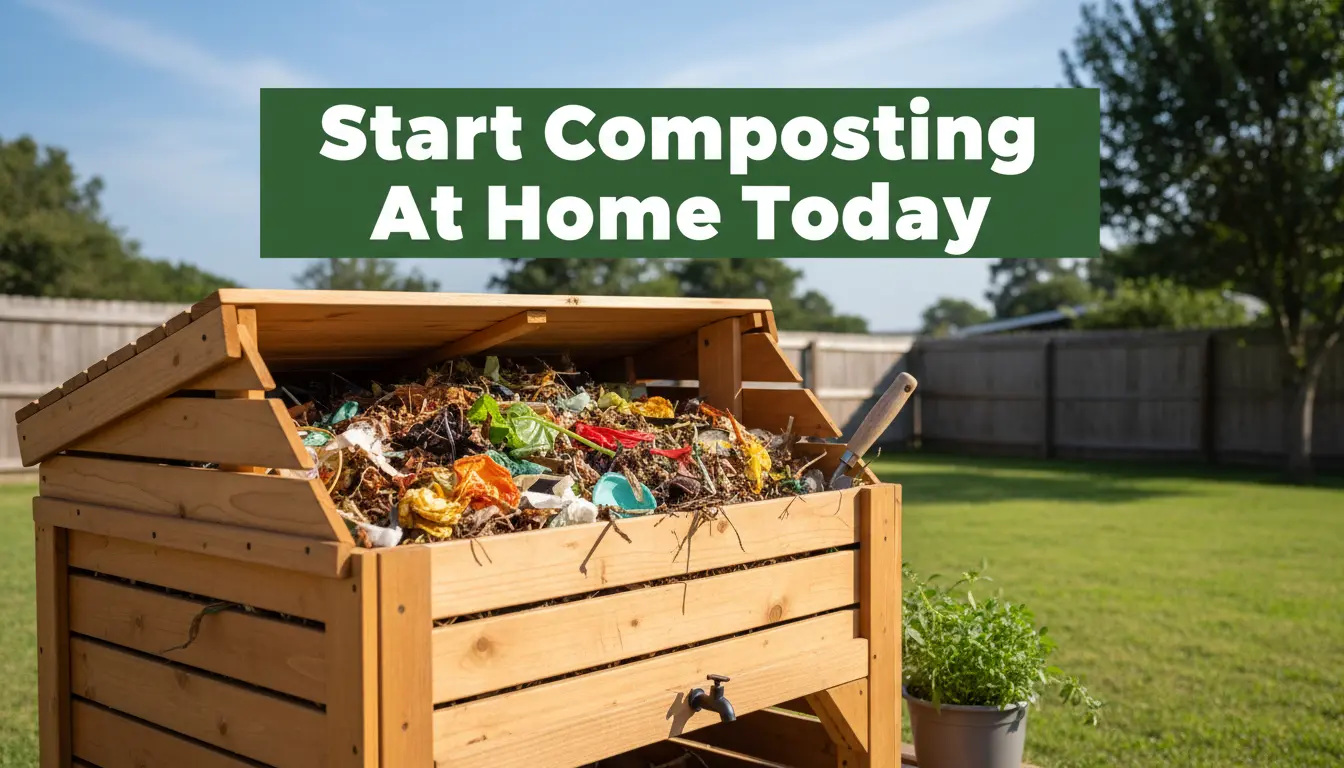
Composting at home turns kitchen scraps and yard waste into useful soil amendment. This guide covers straightforward steps, system choices, and common mistakes so you can begin composting with confidence.
Why Composting at Home Matters
Composting reduces household waste and returns nutrients to soil. It also lowers methane emissions from landfills and supports healthier plants.
Even small-scale composting can make a measurable difference in monthly trash volume and garden productivity.
Choosing the Right System for Composting at Home
Select a system that fits your space, budget, and effort level. The right choice makes composting easier and more consistent.
Backyard Pile or Bin
Backyard piles are flexible and free. Bins keep material contained and tidy, which helps with appearance and pest control.
Tumbler Composters
Tumblers speed up mixing and aeration. They are a good choice if you want faster breakdown and easier turning.
Worm Composting (Vermicomposting)
Worm bins work well indoors or in apartments. Red wiggler worms convert food scraps into rich castings with minimal space.
What to Compost at Home
Knowing what to add helps avoid smells and pests. Balance carbon rich browns with nitrogen rich greens.
- Greens (nitrogen): vegetable scraps, coffee grounds, fresh grass clippings, green leaves.
- Browns (carbon): dried leaves, shredded paper, cardboard, straw.
- Avoid: meat, dairy, oily foods, diseased plants, and pet waste.
How to Start Composting at Home: Step by Step
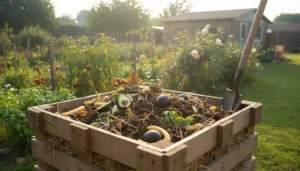
Follow these practical steps to set up a basic backyard or bin system. Each step helps maintain balance and speed decomposition.
Step 1: Pick a Location
Choose a spot with partial shade and good drainage. It should be convenient for adding waste and turning the pile.
Step 2: Build a Base Layer
Start with coarse material like twigs or straw to improve airflow. This helps microorganisms get started and prevents compaction.
Step 3: Add Greens and Browns
Layer kitchen scraps with dry leaves or shredded paper. Aim for roughly 2–3 parts browns to 1 part greens by volume.
Step 4: Maintain Moisture and Aeration
Keep the pile as damp as a wrung-out sponge. Turn or mix the pile every 1–2 weeks to introduce oxygen and speed up decomposition.
Troubleshooting and Common Mistakes in Composting at Home
Problems often come from imbalance, poor aeration, or wrong ingredients. Fixing a few issues gets compost back on track quickly.
- Smelly pile: Add more browns and turn to add air.
- Slow breakdown: Chop materials smaller, maintain moisture, and turn more often.
- Pests: Avoid meat and keep bin closed; use a tumbler or worm bin for indoor spaces.
Small Real-World Example
Jane, a suburban homeowner, started a 60-liter tumbler and saved one kitchen trash bag per week by composting vegetable scraps and coffee grounds. After six months she used finished compost to topdress her vegetable beds, improving soil structure and reducing watering frequency.
Case Study: Apartment Vermicomposting
In a three-month pilot, an apartment resident used a 30-liter worm bin for food scraps. The bin produced about 10 liters of worm castings and reduced the resident’s landfill waste by 40 percent. Key actions were avoiding citrus and onion overload, harvesting castings every two months, and keeping the bin slightly moist.
Compost can retain water and reduce garden watering needs by up to 30 percent when mixed into soil. Finished compost improves soil structure and supports beneficial microbes.
Tips to Speed Up Composting at Home
Use these practical tactics to get finished compost faster and more reliably.
- Shred or chop materials before adding.
- Use a compost thermometer for hot piles (aim 130–160°F for active breakdown).
- Layer materials rather than adding large single-item loads.
- Mix finished compost into beds to improve infiltration and root growth.
How to Use Finished Compost
Finished compost looks dark and crumbly with an earthy smell. Use it as a soil amendment, top dressing, or potting mix ingredient.
- Vegetable beds: Incorporate 2–3 inches into topsoil before planting.
- Container plants: Mix one part compost to three parts potting mix.
- Lawn care: Spread a thin layer as a top dressing in spring or fall.
Final Checklist for Composting at Home
Before you start, review this short checklist to avoid common early mistakes and get steady results.
- Choose a bin type and convenient location.
- Stock up on browns like dry leaves and shredded paper.
- Keep a small kitchen pail for scraps to reduce trips outside.
- Monitor moisture and turn regularly.
Composting at home is a simple habit with lasting benefits for your garden and the environment. Start small, watch how your system behaves, and adjust as you learn what works best in your space.