
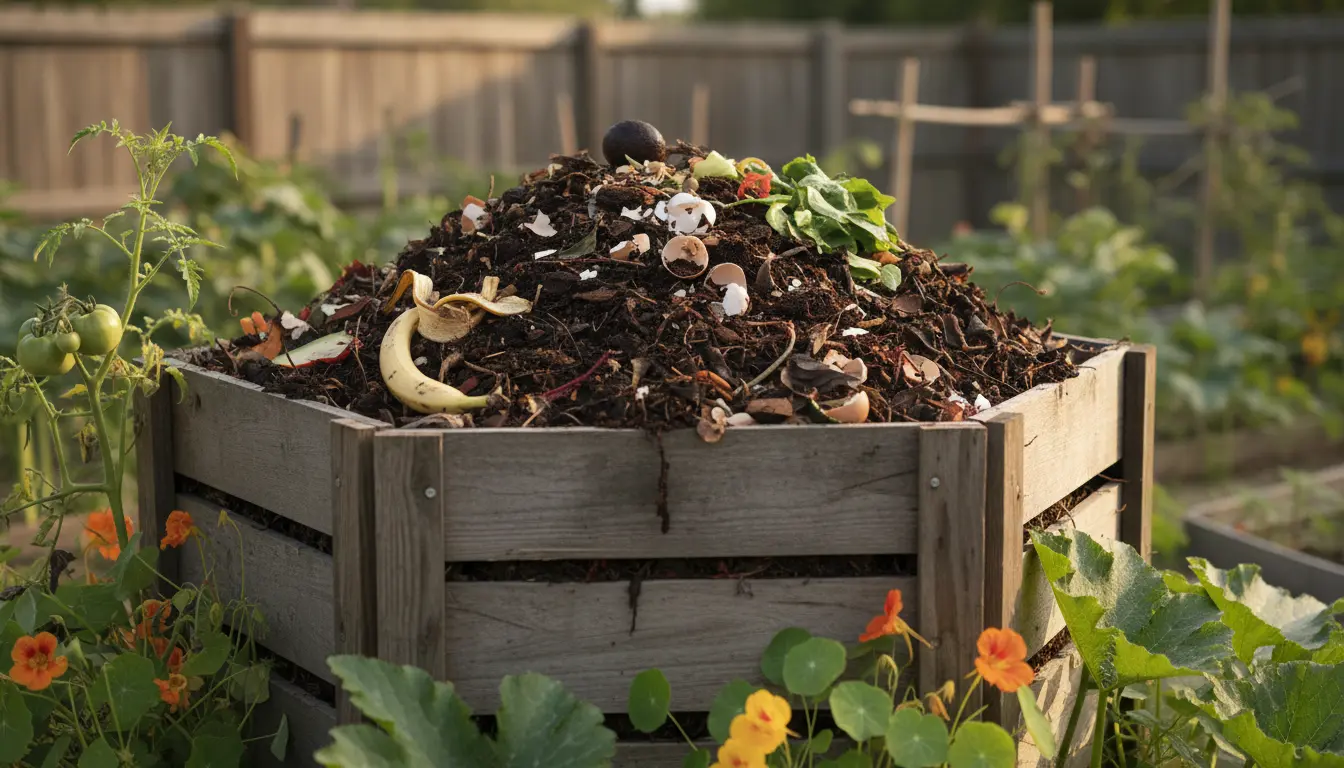
Composting at home turns kitchen scraps and yard waste into rich soil in a simple, low-cost way. This guide explains how to start composting at home with clear steps, best materials, and easy troubleshooting tips.
Why composting at home matters
Composting reduces household waste sent to landfill and returns nutrients to soil. It also improves garden health, increases water retention, and lowers the need for chemical fertilizers.
Choose a composting method for your space
How you start composting at home depends on available space, time, and local rules. Common methods include backyard bins, tumblers, vermicomposting, and bokashi systems.
Backyard compost bin
Backyard bins are inexpensive and work well for yards with space. They require periodic turning and a mix of green and brown materials.
Compost tumblers
Tumblers speed up decomposition by making turning easy. They are ideal if you want faster results and cleaner handling of compost materials.
Vermicomposting (worms)
Worm bins are compact and suitable for apartments or small patios. Red wigglers break down food scraps efficiently but need consistent temperature and moisture control.
Bokashi fermentation
Bokashi is an anaerobic process using bran inoculated with microbes. It handles cooked foods and meat, then requires burying or mixing the fermented material into soil after treatment.
Gather the right materials
Successful composting at home needs a balance of carbon (brown) and nitrogen (green) materials. Aim for a mix that decomposes steadily and avoids odors.
- Brown materials: dry leaves, straw, shredded cardboard, paper
- Green materials: fruit and vegetable scraps, coffee grounds, grass clippings
- Aeration tools: pitchfork or compost aerator for turning
- Optional: thermometer to track pile temperature
Step-by-step: How to start composting at home

Follow these basic steps to begin composting at home. Each step helps maintain balance and speed up decomposition.
- Pick a suitable spot: partial shade, level ground, and good drainage.
- Build or place your bin: open bottom allows worms and microbes in.
- Start with a layer of coarse brown material to improve airflow.
- Add green and brown materials in roughly 2:1 or 3:1 brown to green volume over time.
- Keep the pile moist like a wrung-out sponge; not soaking wet.
- Turn the pile every 1–2 weeks for aerobic composting; less often for slower systems.
- Harvest finished compost when dark, crumbly, and earthy-smelling (usually 2–12 months).
Troubleshooting common problems in composting at home
Small issues are normal and fixable. The three main factors to manage are moisture, aeration, and balance of materials.
Problem: Smelly compost
Smell usually means too much wet or green material and not enough air. Fix by adding brown materials and turning the pile to increase oxygen.
Problem: Slow decomposition
Slow breakdown often results from insufficient nitrogen, cold temperatures, or lack of moisture. Add fresh greens, insulate the pile, and keep it slightly moist.
Problem: Fruit flies or pests
Use a closed bin or cover fresh food scraps with a layer of brown material. Avoid adding meat, dairy, or oily foods to open compost systems.
Uses for finished compost
Finished compost improves soil structure, fertility, and moisture retention. Use it as a top dressing, mix it into potting soil, or blend it into garden beds.
- Seed starting mix: combine 1 part compost with 2 parts sterile potting mix.
- Vegetable beds: work 2–3 inches of compost into the topsoil before planting.
- Mulch and soil amendment: spread compost around trees and shrubs to retain moisture.
Small real-world case study
Jane, a city homeowner, started a 50-gallon tumbler at the back patio using kitchen scraps and shredded paper. In six months she produced enough compost to top-dress two raised vegetable beds.
She found that turning the tumbler twice a week and keeping the mix slightly damp produced dark, crumbly compost in four months. Her tomato plants yielded 30% more fruit the following season.
Quick checklist to start composting at home
- Choose a method that fits your space (bin, tumbler, worm bin, bokashi).
- Collect brown and green materials before starting.
- Maintain moisture and aeration—turn regularly if possible.
- Monitor results and adjust balance if odors or pests appear.
- Use finished compost to improve garden soil and plant health.
Composting at home is a practical way to reduce waste and improve local soil health. Start small, observe how your system responds, and adjust materials and care until you find a routine that works.