
What Is Composting at Home?
Composting at home is the controlled breakdown of organic waste into nutrient-rich soil. It uses kitchen scraps and yard trimmings to create a natural fertilizer for plants.
This process saves landfill space, reduces methane emissions, and improves garden soil structure and fertility.
Why composting at home matters
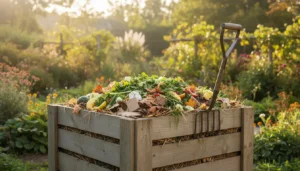
Composting reduces household waste and returns valuable nutrients to your garden. It is a low-cost, practical step toward a more sustainable lifestyle.
Benefits of Composting at Home
Composting supports healthy plants and reduces the need for chemical fertilizers. It also lowers household trash volume and cuts disposal costs in some areas.
- Improves soil structure and water retention
- Provides free, slow-release nutrients for plants
- Reduces landfill waste and greenhouse gases
- Encourages healthy microbial life in soil
How To Start Composting at Home
Follow these practical steps to begin composting at home. You can start small and expand as you learn what works for your space and climate.
1. Choose a compost method

Select a method that fits your living situation. Options include a simple pile, a tumbling composter, a bin, or worm composting for small spaces.
- Pile: Best for large yards with room for turning.
- Bin: Keeps compost contained and neat for most homeowners.
- Tumbler: Easier turning and faster results for small to medium gardens.
- Vermicomposting: Uses worms to compost indoor or balcony food waste.
2. Pick the right location
Place your compost in a spot with some shade and easy access. Good drainage and airflow help decomposition proceed evenly.
3. Balance greens and browns
Successful composting at home relies on a balance of green (nitrogen) and brown (carbon) materials. Aim for a rough volume mix of 1 part greens to 2–3 parts browns.
- Greens: Vegetable scraps, coffee grounds, fresh grass clippings
- Browns: Dry leaves, shredded paper, cardboard, straw
4. Layer and maintain your pile
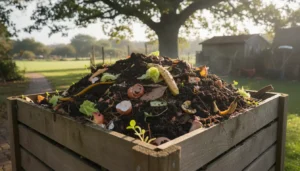
Layer materials loosely rather than compacting them. Turn or mix the pile every 1–2 weeks to add oxygen and speed decomposition.
Keep the pile as moist as a wrung-out sponge. Add water during dry periods and add more browns if it gets too wet or smelly.
What to Add and What to Avoid
Knowing what to include ensures safe, odor-free composting at home. Avoid items that attract pests or introduce pathogens.
Safe to add
- Fruit and vegetable scraps
- Eggshells (crushed)
- Coffee grounds and tea bags (no staples)
- Yard trimmings and leaves
- Shredded paper and cardboard
Avoid adding
- Meat, bones, dairy, and oily foods (attract pests)
- Diseased plants or invasive weeds with seeds
- Pet waste from carnivores
- Large branches that take too long to break down
Troubleshooting Composting at Home
Common issues can be fixed with simple adjustments. These quick checks will keep your compost healthy.
- Smelly pile: Add more browns and turn frequently to add air.
- Too dry: Water the pile and cover to retain moisture.
- Slow breakdown: Chop materials smaller and increase turning.
- Pests: Stop adding meat or oily foods and secure the bin.
Composting can cut household waste by up to 30 percent. Even apartment dwellers can compost using a worm bin or sealed bokashi system.
Small Case Study: Urban Balcony Composting
Emma lives in a third-floor apartment and wanted to reduce food waste. She bought a small worm bin and a container for dry browns.
Within three months she produced rich worm castings used in her balcony planters. Her household trash volume dropped by about 25 percent and her tomatoes yielded more fruit.
How Long Until Compost Is Ready?
Composting at home can take anywhere from 2 months to a year depending on the method and maintenance. Hot composting with regular turning is fastest.
Finished compost looks dark, crumbly, and earthy-smelling. Use it as a top dressing, soil amendment, or potting mix ingredient.
Final Tips for Successful Composting at Home
- Start small and be consistent in adding materials.
- Chop or shred large items for faster breakdown.
- Keep a small counter container for scraps to make composting habit easier.
- Monitor moisture and air — those two factors control speed.
Composting at home is a practical, low-cost way to improve soil and reduce waste. With a little routine maintenance, most households can turn kitchen and yard scraps into valuable compost in a few months.