
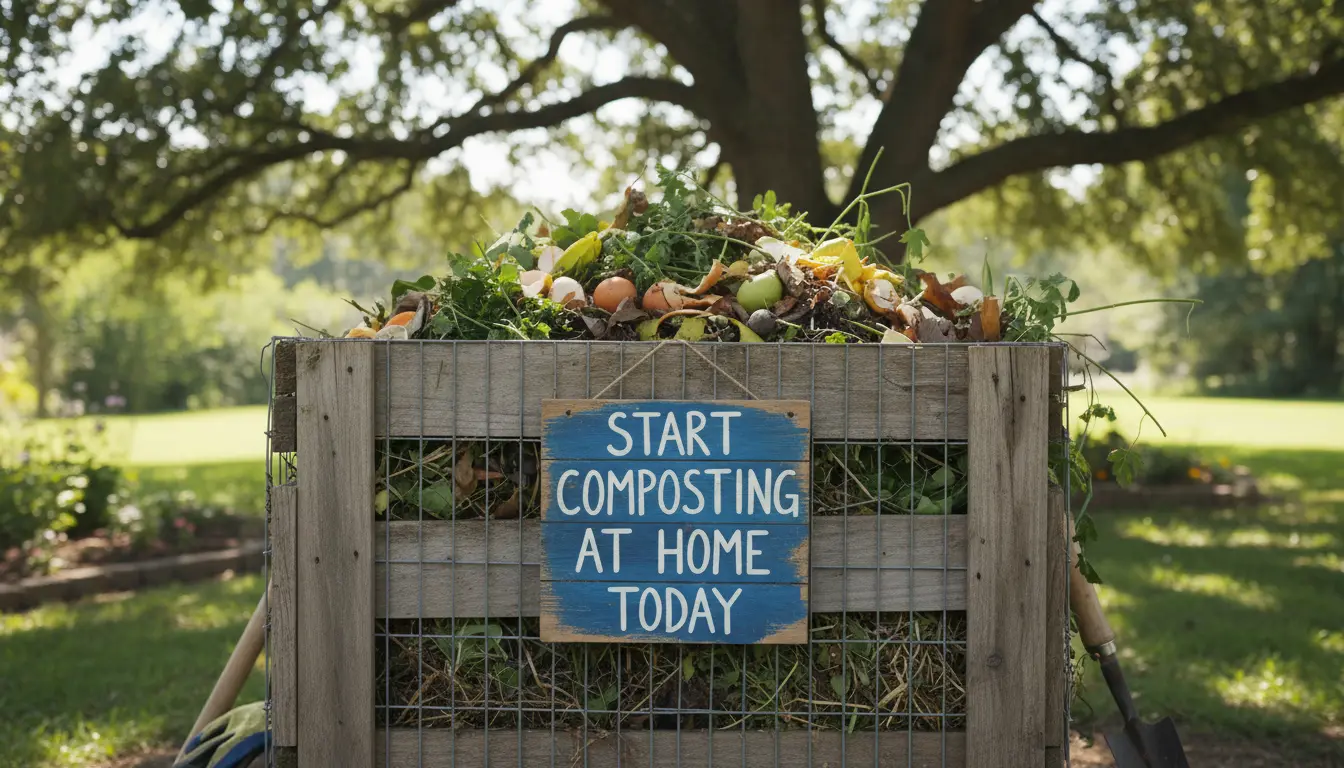
Why Composting at Home Matters
Composting at home turns kitchen and yard waste into nutrient-rich material for soil. It reduces landfill waste, cuts greenhouse gas emissions, and improves garden health.
Starting composting at home needs only a basic setup and regular attention. This guide explains clear steps and common pitfalls so you can begin right away.
How to Start Composting at Home: Basic Options
Choose a method that fits your space and schedule. The three most common home options are simple and effective.
- Backyard bin composting — best if you have outdoor space and produce moderate waste.
- Compost tumbler — speeds up mixing and aeration, good for small yards.
- Bokashi or indoor composting — fermenting kitchen waste, ideal for apartments.
Choose a Bin for Composting at Home
Select a bin size that matches your waste volume. A 50–100 gallon bin suits most households. Ensure it has vents or holes for airflow.
Place the bin on soil or grass to allow organisms and moisture exchange. Avoid concrete bases unless you use a worm bin or sealed system.
Where to Put Your Compost Bin
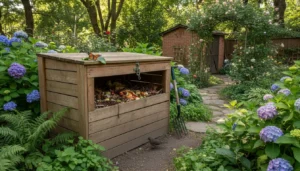
Pick a shaded, accessible spot near your kitchen or garden. Too much sun can dry the pile; too much shade can slow decomposition.
Keep the bin within easy reach to encourage regular use and turning.
Materials: What to Compost at Home
Compost ingredients fall into two categories: greens and browns. Balancing them helps decomposition and prevents odors.
- Greens (nitrogen): vegetable scraps, fruit peels, coffee grounds, fresh grass clippings.
- Browns (carbon): dry leaves, shredded paper, straw, cardboard, sawdust from untreated wood.
A general rule is a 2:1 ratio by volume of browns to greens. If the pile smells, add more browns. If it is slow, add more greens and water.
Step-by-Step: How to Start Composting at Home
Follow these core steps to build a healthy compost pile that breaks down efficiently.
- Layer the base: Start with coarse browns like twigs to aid drainage and airflow.
- Add kitchen scraps: Add greens in small batches and cover each layer with browns to reduce flies.
- Maintain moisture: Keep the pile as damp as a wrung-out sponge. Water occasionally in dry weather.
- Turn regularly: Turn the pile every 1–2 weeks to add oxygen and speed decomposition.
- Wait and monitor: Finished compost is dark, crumbly, and smells earthy. This can take 2–6 months depending on conditions.
Troubleshooting Tips for Home Composting
- Bad smell: Add more browns, turn the pile, and check moisture.
- Pile too dry: Add water and some greens to boost activity.
- Slow breakdown: Chop materials smaller, increase moisture, and turn more often.
- Attracting pests: Avoid meat, dairy, and oily foods. Use a closed bin or bury food scraps in the center.
Composting a ton of food waste can prevent the release of about 800 kilograms of CO2 equivalent, helping cut household emissions.
Using Your Finished Compost
When compost looks dark and crumbly, it is ready to use. Mix it into garden beds, sprinkle it on lawns, or use it as potting mix component.
Benefits include improved soil structure, better water retention, and slow-release nutrients for plants.
Simple Uses Around the Home
- Top-dress vegetable beds with 1–2 inches of compost each season.
- Mix compost 1:3 with existing soil for new plantings.
- Use as a seed-starting additive at 10–20% of the mix.
Small Real-World Example: Case Study
Case: Sarah, a city homeowner, started composting at home using a 60-gallon bin. She saved kitchen scraps and mixed them with dry leaves collected in fall.
Within four months, Sarah produced about 40 liters of finished compost. She used it to top-dress her raised vegetable beds and reported healthier tomato plants with fewer supplemental fertilizers.
This simple routine reduced her weekly trash and improved garden yields, illustrating how small changes scale up.
Final Checklist to Start Composting at Home
- Choose a bin type and location
- Collect kitchen scraps and dry browns separately
- Layer materials and monitor moisture
- Turn the pile every 1–2 weeks
- Use finished compost in your garden
Composting at home is practical, affordable, and flexible. Start small, learn by doing, and adjust your process based on results. Within months you can convert household waste into a valuable soil amendment.