
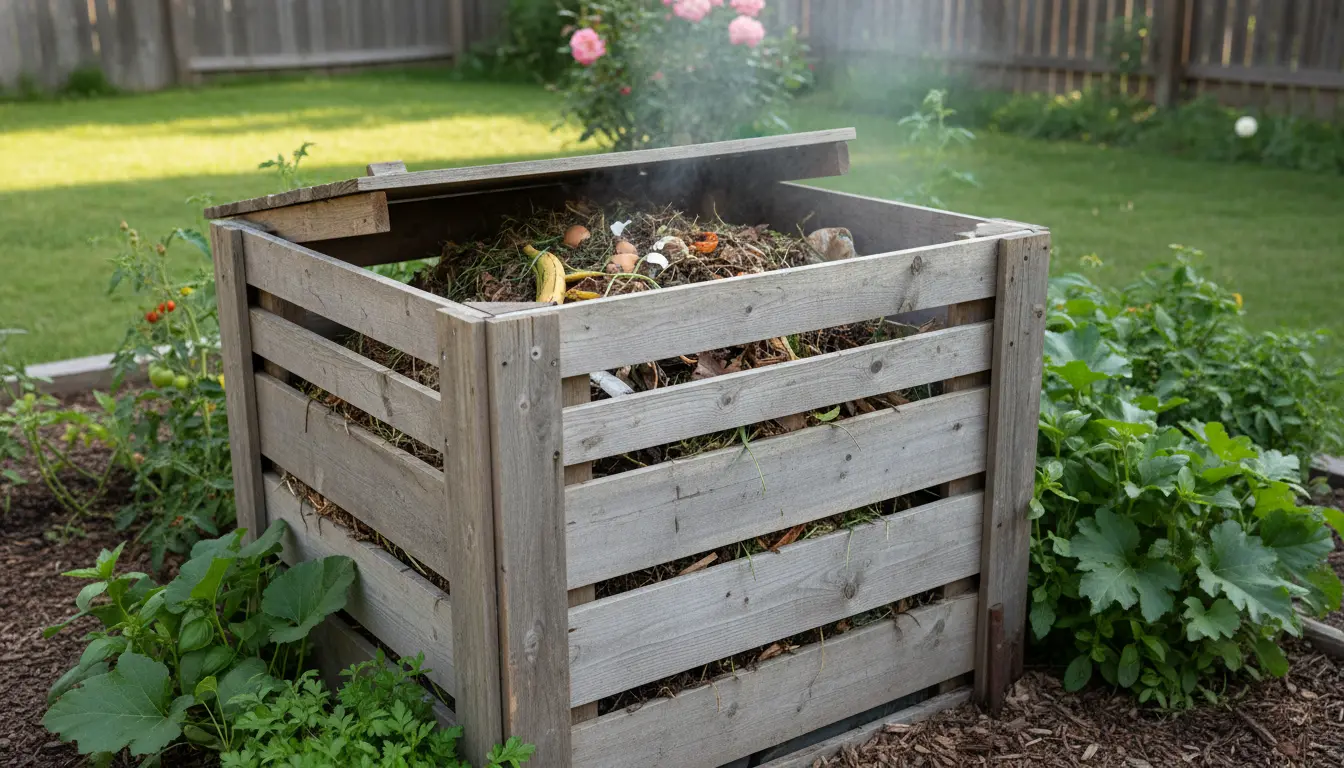
Why composting at home matters
Composting at home turns kitchen scraps and yard waste into useful soil that supports plants and reduces landfill waste. It lowers household garbage volume and can save money on fertilizer and soil amendments.
This guide explains practical steps you can follow today to start a simple, effective home composting system.
Getting started with composting at home

Choose a site that is convenient and has good drainage. A shaded spot near the kitchen or garden cut down on trips and keeps the pile from drying out too quickly.
Decide on a container type based on space and lifestyle. Small apartments can use a bokashi or worm bin, while yards can use tumblers or open piles.
Choosing a compost method for home
- Backyard bin or pile: low cost, works well for yard waste and large volumes.
- Tumbler: faster mixing, contained and neater for suburban yards.
- Vermicomposting (worms): ideal for apartments and small kitchens, produces rich castings.
- Bokashi: fermenting kitchen waste including meat and dairy, then burying or adding to a compost pile.
Tools and supplies for home composting
- Pitchfork or turning tool for open piles.
- Compost thermometer (optional) to monitor temperatures.
- Worm bin or tumbler if you prefer contained systems.
- Kitchen collection bucket with a tight lid or compost pail for storing scraps.
What to compost at home
Good compost balances “greens” (nitrogen-rich) and “browns” (carbon-rich). Aim for roughly two to three parts browns to one part greens.
- Greens: vegetable peels, fruit scraps, coffee grounds, fresh grass clippings.
- Browns: dry leaves, shredded paper, cardboard, straw, wood chips.
- Avoid: large amounts of meat, dairy, oils, diseased plants, and pet waste from carnivores unless using bokashi or a high-heat system.
How to build and maintain a home compost pile
Layer materials rather than dropping everything in a heap. Start with coarse browns at the bottom for airflow, then alternate greens and browns.
- Lay 3–6 inches of browns as the base.
- Add a 2–4 inch layer of greens.
- Sprinkle a thin layer of garden soil or finished compost to introduce microbes.
- Mix or turn every 1–2 weeks for aerobic composting; tumblers simplify this step.
Keep the pile moist like a wrung-out sponge. If it smells bad, it is too wet or lacks oxygen; add browns and turn.
Troubleshooting home composting
- Bad smell: add dry browns, increase turning, and check for anaerobic pockets.
- Slow breakdown: chop materials smaller, add moisture and nitrogen (greens), or increase temperature with more volume.
- Pests: use a closed bin or bury food scraps in the middle of the pile, avoid meat/dairy unless using bokashi.
Using finished compost from home
Finished compost is dark, crumbly, and earthy-smelling. Use it as a soil amendment, potting mix ingredient, or mulch layer.
Application rates: mix 1–3 inches into garden beds annually, or add a handful to potting mixes for seedlings.
Small real-world example: Sarah’s balcony worm bin
Sarah lives in a two-bedroom apartment and started vermicomposting in a 2-drawer worm bin. She collected kitchen scraps in a small pail and added bedding of shredded cardboard and dry leaves.
Within three months she had a steady supply of worm castings. Her houseplants responded well and she cut store-bought fertilizer costs by 40%. She reduced weekly trash by nearly one-third.
Quick checklist to start composting at home
- Pick a method: pile, tumbler, worms, or bokashi.
- Gather tools: bin, kitchen pail, browns (leaves, cardboard).
- Follow layering: browns, greens, soil, and turn regularly.
- Monitor moisture and smell; adjust with browns or turning.
- Harvest finished compost after 3–12 months depending on method and conditions.
Tips for faster results with home composting
- Chop or shred materials before adding.
- Keep the pile insulated or use a bin to retain heat in cooler months.
- Use a compost starter or mature compost to introduce microbes.
Composting at home is a practical, low-cost step toward reducing waste and improving soil health. Choose a method that fits your space, stay consistent with basic maintenance, and you will see steady results.