
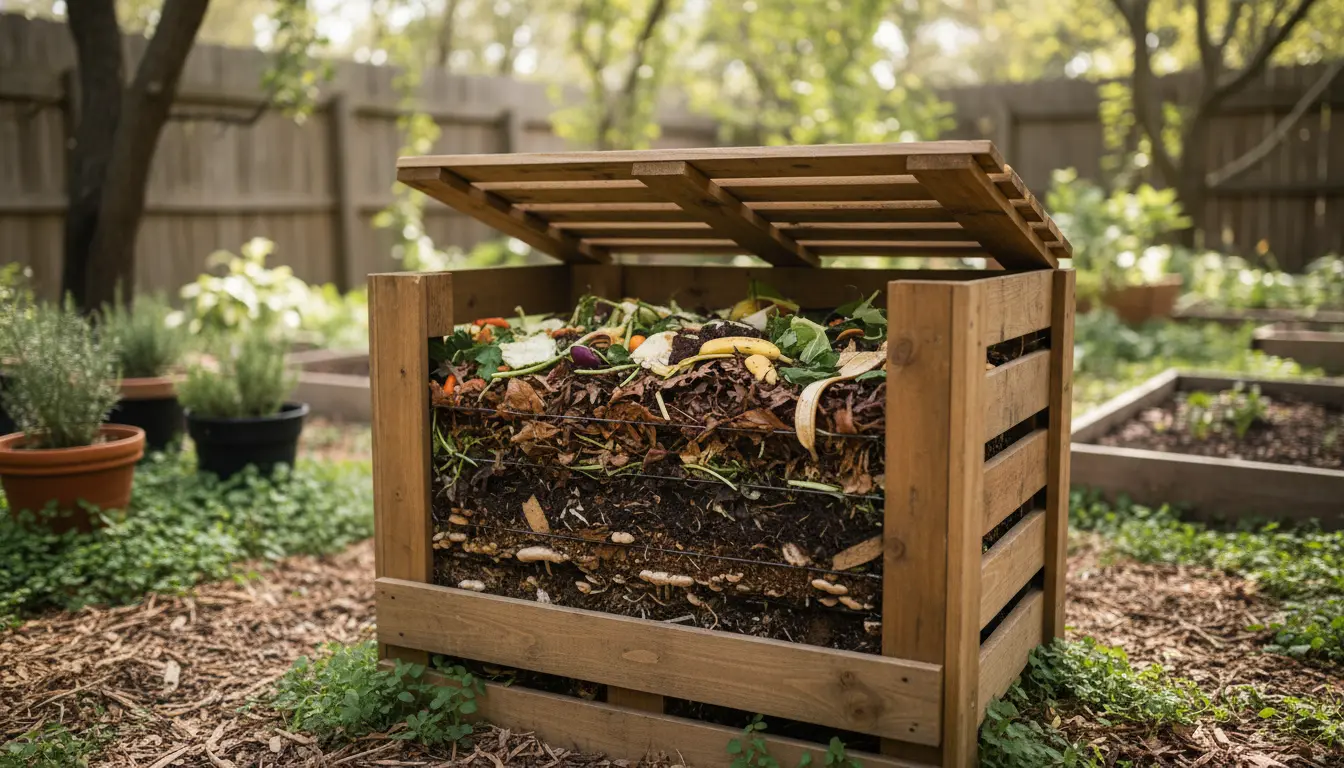
Why Start Composting at Home
Composting at home turns kitchen and yard waste into valuable soil material. It reduces waste, improves soil structure, and feeds plants naturally.
Even small efforts like a countertop bin or a simple backyard pile make a measurable environmental impact. This guide gives practical, step-by-step instructions for beginners.
Basic Principles of Composting at Home

Composting requires three main elements: carbon, nitrogen, and oxygen. Carbon materials are dry and brown, while nitrogen materials are green and wet.
Balance these materials, keep the pile moist but not soggy, and provide airflow to speed decomposition. A good rule of thumb is roughly 25–30 parts carbon to 1 part nitrogen by weight.
What to Add to Your Compost
- Greens (nitrogen): fruit and vegetable scraps, coffee grounds, fresh grass clippings.
- Browns (carbon): dry leaves, straw, shredded cardboard, newspaper.
- Air and moisture: turn the pile and keep it as damp as a wrung-out sponge.
What Not to Compost
- Meat, fish, dairy, and oily foods (can attract pests).
- Diseased plants, weeds with seeds, and persistent invasive species.
- Pet waste and non-biodegradable materials like plastics.
Choosing a Compost Method for Home
Pick a method based on your space, time, and needs. Common options include simple piles, tumblers, and enclosed bins.
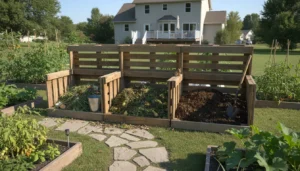
Tumblers are tidy and speed up decomposition with regular turning. Open piles or bins are low-cost and suitable for larger yards.
Quick Setup Steps for Backyard Composting at Home
- Choose a location: partial shade and good drainage are ideal.
- Build a base: start with coarse materials like twigs to improve airflow.
- Add materials in layers: alternate browns and greens every 6–12 inches.
- Moisten and aerate: water lightly and turn the pile every 1–2 weeks.
Managing Your Compost Pile
Temperature is a good indicator of activity. A hot pile (120–160°F) breaks down materials faster and kills many weed seeds and pathogens.
If your pile smells bad, it is likely too wet or lacks oxygen. Add more browns and turn it to restore balance.
Troubleshooting Common Problems
- Smelly compost: Add dry browns, increase turning, and reduce moisture.
- Slow decomposition: Chop materials smaller, add some nitrogen, and ensure warmth.
- Pests around pile: Avoid adding meat or dairy and use a closed bin if needed.
Harvesting and Using Finished Compost
Finished compost is dark, crumbly, and earthy-smelling. It generally takes 3–12 months depending on management.
Use finished compost as a top dressing, soil amendment, or in potting mixes. It improves water retention, nutrient availability, and soil structure.
How to Use Compost in the Garden
- Top-dress established beds with 1–2 inches of compost in spring or fall.
- Mix compost into planting holes or potting mixes at 10–30% by volume.
- Use as mulch around trees and shrubs to suppress weeds and conserve moisture.
Small Real-World Case Study: Apartment Balcony Composting
Maria, a city renter, started composting with a small worm bin on her balcony. She collected kitchen scraps daily and added shredded paper to balance moisture.
Within four months she had enough castings to refresh two balcony planters. Her herbs grew fuller and she cut store-bought soil use by half.
Tips for Long-Term Success with Composting at Home
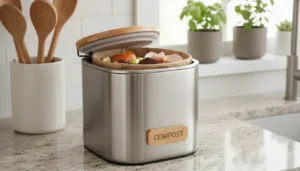
- Keep a small countertop compost container with a tight lid to collect scraps easily.
- Chop or blend larger items before adding to speed breakdown.
- Record what you add and how often you turn the pile to learn what works best.
Seasonal Notes
Composting slows in winter; insulate the pile with extra browns or move bins to a sunnier spot. In summer, monitor moisture and add water to prevent drying out.
Final Checklist to Start Composting at Home
- Choose a bin or spot and gather basic tools: pitchfork or turning tool, thermometer (optional), and a small kitchen container.
- Learn the greens vs. browns rule and aim for balanced layers.
- Maintain moisture and turn regularly until compost is finished.
Composting at home is a practical way to reduce waste and improve your garden. Start small, observe the process, and adjust to your local conditions for the best results.