
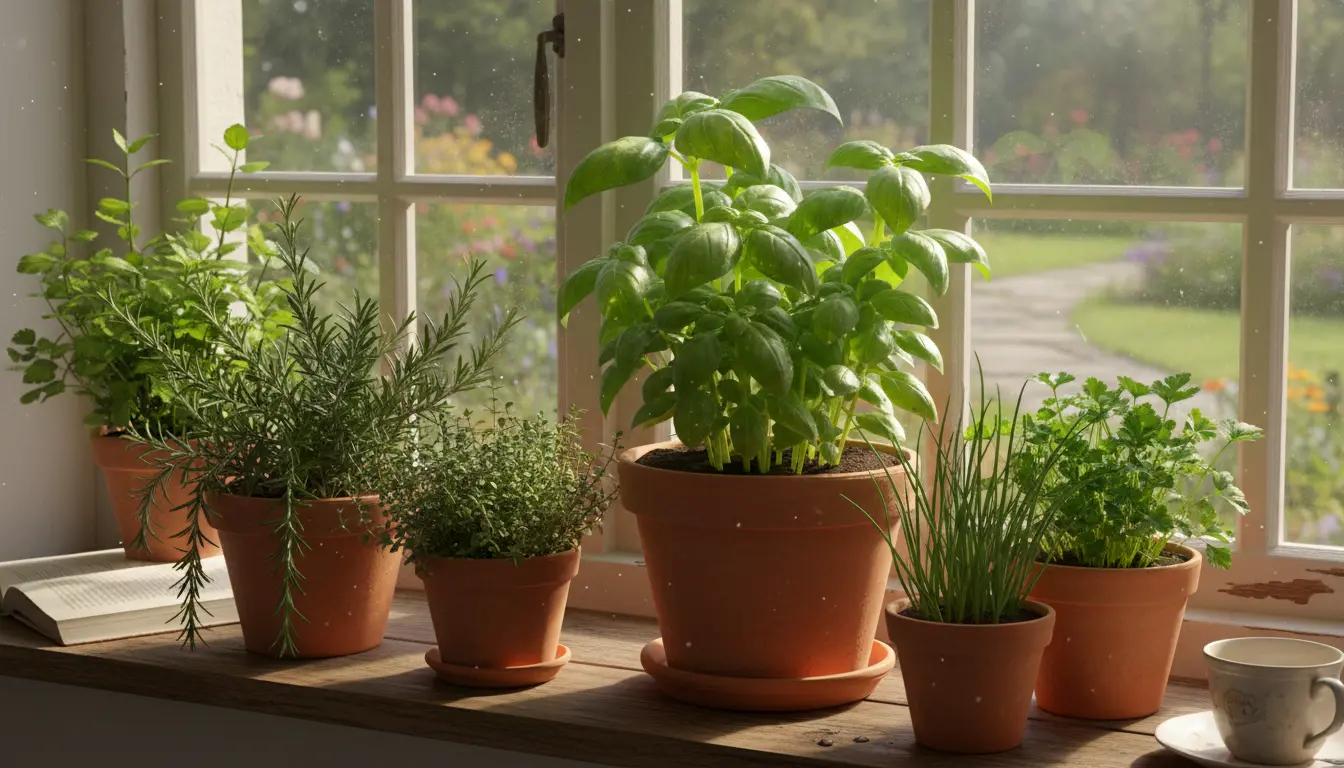
Growing an indoor herb garden is a practical way to add fresh flavors to meals and bring greenery into small spaces. This guide explains step-by-step how to plan, set up, and maintain an indoor herb garden so you get steady harvests year-round.
Why an Indoor Herb Garden Works
An indoor herb garden gives you quick access to fresh herbs and saves money over buying small bunches. Herbs are compact, forgiving, and fit well in containers on a windowsill or shelf.
Many common culinary herbs are well suited to indoor life because they need moderate light and limited space. With the right potting mix and light, most beginners see success within weeks.
Choose the Right Spot for Your Indoor Herb Garden
Light is the most important factor for an indoor herb garden. Place containers where they get 4–6 hours of direct sun or 8–12 hours of bright indirect light.
Common locations include south- or west-facing windows, a bright kitchen counter, or under grow lights if natural light is limited.
Light Options for an Indoor Herb Garden
- Natural sun: south- or west-facing windows are best.
- East-facing windows work for milder sun lovers like parsley.
- LED grow lights: use full-spectrum LEDs for 10–12 hours per day when natural light is insufficient.
Select Herbs That Thrive Indoors
Start with herbs that are known to do well inside. These herbs are forgiving and fast-growing for new growers.
- Basil — loves warmth and bright light.
- Parsley — tolerates moderate light and regular trimming.
- Chives — compact and hardy, good for beginners.
- Mint — grows vigorously; keep in its own pot to avoid spreading.
- Thyme, oregano, and rosemary — prefer drier soil and lots of light.
Containers, Soil, and Drainage
Choose containers with drainage holes to avoid soggy roots. Wide, shallow pots work well for many herbs because they encourage root spread.
Use a light, well-draining potting mix formulated for containers. Avoid garden soil, which compacts and drains poorly indoors.
Supplies Checklist for an Indoor Herb Garden
- Pots with drainage holes (4–8 inch pots for most herbs)
- Quality potting mix with perlite or vermiculite
- Tray or saucers to catch runoff
- Liquid fertilizer or slow-release pellets
- Pruning scissors and a watering can
Planting and Early Care
Start herbs from seeds or small nursery plants. Seeds are cheaper but take longer; seedlings give faster harvests.
When planting, fill the pot with potting mix, place the seedling at the same depth as in its original container, and firm the soil gently around the roots.
Watering Tips for an Indoor Herb Garden
- Water when the top 1 inch of soil is dry for most herbs.
- Use a saucer to catch extra water and empty it to prevent root rot.
- Mints and basil like more consistent moisture, while rosemary and thyme prefer drier conditions.
Feeding, Pruning, and Harvesting
Feed herbs with a balanced liquid fertilizer every 4–6 weeks or use a slow-release fertilizer at planting. Avoid over-fertilizing, which can reduce flavor intensity.
Prune herbs regularly to encourage bushy growth. Harvest leaves from the top down and avoid removing more than one-third of the plant at a time.
Pruning Guide for an Indoor Herb Garden
- Pinch back basil when it has 6–8 leaves to promote branching.
- Trim chives and parsley frequently to keep them productive.
- Remove flowers from basil and cilantro if you want more leaf growth.
Cutting herbs regularly actually improves flavor by preventing the plant from diverting energy into flowers and seeds. Frequent harvesting keeps many herbs producing for months.
Troubleshooting Common Problems
Yellowing leaves often signal overwatering or poor drainage. Move pots to a brighter spot and check that water is draining freely.
Pests like aphids or spider mites show up occasionally. Wipe leaves with a damp cloth, use insecticidal soap, or rinse plants under a gentle stream of water.
Small Real-World Case Study: Windowsill Basil Success
Case: A beginner wanted fresh basil year-round and used a south-facing kitchen windowsill. They planted a small basil seedling in a 6-inch pot with quality potting mix.
Result: Within six weeks the plant provided regular handfuls of leaves for pesto and salads. Weekly pruning and consistent light kept the plant compact and productive.
Maintenance Schedule for Your Indoor Herb Garden
- Daily: Check light exposure and rotate pots for even growth.
- Weekly: Water as needed, harvest small amounts, and inspect for pests.
- Monthly: Feed with liquid fertilizer or top-dress with compost.
Final Tips for a Successful Indoor Herb Garden
Start small with 3–6 different herbs and learn each plant’s needs before expanding. Rotate pots and note how light changes with the seasons.
With routine care, an indoor herb garden can supply fresh flavor and brighten your kitchen all year. Begin with easy herbs, observe, and adjust as you learn what works in your home.