
Why Start an Indoor Herb Garden
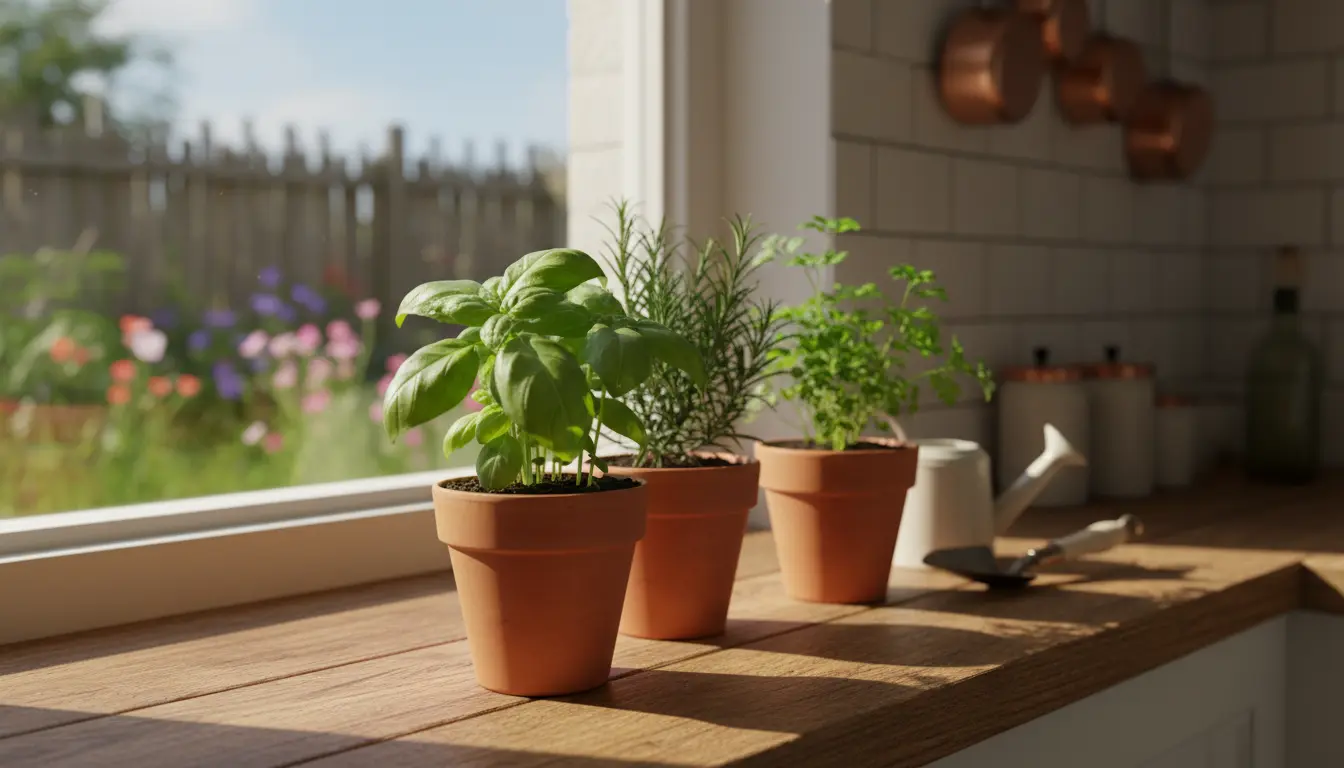
Growing herbs indoors is a practical way to have fresh flavor on hand year-round. An indoor herb garden saves money, reduces waste, and adds greenery to small spaces.
This guide shows clear, actionable steps for setting up and maintaining an indoor herb garden. The advice works for windowsills, balconies, and small kitchens.
How to Start an Indoor Herb Garden: Basic Plan
Begin with a simple plan: choose 2–5 herbs, pick containers, use quality potting mix, and place them where they get enough light. Keep tasks small and repeatable.
Follow the step-by-step list below to avoid common mistakes and build confidence quickly.
Step 1: Pick Easy Herbs for Beginners
Choose herbs that tolerate indoor conditions and respond well to pruning. Start simple to get quick wins.
- Basil — great for cooking, likes bright light and warmth.
- Mint — hardy and forgiving; keep it contained in its own pot.
- Parsley — prefers consistent moisture and moderate light.
- Rosemary — needs bright light and good drainage.
- Thyme — drought tolerant and compact.
Step 2: Choose Containers and Soil
Use containers with drainage holes to prevent root rot. Size matters: 4–8 inch pots suit most herbs.
Use a light potting mix made for containers; avoid heavy garden soil. A mix with perlite or vermiculite improves drainage.
Step 3: Light Requirements for an Indoor Herb Garden
Most herbs need 6–8 hours of bright light daily. A south or west-facing window is ideal. If natural light is limited, use a full-spectrum LED grow light for 10–12 hours.

Rotate pots weekly so all sides get even light and avoid legginess.
Step 4: Watering and Feeding
Water when the top 1 inch of soil feels dry. Overwatering is the most common cause of failure; ensure excess water drains away.
Fertilize lightly every 4–6 weeks during active growth with a balanced liquid fertilizer at half strength.
Step 5: Pruning and Harvesting
Harvest regularly to encourage bushy growth. Pinch or cut stems just above a leaf node. Remove flowers on culinary herbs to maintain leaf production.
Pruning prevents herbs from becoming leggy and improves flavor and yield.
Troubleshooting Common Problems in an Indoor Herb Garden
Pest issues and poor growth are common but manageable. Inspect plants weekly for signs of stress and act early.
- Yellow leaves: often from overwatering or poor drainage.
- Leggy growth: not enough light — move plants to a brighter spot.
- White dust or webbing: check for pests (spider mites or aphids) and rinse leaves or use insecticidal soap.
Temperature and Humidity Tips
Most herbs prefer 60–75°F (15–24°C). Avoid placing pots near drafts or heating vents.
Indoor air can be dry; increase humidity by grouping pots, using a tray of water and pebbles, or occasionally misting leaves.
Practical Care Schedule for Your Indoor Herb Garden
Keep a simple weekly routine to reduce effort and improve results. Consistency beats perfection.
- Daily: Check soil moisture and light exposure.
- Weekly: Rotate pots, harvest, and inspect for pests.
- Monthly: Feed with diluted fertilizer and trim as needed.
Many herbs like basil and mint can be propagated from cuttings. Rooting cuttings saves money and quickly expands your indoor herb garden.
Small Real-World Example: Apartment Windowsill Case Study
Case study: Anna, living in a two-room apartment, started with three 6-inch pots: basil, parsley, and mint. She placed them on a south-facing windowsill and used a basic potting mix.
Within six weeks she had regular harvests for salads and sauces. Simple changes — switching to a pot with drainage and moving mint to its own container — solved early issues.
Result: Anna reduced store-bought herb purchases and enjoyed fresher meals. Her time investment was 10–15 minutes per week.
Advanced Tips for a More Productive Indoor Herb Garden
Once you have basic success, try these techniques to boost yields and variety.
- Companion planting: group herbs with similar light and water needs together.
- Use a timer for grow lights to maintain consistent light cycles.
- Experiment with hydroponic trays or vertical planters for limited space.
Conclusion: Keep It Simple and Start Small
An indoor herb garden is an easy, rewarding project for cooks and plant lovers. Focus on a few resilient herbs, proper light, and consistent watering.
Start with what fits your space and routine, then expand as you learn. Small steps lead to a steady supply of fresh herbs and a greener home.