
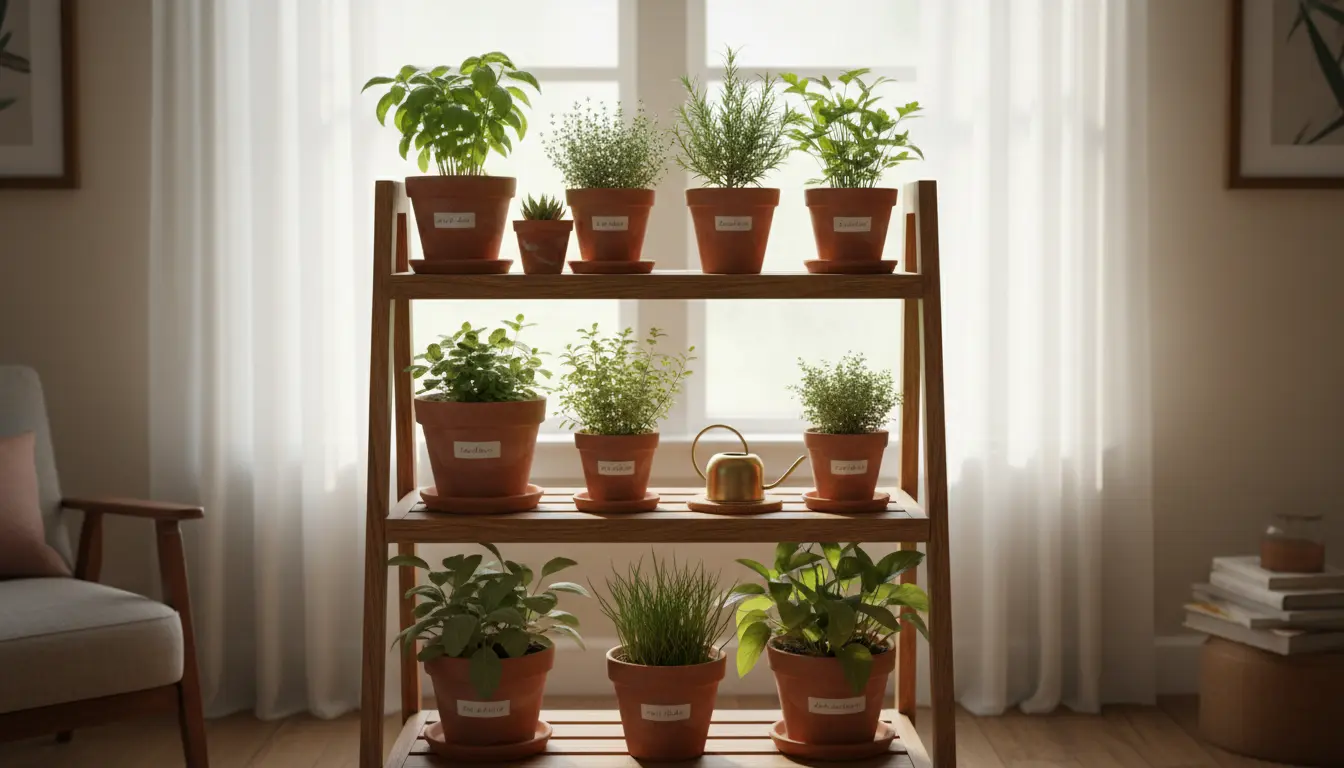
Benefits of an Indoor Herb Garden
An indoor herb garden brings fresh flavors to your kitchen and saves money on store-bought herbs. It also improves air quality and offers a satisfying, low-cost hobby.
Small indoor herb gardens fit apartments, kitchens, or windowsills and require minimal space and tools. This guide explains practical steps to start and maintain one steadily.
Choose the Right Herbs for an Indoor Herb Garden
Select herbs that adapt well to indoor conditions and frequent harvesting. Start with easy, resilient varieties to reduce early frustration.
- Basil — great for cooking, likes bright light and regular watering.
- Peppermint or spearmint — vigorous growers that tolerate less light.
- Thyme and oregano — drought-tolerant and compact habits.
- Parsley and chives — tolerate moderate light and are useful year-round.
Tips for Herb Selection
Pick 3–5 varieties to begin. Mixing fast growers (basil, mint) with slower herbs (thyme, rosemary) balances watering and light needs.
Consider culinary use: choose herbs you cook with often to ensure regular harvesting and healthy regrowth.
Light Requirements for an Indoor Herb Garden
Light is the most important factor for healthy herbs. Most herbs need 6–8 hours of bright light daily.
Place your herb garden on a south- or west-facing windowsill when possible. If natural light is limited, use a full-spectrum grow light for 10–12 hours daily.
Practical Lighting Options
- Window light: Best for bright climates and unobstructed windows.
- Clip-on LED grow lights: Affordable and adjustable for single pots.
- Strip grow lights: Good for multiple pots on shelves.
Soil, Containers, and Drainage
Use a well-draining potting mix formulated for herbs or vegetables. Avoid garden soil, which can compact and hold too much moisture indoors.
Choose pots with drainage holes. If decorative containers lack holes, place herbs in plastic nursery pots and set them inside the decorative pot.
Container Size and Material
Start with 4–6 inch pots for most herbs. Larger herbs like basil may benefit from 6–8 inch pots to allow root growth.
Terracotta pots dry faster and help prevent overwatering; plastic retains moisture longer. Match pot material to your watering habits.
Watering and Feeding Your Indoor Herb Garden
Watering frequency depends on pot size, soil, and indoor humidity. Check soil daily at first; water when the top inch feels dry.
Avoid sitting pots in water. Empty saucers after watering and lift pots to feel weight—this helps judge moisture more accurately.
Fertilizing Schedule
Feed herbs with a balanced liquid fertilizer at half strength every 4–6 weeks during active growth. Excess fertilizer can reduce flavor, so err on the lighter side.
Pest Management and Common Problems
Indoor pests are less common but can include aphids, spider mites, and fungus gnats. Early detection prevents spread.
- Inspect new plants before bringing them indoors.
- Use insecticidal soap or neem oil for minor infestations.
- Reduce overwatering to prevent root rot and gnats.
Addressing Leggy Growth
Leggy herbs signal insufficient light. Move plants closer to a window or add supplemental grow lighting and pinch back long stems to encourage bushiness.
Growing herbs indoors can reduce food waste because you harvest only what you need. Fresh-cut herbs also retain more flavor and nutrients than dried store-bought varieties.
Harvesting and Pruning an Indoor Herb Garden
Regular harvesting encourages fuller plants. Snip stems above a pair of leaves and never remove more than one-third of a plant at once.
For herbs like basil, pinch flower buds to keep leaves tasting fresh and to prolong production.
Small Case Study: A Kitchen Windowsill Herb Garden
Maria, an apartment cook, started a three-pot herb garden with basil, chives, and thyme on a south-facing windowsill. She used three 6-inch terracotta pots with a store-bought potting mix and a clip-on LED for cloudy days.
Within six weeks she had steady harvests for cooking and cut grocery herb expenses by about $15 per month. Pruning basil twice weekly kept the plant bushy and productive.
Quick Checklist to Start Your Indoor Herb Garden
- Choose 3–5 easy herbs (basil, chives, thyme).
- Select pots with drainage and a light potting mix.
- Place by a bright window or install a grow light.
- Water when the top inch of soil is dry; avoid overwatering.
- Fertilize lightly every 4–6 weeks during growth.
- Harvest regularly and inspect plants for pests.
Final Tips for a Successful Indoor Herb Garden
Start small and adjust one variable at a time — light, water, or pot size. Keeping a simple journal of watering and fertilizing helps identify what works best for your space.
With basic attention to light, drainage, and regular harvesting, an indoor herb garden becomes a reliable source of fresh flavors and a satisfying green project for any home.