
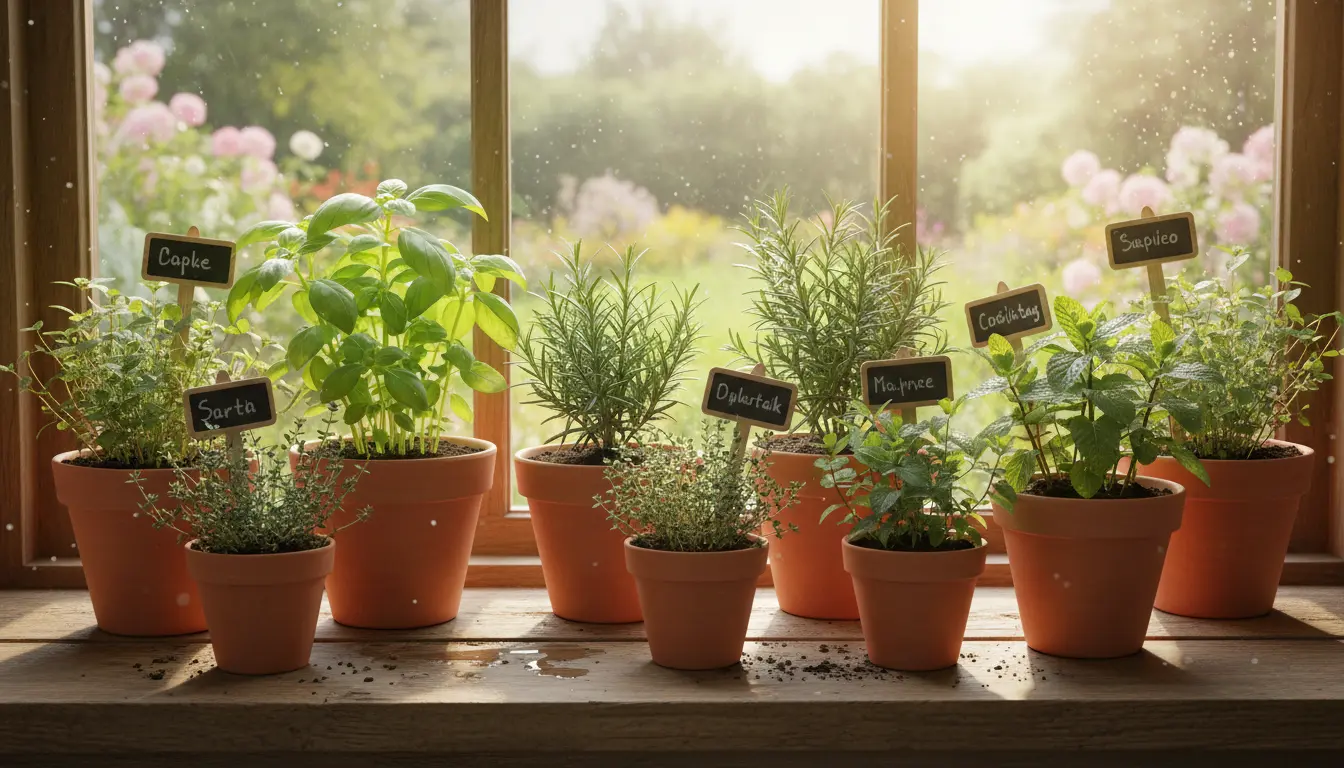
Why Start an Indoor Herb Garden
Growing an indoor herb garden saves money, adds fresh flavor to meals, and improves indoor air quality. Herbs are forgiving, take little space, and offer quick rewards for new growers.
This guide walks through practical steps to set up and maintain a thriving indoor herb garden. Follow clear actions for lighting, soil, containers, watering, and harvesting.
Essential Supplies for an Indoor Herb Garden
Before you begin, gather a few basic items. Using the right supplies makes the process simpler and improves success.
- Containers with drainage holes (or add a layer of gravel)
- High-quality potting mix for herbs or vegetables
- Seed packets or starter plants for common herbs
- Drain trays, a watering can with a narrow spout, and basic pruning shears
- Fertilizer: balanced liquid feed or slow-release granules
Choose the Best Herbs for an Indoor Herb Garden
Start with herbs that suit indoor conditions and regular use. Some herbs adapt better to lower light or small pots.
- Basil — bright light, fast growing, great for kitchen use
- Parsley — tolerates moderate light and steady moisture
- Chives — compact, needs moderate light, easy to cut
- Mint — vigorous, prefer a separate pot to avoid spreading
- Thyme and Rosemary — like bright light and drier soil
Lighting Needs for an Indoor Herb Garden
Light is the most important factor for healthy herbs. Place plants near a south- or west-facing window when possible.
If natural light is limited, use an LED grow light set on a timer for 10–14 hours per day. Position the light 6–12 inches above plants depending on the bulb and power.
Signs of Insufficient Light
Stretching stems, pale leaves, and slow growth indicate low light. Move the herbs closer to the window or add supplemental lighting to correct this.
Soil and Container Tips for an Indoor Herb Garden
Herbs prefer well-draining soil. Use a potting mix formulated for containers instead of garden soil, which compacts and holds too much moisture.
Choose pots with drainage holes. If you must use decorative containers without holes, set the herb in a plastic nursery pot inside it and remove for watering drains.
Mix Ideas and Soil Additives
- Standard potting mix + perlite for extra drainage
- Mix in a small amount of compost for nutrients
- Use a light, fast-draining mix for Mediterranean herbs like rosemary and thyme
Watering and Feeding Your Indoor Herb Garden
Watering is more about feel than a fixed schedule. Check soil moisture by inserting a finger into the top inch of soil; water when the top inch feels dry for most herbs.
Overwatering is a common mistake—roots need oxygen. Ensure excess water can drain away and avoid letting pots sit in standing water.
- Feed with a balanced liquid fertilizer every 3–4 weeks during the growing season.
- Use half-strength fertilizer for seedlings and young plants.
Pruning and Harvesting from an Indoor Herb Garden
Regular harvesting encourages bushier growth and prevents legginess. Pinch or cut stems above a leaf node to stimulate new growth.
For herbs like basil and mint, harvest frequently but never take more than one-third of the plant at once. With rosemary and thyme, trim selectively to shape and encourage fresh shoots.
Common Problems and Solutions for an Indoor Herb Garden
Watch for pests such as aphids, spider mites, and fungus gnats. Use a gentle spray of water or insecticidal soap when needed.
Yellowing leaves often indicate overwatering or poor drainage. Adjust your watering routine and check container drainage to resolve this issue.
Simple Troubleshooting Checklist
- Leggy plants: increase light or rotate location
- Slow growth: check fertilizer and root space
- Pests: inspect undersides of leaves and treat early
Many herbs such as basil, mint, and chives release fragrant compounds that can improve indoor scent and may help deter some common pests.
Real-World Example: Apartment Windowsill Herb Garden
Case study: Sara, an apartment renter, started three pots of basil, chives, and mint on a south-facing windowsill. She used a well-draining potting mix and an LED clip light for cloudy days.
Within six weeks, she had a steady supply of fresh basil for pesto and tomatoes. Regular harvesting kept the plants compact, and a monthly half-strength fertilizer maintained growth. Her initial cost was under $40, and she saved on grocery herbs within two months.
Quick Start Checklist for Your Indoor Herb Garden
- Choose 3–5 easy herbs that match your light conditions.
- Buy containers with drainage and a quality potting mix.
- Place near bright window or install LED grow light.
- Water when the top inch of soil is dry; avoid standing water.
- Harvest regularly and feed monthly during the growing season.
Final Tips for a Successful Indoor Herb Garden
Start small and expand as you gain confidence. Keep a simple journal noting watering, light, and fertilizer routine to troubleshoot problems quickly.
With minimal space and care, an indoor herb garden delivers fresh flavors year-round and connects you to simple, rewarding gardening practices.