
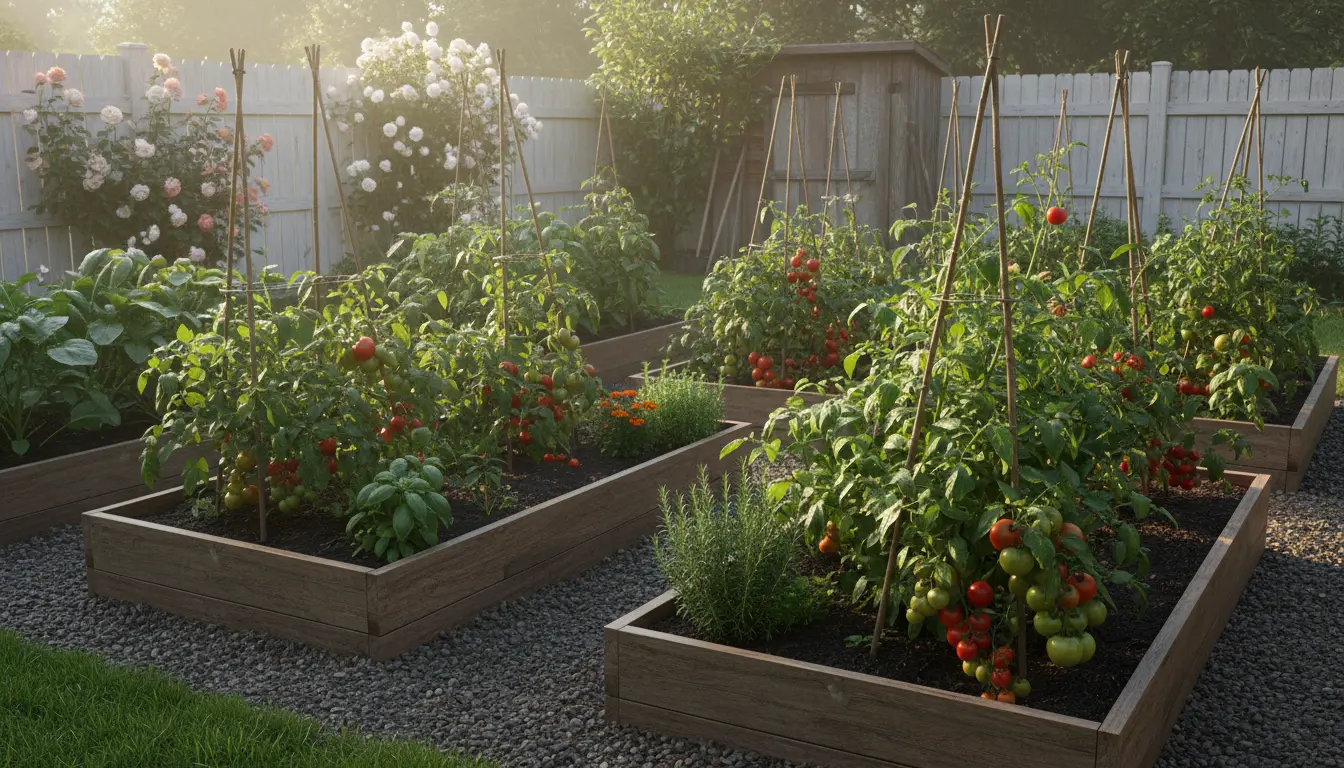
Why Start a Vegetable Garden
Starting a vegetable garden gives you fresh produce, exercise, and a chance to control what goes into your food. It can fit any space, from a balcony container to a full backyard plot.
This guide explains how to start a vegetable garden step by step with practical tips you can follow regardless of experience level.
Planning to Start a Vegetable Garden
Plan before you dig. Choose a location that gets at least six hours of sunlight a day for most vegetables.
Decide on size based on time and space. Beginners often succeed with a few raised beds or 4–6 containers.
Choosing What to Grow
Select vegetables you and your family will eat and that suit your climate. Fast-growing crops like lettuce, radishes, and beans give quick rewards.

List easy starters: tomatoes, peppers, lettuce, green beans, and herbs such as basil and parsley.
Design and Layout
Sketch a simple layout with beds or containers. Allow room for walking and accessing plants easily.
Consider companion planting and grouping plants with similar water and sunlight needs.
Preparing Soil to Start a Vegetable Garden
Good soil is the foundation of a productive garden. Test soil pH with a simple kit or send a sample to a local cooperative extension.
Most vegetables prefer a pH between 6.0 and 7.0. Amend soil with compost to improve structure and fertility.
Soil Preparation Steps
- Clear the area of weeds and grass.
- Loosen soil to 8–12 inches for most vegetables.
- Work in 2–3 inches of compost or aged manure.
- Adjust pH if needed using lime or sulfur according to test results.
Planting and Spacing When You Start a Vegetable Garden
Follow seed packet or plant tag instructions for depth and spacing. Crowded plants compete for light and nutrients.
Use succession planting to get continuous harvests—stagger sowings of quick crops every 2–3 weeks.
Starter Tips
- Start seeds indoors for long-season crops like tomatoes if your frost dates require it.
- Harden off seedlings for a week before transplanting outside.
- Mulch around plants to conserve moisture and suppress weeds.
Watering and Fertilizing a New Vegetable Garden
Consistent moisture is crucial for healthy plants. Water deeply and less frequently to encourage deep roots rather than daily shallow watering.
Apply a balanced organic fertilizer at planting and side-dress with compost or fertilizer during the season as crops demand.
Practical Watering Guidelines
- Water early in the morning to reduce disease risk.
- Check soil moisture by feeling 2–3 inches below the surface.
- Drip irrigation or soaker hoses save water and target roots efficiently.
Pest Control and Maintenance for Your Vegetable Garden
Monitor plants regularly for pests and diseases. Small problems caught early are easier to manage.
Use integrated pest management: physical barriers, hand-picking, beneficial insects, and organic treatments as needed.
Routine Maintenance Tasks
- Weed weekly to reduce competition for nutrients.
- Prune and stake tall plants like tomatoes to improve air flow.
- Rotate crops each year to reduce pest and disease buildup.
Planting marigolds near vegetables can reduce some soil pests and attract beneficial insects. Small companion plants yield big benefits.
Harvesting and Next Steps After You Start a Vegetable Garden
Harvest when crops reach peak ripeness for best flavor and nutritional value. Regular picking often encourages more production.
At season end, clear spent plants and add them to compost. Plan crop rotation and soil improvement for the next season.
Short Case Study: A Small Suburban Garden
Jane, a first-time gardener in a small suburban yard, used two 4×4 raised beds and followed basic steps to start a vegetable garden. She selected tomatoes, lettuce, and bush beans for their ease and quick results.
Within three months she harvested repeated lettuce cuttings, a steady supply of beans, and ripe tomatoes by mid-summer. Using compost and drip irrigation reduced watering time and boosted yields.
Quick Checklist to Start a Vegetable Garden
- Choose a sunny spot and size your garden to fit available time.
- Test and amend soil; add compost for fertility.
- Select easy crops and follow spacing and planting dates.
- Water deeply, mulch, and monitor for pests weekly.
- Harvest regularly and rotate crops next season.
Starting a vegetable garden is a practical project that pays off with fresh food and learning. Begin small, keep tasks manageable, and adjust your plan as you gain experience.