
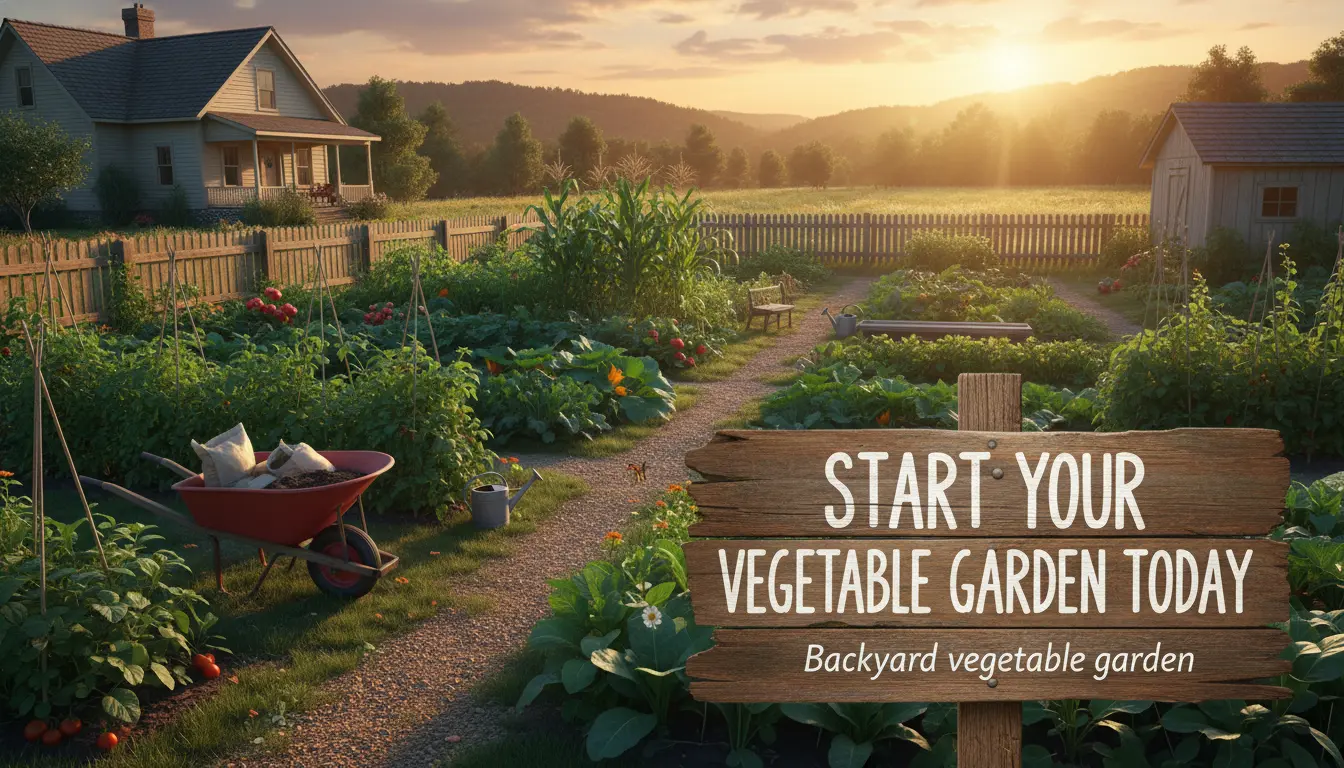
Why Start a Vegetable Garden
Starting a vegetable garden is a practical way to grow fresh food, save money, and learn a new skill. It fits small yards, balconies, and community plots.
This guide gives clear steps to start a vegetable garden that produces useful yields without overwhelming new gardeners. Follow the sequence and adapt to your climate.
Choose a Site to Start a Vegetable Garden
Selecting the right site is the first step when you start a vegetable garden. Look for a spot with good sun, easy access, and space for your chosen crops.
Key site criteria include:
- 6–8 hours of direct sunlight for most vegetables.
- Level area with good drainage to avoid waterlogging.
- Close to a water source to make watering easy.
Examples of Good Sites
Raised beds in the backyard, large containers on a sunny patio, and a sunny strip near a driveway can all work well. Even small balconies can host tomatoes, peppers, and herbs.
Prepare Soil and Beds
Healthy soil is the foundation of a productive vegetable garden. Test soil texture and fertility, then improve it with organic matter.
Basic soil steps when you start a vegetable garden:
- Remove grass and weeds, or use a raised bed or container.
- Work in 2–4 inches of compost to improve structure and nutrients.
- Ensure a pH near 6.0–7.0 for most vegetables; adjust with lime or sulfur if needed.
Raised Beds vs In-Ground
Raised beds warm faster, drain better, and are easier to control for beginners. In-ground beds can be less work initially but may need more soil amendment.
Plan What to Plant
Choose vegetables that match your climate, space, and taste preferences. Start with reliable, easy varieties.
Good beginner choices include:
- Tomatoes (determinant types for small spaces)
- Lettuce and salad greens
- Radishes and carrots
- Peppers and bush beans
- Herbs: basil, parsley, chives
Crop Rotation and Companion Planting
Plan to rotate families (e.g., nightshades, brassicas, legumes) each season to reduce pests and nutrient depletion. Companion planting can improve pollination and deter pests.
Planting Basics
Follow seed packet or plant tag instructions for depth and spacing. Proper spacing reduces disease and improves airflow.
Planting tips when you start a vegetable garden:
- Sow seeds at recommended depth and keep soil moist until germination.
- Transplant seedlings on a cloudy day or late afternoon to reduce transplant shock.
- Harden off seedlings for 7–10 days outdoors before planting in the garden.
Watering and Mulching
Consistent moisture is critical for steady growth and good yields. Deep, infrequent watering encourages strong roots.
Watering guidelines:
- Water in the morning to reduce evaporation and leaf disease.
- Aim for 1–2 inches of water per week, adjusted for rainfall.
- Use drip irrigation or soaker hoses to deliver water to the soil, not the leaves.
Mulch with straw, shredded leaves, or wood chips to retain moisture and suppress weeds.
Maintenance: Weeds, Pests, and Fertility
Regular maintenance keeps problems small and manageable. Spend short sessions weekly checking the garden.
Practical maintenance tasks include:
- Pulling young weeds when small
- Inspecting plants for pests and removing affected leaves
- Feeding with compost tea, compost, or balanced organic fertilizer if growth slows
Common Pest Control Methods
Start with non-chemical options: hand-picking, row covers, and encouraging beneficial insects. Use targeted organic sprays only if needed.
Planting basil next to tomatoes can improve tomato flavor and repel certain pests. Companion planting pairs like beans and corn benefit each other by fixing nitrogen and providing structure.
Harvesting and Ongoing Care
Harvest vegetables at peak ripeness for best flavor and to encourage more production. Leafy greens can be cut multiple times; fruiting crops often stop after a heavy harvest.
Keep records of planting dates, varieties, and harvests to improve next season’s decisions.
Storage and Use
Store root crops in cool, dark places and use tender greens quickly. Preserve surplus by freezing, pickling, or drying.
Small Case Study: A First-Year Backyard Bed
Maria started a 4×8 raised bed in spring with tomatoes, peppers, lettuce, and bush beans. She amended soil with 3 inches of compost and planted in early May.
By mid-July she harvested lettuces weekly and enjoyed tomatoes from August. Mulching reduced watering by half, and a single infestation of aphids was managed with insecticidal soap. Her bed produced several meals a week and cost less than buying organic produce for the season.
Quick Checklist to Start a Vegetable Garden
- Choose a sunny site near water.
- Decide on raised beds or containers if soil is poor.
- Improve soil with compost and test pH if unsure.
- Pick easy crops for your zone and start seeds or buy seedlings.
- Water consistently, mulch, and monitor for pests.
Starting a vegetable garden is a step-by-step process that rewards planning and simple, regular care. Use this guide as a checklist, adapt to your local climate, and learn by doing. Over a season you will refine your choices and increase yields.