
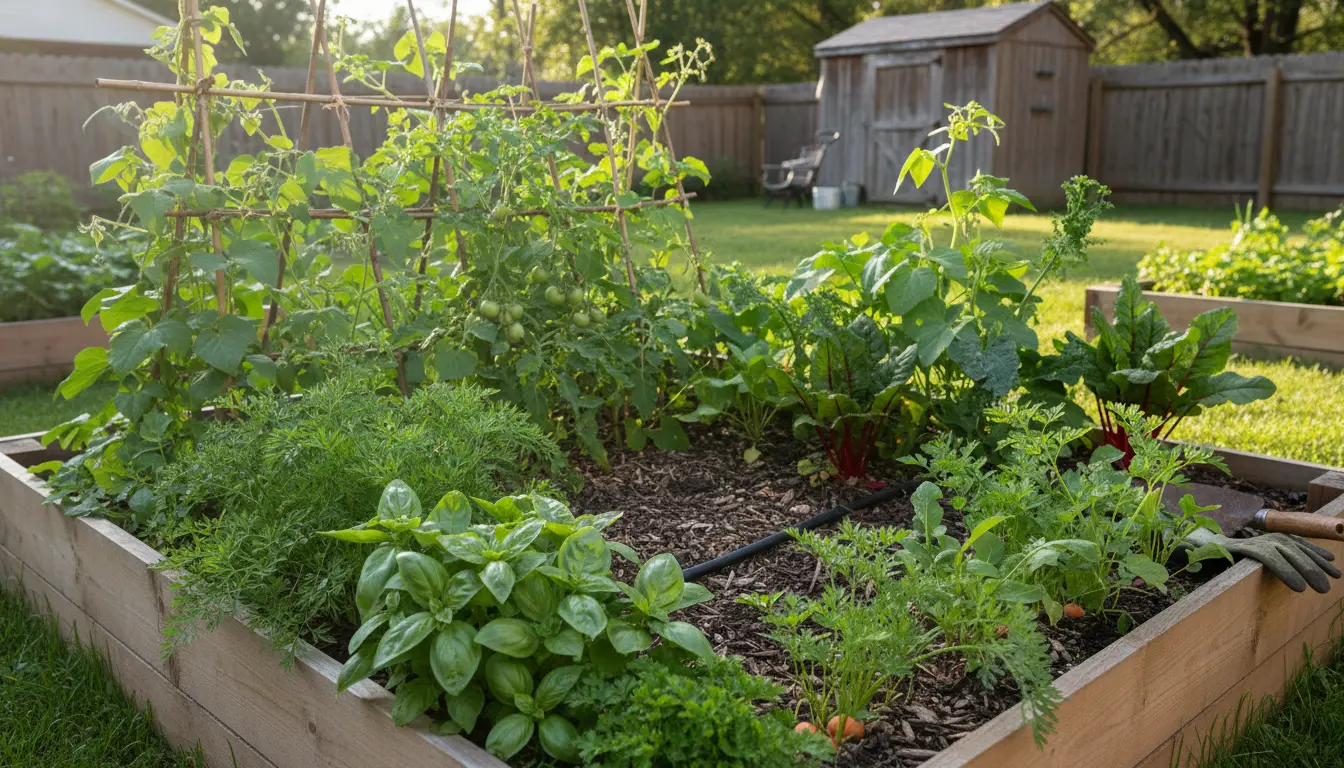
Starting a vegetable garden is a practical way to grow fresh food, save money, and learn seasonal care. This guide breaks the process into clear, actionable steps you can follow whether you have a backyard, patio, or balcony.
How to Start a Vegetable Garden: Plan First
Good results begin with a simple plan. Decide what you want to grow based on space, climate, and how much time you can commit.
Make a short list of vegetables you like to eat and store the seed packets or plant tags to check spacing and days to maturity.
Choose crops for beginners
- Lettuce and other salad greens — fast and forgiving
- Radishes — very quick harvests (3–4 weeks)
- Tomatoes — productive in containers or raised beds
- Zucchini — high yield with minimal care
- Herbs (basil, parsley) — useful and low maintenance
Choose Where to Start Your Vegetable Garden
Location matters. Most vegetables need 6–8 hours of direct sun per day. Observe sun patterns for a few days before deciding the spot.
Consider access to water, soil quality, and convenience for daily checks. If ground space is limited, use containers or raised beds.
Site checklist
- Sun exposure: 6–8 hours ideal
- Nearby water source for easy watering
- Good drainage to avoid standing water
- Protection from strong winds or falling debris
Prepare Soil and Containers
Healthy soil gives plants a strong start. If using garden beds, loosen soil to a depth of 8–12 inches and remove large stones or roots.
Mix in compost or well-rotted organic matter to improve structure and nutrients. For containers, use a quality potting mix with good drainage.
Soil mix basics
- Garden bed: topsoil + compost (2:1) and a balanced fertilizer if needed
- Raised bed: high-quality garden mix with compost
- Containers: light potting mix with added compost or slow-release fertilizer
Planting: Seeds vs. Transplants
Choose seeds to save money and access more varieties. Use transplants (young plants) for a faster start, especially for tomatoes, peppers, and eggplants.
Follow spacing and depth instructions on seed packets or plant labels. Crowding plants reduces yield and invites disease.
Basic planting schedule
- Cool-season crops (lettuce, peas): plant in early spring or fall
- Warm-season crops (tomatoes, peppers): plant after last frost
- Stagger plantings of quick crops like radishes and lettuce every 2–3 weeks for continuous harvest
Watering and Mulching
Consistent moisture is key. Water deeply at the soil level to encourage strong roots. Avoid frequent shallow watering.
Mulch around plants to retain moisture, suppress weeds, and stabilize soil temperature. Use straw, shredded leaves, or wood chips.
Simple watering tips
- Water in the morning to reduce disease risk
- Use a soaker hose or drip irrigation for efficiency
- Check soil moisture with a finger — if the top 1–2 inches are dry, water
Routine Care and Pest Management
Spend 10–15 minutes most days checking plants for pests, wilting, or nutrient issues. Early detection prevents bigger problems.
Use physical controls first: hand-pick pests, use row covers, or plant companion species like marigolds. Apply organic insecticidal soap or neem oil if needed.
Common problems and quick fixes
- Yellowing leaves: check watering and soil nutrients
- Slugs and snails: use beer traps or hand removal at night
- Powdery mildew: improve air flow and remove affected leaves
Harvesting and Seasonal Care
Harvest vegetables when they reach recommended size for the best flavor. Regular picking encourages more production in many crops like beans and summer squash.
Prepare for seasonal transitions: add more mulch in winter or plan fall plantings to extend the harvest season.
Harvest tips
- Pick tomatoes when fully colored and slightly soft
- Harvest lettuce before it bolts for best taste
- Use sharp scissors or pruners to avoid damaging plants
Real-World Example: Small Balcony Garden Case Study
Case: A renter converted a 6-foot balcony into a productive garden using three 12-inch containers and two 2×1 foot planters. They grew cherry tomatoes, basil, leaf lettuce, and radishes.
Outcome: Within 12 weeks the renter harvested 18 pints of cherry tomatoes and weekly salad greens. Water use averaged 2–3 liters per day during hot weeks, and simple staking kept tomato plants tidy.
Final Checklist to Start a Vegetable Garden
- Pick a sunny spot and map available space
- Prepare soil or choose good container mix
- Decide seeds or transplants and follow planting times
- Set up watering plan and mulch to conserve moisture
- Monitor pests and harvest regularly
Starting a vegetable garden is a step-by-step process that rewards consistency more than perfection. Begin with a few easy crops, learn from each season, and scale up as you gain confidence.