
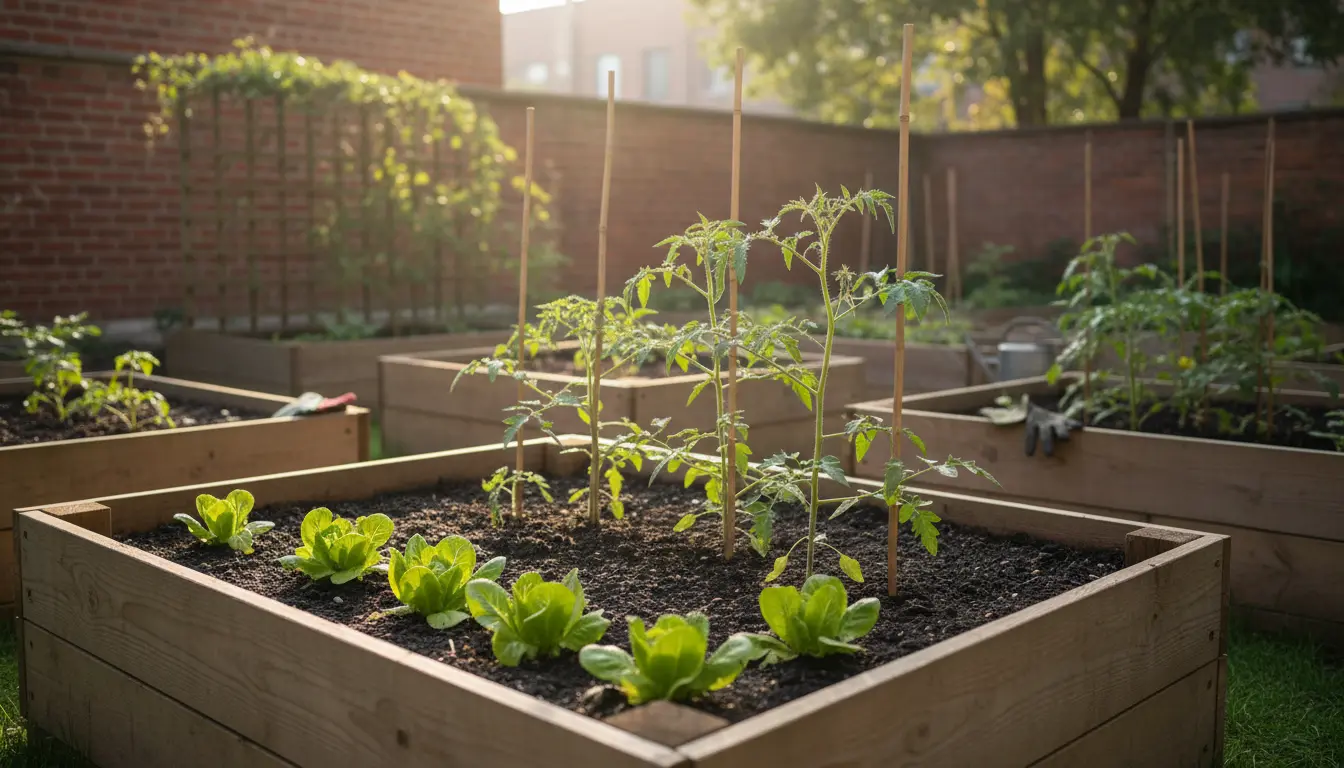
Starting a vegetable garden is achievable with simple planning and a few basic skills. This guide breaks the process down into clear steps so you can begin growing food quickly and reliably.
How to Start a Vegetable Garden: Choose Site and Size
Select a site with at least 6 hours of direct sun per day for most vegetables. If sun is limited, focus on leafy greens and herbs that tolerate partial shade.
Decide on size based on time and space. A 4 x 8 foot raised bed suits a small family and is easy to manage. Containers work well for balconies and patios.
Site considerations
- Sun exposure: 6–8 hours ideal for tomatoes, peppers, and beans.
- Drainage: Avoid low spots that collect water.
- Access: Place near a water source and where you pass regularly.
How to Start a Vegetable Garden: Plan What to Grow
Choose vegetables that match your climate, season, and tastes. Beginners should start with easy crops like lettuce, radishes, beans, and cherry tomatoes.
Consider space and succession planting to keep beds productive. Plant fast-growing crops in gaps left by slower growers.
Suggested beginner crop list
- Lettuce and salad greens — quick harvests, tolerate shade.
- Radishes — ready in 3–4 weeks.
- Beans — high yield with minimal maintenance.
- Cherry tomatoes — compact varieties for containers.
- Herbs (basil, parsley) — useful and low maintenance.
How to Start a Vegetable Garden: Prepare Soil and Tools
Good soil is the most important factor. Aim for loose, crumbly soil rich in organic matter and with neutral to slightly acidic pH (6.0–7.0).
If using raised beds or containers, use a mix of compost and quality topsoil. For in-ground beds, work in 2–4 inches of compost and test pH if possible.
Essential tools
- Hand trowel and garden fork for small beds.
- Rake and hoe for bed preparation and weeding.
- Watering can or hose with a gentle nozzle for seedlings.
How to Start a Vegetable Garden: Planting and Spacing
Follow seed packet instructions or plant tag spacing to avoid crowding. Proper spacing reduces disease and improves yield.
Use these simple rules: thin seedlings to proper spacing, plant deep for root crops, and stake vining plants early.
Basic planting examples
- Lettuce: sow every 2–3 weeks for continuous harvest.
- Radishes: 1 inch deep, 1 inch apart; thin to 2 inches.
- Tomatoes: plant deep, bury lower stems to encourage roots.
How to Start a Vegetable Garden: Watering and Maintenance
Water consistently, aiming for deep, infrequent watering rather than light daily watering. This encourages deep roots and drought resilience.
Mulch around plants to conserve moisture and suppress weeds. Use organic mulch like straw, shredded leaves, or compost.
Pest and disease basics
- Inspect plants weekly for pests and remove by hand when possible.
- Rotate crops each season to reduce soil-borne disease buildup.
- Use row covers for seedlings to protect from insects and birds.
Deep watering once or twice a week encourages stronger roots than daily light sprinkling. A 1-inch weekly water is a good target for most gardens.
How to Start a Vegetable Garden: Seasonal Care and Harvest
Keep a simple calendar: planting dates, fertilizing, and harvest windows. Note first and last frost dates for your area to schedule crops correctly.
Harvest regularly to encourage more production. Many plants produce more if you pick frequently, such as beans and lettuce.
Succession planting example
- Plant early spring: peas and radishes.
- After spring harvest: follow with beans and summer squash.
- Late season: sow fall lettuce and spinach for cooler weather.
Small Case Study: Neighborhood Raised Bed Success
Sarah, a beginner in a suburban yard, built a single 4 x 8 foot raised bed in spring. She filled it with a 50/50 mix of compost and topsoil and planted lettuce, radishes, two determinate tomato plants, and basil.
By midsummer she harvested weekly salads and three dozen cherry tomatoes. Regular watering, mulching, and pruning kept plants healthy. The bed required about 2–3 hours per week for maintenance.
Lessons learned: start small, choose compact varieties, and rotate crops next season to improve soil health.
How to Start a Vegetable Garden: Final Checklist
- Choose a sunny site and decide on bed type (in-ground, raised, container).
- Build soil with compost and test pH when possible.
- Select easy crops suited to your season and space.
- Water deeply, mulch, and monitor pests weekly.
- Keep a planting calendar and start succession crops for continuous yield.
Starting a vegetable garden is a process of small, consistent actions. With planning, simple tools, and a few reliable crops, most beginners can enjoy fresh produce in their first season.