
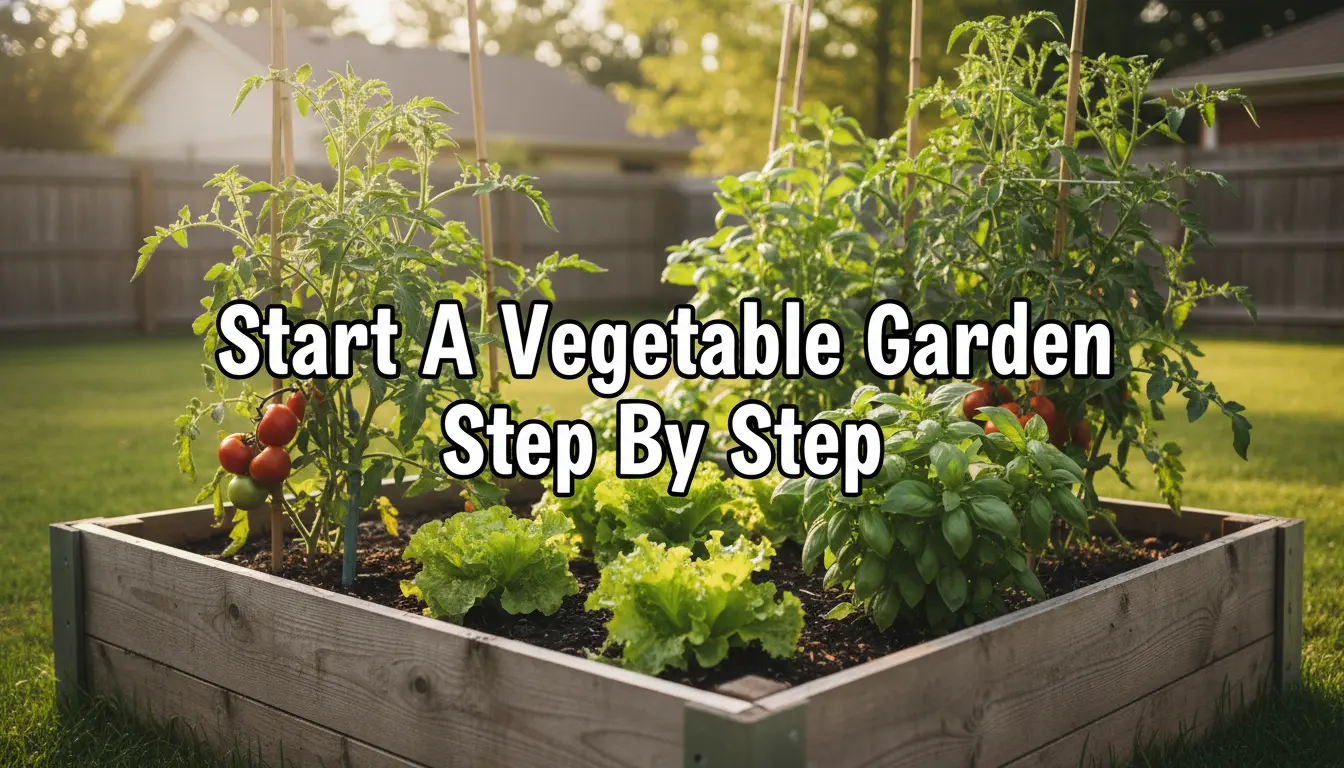
How to Start a Vegetable Garden: First Steps
Starting a vegetable garden is manageable if you break it into clear steps. This guide shows practical actions you can take to plan, plant, and maintain a productive garden.
Choose a Good Location to Start a Vegetable Garden
Select a spot that gets at least 6 hours of sunlight a day. Full sun is ideal for most vegetables, though some leafy greens tolerate partial shade.
Also check for easy access to water and reasonable soil drainage. A location near your kitchen encourages regular care and harvesting.
Decide Garden Size and Type
Start small to avoid overwhelm: a single 4×8 foot bed or a few large containers is enough for beginners. Small beds are faster to prepare and maintain.
Consider raised beds if soil quality or drainage is poor. Containers work well for tomatoes, peppers, and herbs.
How to Start a Vegetable Garden: Prepare the Soil
Healthy soil is the foundation of a productive garden. Test or assess soil texture and adjust organic matter accordingly.
Work in compost and aged manure to improve fertility and structure. Aim for a loose, crumbly texture that holds moisture without becoming waterlogged.
Soil Steps
- Remove weeds and large stones from the planting area.
- Mix 2–3 inches of compost into the top 6–8 inches of soil.
- For heavy clay, add coarse sand and organic matter to improve drainage.
How to Start a Vegetable Garden: Choose Plants for Your Climate
Pick vegetables suited to your USDA zone or local climate. Beginners should select easy, forgiving crops.
Good starter vegetables include lettuce, radishes, bush beans, cherry tomatoes, zucchini, and herbs like basil.
Planting Schedule
Follow local frost dates and use a planting calendar to know when to start seeds indoors or sow directly outside. Many seed packets list days to maturity and planting depth.
How to Start a Vegetable Garden: Planting and Layout
Plan rows or beds with space for growth and access paths. Avoid compacting soil where roots will grow.
Use companion planting and succession planting to maximize yield. For example, sow quick-growing radishes between slower-growing seedlings.
Basic Planting Tips
- Follow spacing recommendations on seed packets or plant labels.
- Bury transplants up to the first true leaves for strong root development.
- Water new plantings thoroughly to settle soil around roots.
How to Start a Vegetable Garden: Watering and Ongoing Care
Consistent watering is crucial. Aim for deep, infrequent watering that moistens the root zone rather than shallow daily sprays.
Mulch with straw, wood chips, or shredded leaves to retain moisture and suppress weeds. Replenish mulch each season as needed.
Routine Tasks
- Check plants every 2–3 days for pests, disease, and moisture needs.
- Thin crowded seedlings to recommended spacing to avoid competition.
- Feed with a balanced organic fertilizer or compost tea during active growth.
How to Start a Vegetable Garden: Harvesting and Rotation
Harvest regularly to encourage more production. Pick beans and peas when tender, and harvest tomatoes when fully colored for best flavor.
Practice crop rotation each year to reduce the buildup of soil-borne diseases and nutrient depletion.
Simple Rotation Plan
- Group crops into families: brassicas, legumes, nightshades, and root crops.
- Rotate families to different beds each year when possible.
- Use cover crops like clover or vetch in off-seasons to restore soil nitrogen and structure.
Small Case Study: One-Season Starter Bed
Maria, a first-time gardener in zone 7, converted a 4×8 raised bed from lawn in early spring. She added 3 inches of compost to the existing soil and planted a mix of lettuce, radish, bush beans, cherry tomatoes, and basil.
She mulched with straw, watered deeply twice a week, and harvested lettuce within four weeks. By midsummer she had a steady supply of tomatoes and beans. Rotating the bed to beans and cover crop in autumn improved soil for next year.
Common Problems and Quick Fixes
- Yellow leaves: check watering and nutrient levels; add compost and adjust irrigation.
- Poor germination: test seed viability and plant depth; ensure soil warmth for seeds that need it.
- Pest outbreaks: hand-pick large pests, use row covers, or introduce beneficial insects.
Final Checklist to Start a Vegetable Garden
- Pick a sunny, accessible site and decide on bed size.
- Improve soil with compost and check drainage.
- Choose easy crops suited to your climate.
- Plant with proper spacing and water deeply.
- Mulch, monitor regularly, and harvest promptly.
With a small, well-prepared plot and consistent care, most beginners can harvest meaningful yields in their first season. Start simple, learn from each season, and expand as your confidence grows.