
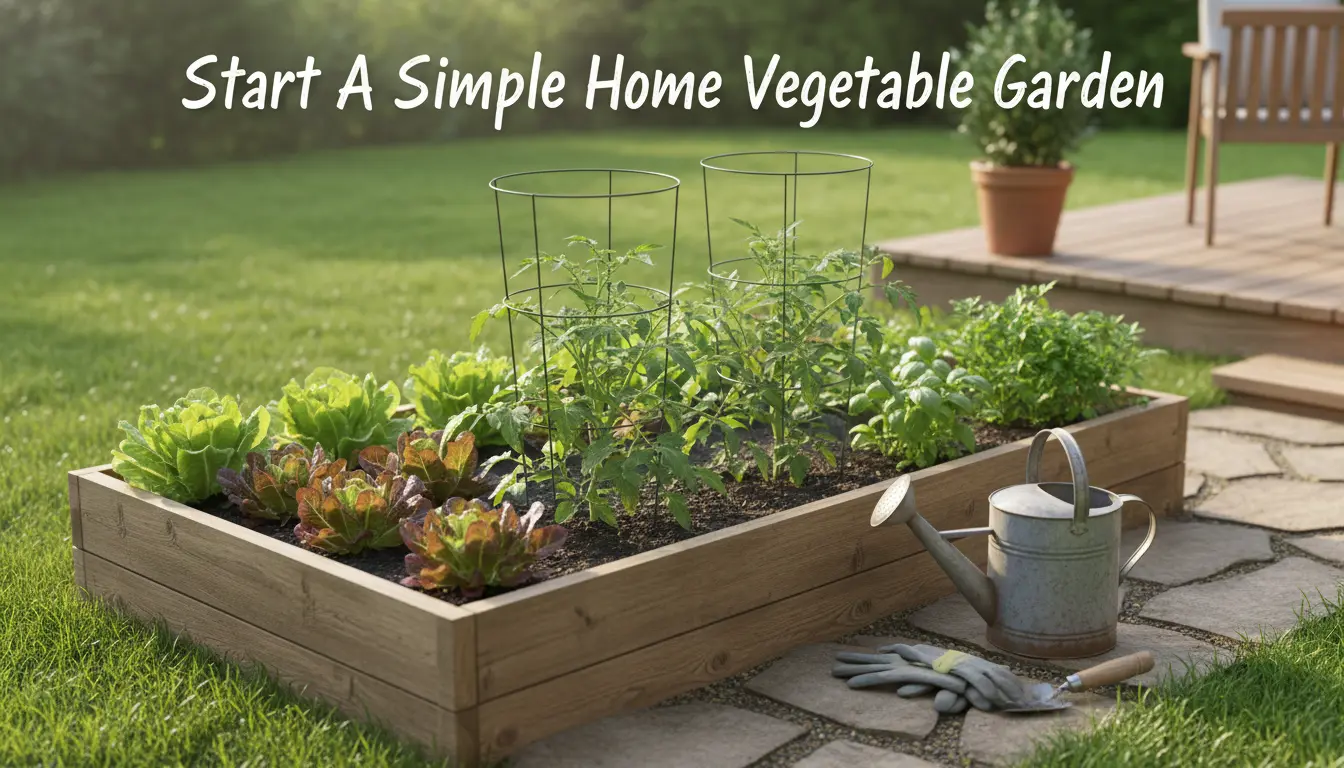
How to Start a Vegetable Garden
Starting a vegetable garden is a practical way to grow fresh food and reduce grocery costs. This guide breaks down each step into clear actions you can follow, whether you have a yard, raised beds, or a balcony.
Plan Before You Plant: How to Start a Vegetable Garden
Good planning saves time and disappointment. Begin by deciding why you want a garden and what you want to grow.
Consider these questions: How much time can you commit? How much sun does your space get? Do you want low-maintenance crops or something more productive?
Choose the Right Location
Most vegetables need 6 to 8 hours of direct sunlight. Observe your site at different times of day to confirm sun exposure.
Also look for easy water access and good drainage. If your soil is compacted or poor, a raised bed or containers are excellent options.
Decide on Garden Type
Common options are in-ground beds, raised beds, and containers. Each has pros and cons for soil control, cost, and accessibility.
- Raised beds: Better drainage and soil control, easier on the back.
- In-ground: More affordable, larger area possible.
- Containers: Great for balconies or small patios, portable, and quick to set up.
Prepare Soil and Planting Plan
Soil quality is the foundation of a productive garden. Test and improve soil before planting to reduce problems later.
Soil Testing and Improvement
Get a basic pH and nutrient test kit or send a sample to a local extension service. Most vegetables prefer a pH between 6.0 and 7.0.

Improve soil with organic matter such as compost, well-rotted manure, or leaf mold. Mix 2 to 4 inches into the top 6 to 8 inches of soil.
Create a Simple Planting Plan
List the vegetables you want and group them by planting season and space needs. Start with easy crops if you are a beginner.
- Beginner-friendly: Lettuce, radish, green beans, cherry tomatoes, zucchini.
- Longer-term: Peppers, broccoli, winter squash.
When and How to Plant
Planting times depend on your climate and the crop. Use your last frost date as a guide for timing.
Follow seed packet or plant tag instructions for depth and spacing. Overcrowding reduces yield and increases disease risk.
Direct Seed vs. Transplants
Direct seeding is easiest for root crops and legumes. Transplants work well for tomatoes, peppers, and brassicas to extend the season.
Hardening off transplants for 7 to 10 days before planting reduces shock and improves survival.
Watering and Feeding Your Garden
Consistent water is often the biggest factor for success. Aim for deep, infrequent watering rather than daily shallow sprinkles.
Mulch helps retain moisture, suppress weeds, and moderate soil temperature. Apply 2 to 4 inches of organic mulch around plants.
Fertilizing Basics
Start with a balanced organic fertilizer if your soil test shows deficiencies. Compost tea or slow-release granular formulas work well.
Avoid over-fertilizing leafy vegetables if you want fruiting crops like tomatoes to set well.
Pest and Disease Management
Preventive care reduces most pest and disease issues. Keep beds clean, rotate crops yearly, and avoid overcrowding.
Use these practical tactics before reaching for chemicals:
- Hand-pick large pests like caterpillars and beetles.
- Introduce beneficial insects or use insecticidal soap for small infestations.
- Rotate families (tomato family, brassicas, legumes) to limit soil-borne disease repeat cycles.
Beans and peas fix nitrogen in the soil, improving fertility for later crops like tomatoes and peppers.
Maintenance and Harvesting
Regular maintenance makes harvesting easier. Check plants weekly for signs of stress, pests, or nutrient needs.
Harvest frequently for crops like lettuce and beans to encourage continuous production. Pick ripe tomatoes when they reach full color and slightly soft to the touch.
Season Extension Techniques
Use row covers, cold frames, or a small hoop house to extend your growing season. These structures protect from frost and pests.
Succession planting—sowing small batches every few weeks—keeps beds productive through the season.
Real-World Example: Small Backyard Garden Case Study
Case study: A 10-by-10-foot raised bed produced a steady summer supply of salad greens, cherry tomatoes, and green beans for a family of two.
They used a simple plan: rotate crops, add compost each spring, and water with a drip line. The bed yielded enough to cut grocery lettuce costs by half and provide fresh tomatoes for daily salads.
Quick Checklist Before You Start
- Choose a sunny site with good drainage.
- Test and amend soil; add compost.
- Create a planting map with spacing and timing.
- Install mulch and set up a watering method.
- Plan basic pest management and crop rotation.
Starting a vegetable garden is a series of small, manageable steps. With planning, regular care, and simple preventive measures, anyone can grow healthy vegetables at home.