
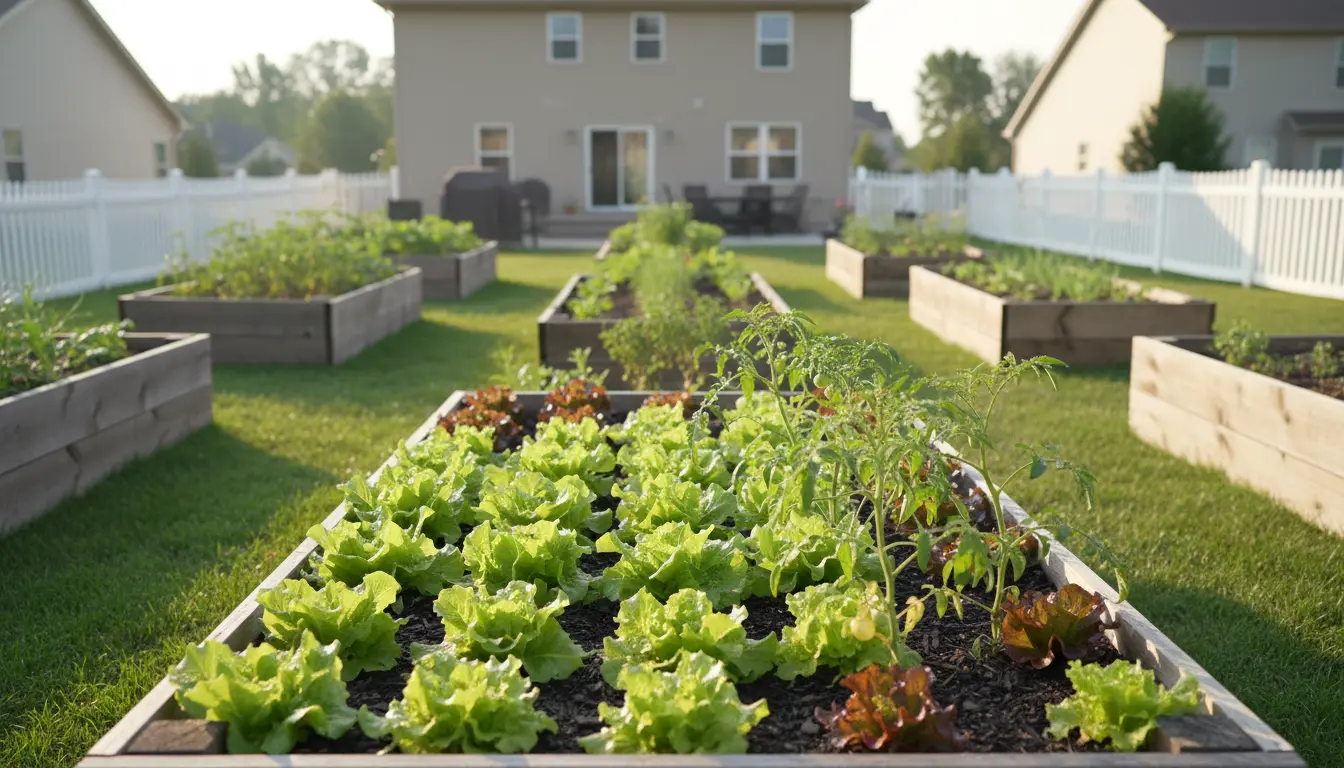
Starting a vegetable garden can be simple and rewarding. This guide breaks the process into clear, actionable steps so you can grow food at home with confidence.
How to Start a Vegetable Garden: Plan Your Space
Decide where to start your vegetable garden by observing sunlight and access. Most vegetables need 6–8 hours of direct sun per day, so choose a sunny spot.
Consider space and format: direct rows, raised beds, or containers. Raised beds and containers are easier to manage for beginners and give better soil control.
Choose Where to Start a Vegetable Garden
Look for level ground near a water source. Avoid low spots that collect water or areas under large tree roots that compete for nutrients.
- Sun exposure: 6–8 hours daily
- Water access: hose or irrigation nearby
- Soil and drainage: avoid compacted clay and standing water
How to Start a Vegetable Garden: Prepare the Soil
Healthy soil is the foundation of a productive garden. Test soil pH and texture using a simple kit or a local extension service to guide amendments.

Improve soil fertility with organic matter. Add 2–4 inches of compost and mix it into the top 6–8 inches of soil for beds or containers.
Soil Tips for Beginners
- If soil is heavy clay, add compost and coarse sand to improve drainage.
- For sandy soil, add compost and composted manure to increase water retention.
- Use pH 6.0–7.0 for most vegetables. Add lime to raise pH or sulfur to lower pH as needed.
How to Start a Vegetable Garden: Pick Easy Crops
Choose beginner-friendly vegetables that are forgiving and fast to harvest. Start small to avoid feeling overwhelmed.
- Leafy greens: lettuce, spinach, Swiss chard
- Root vegetables: radishes, carrots
- Quick producers: bush beans, cherry tomatoes
- Herbs: basil, parsley, chives
Plant crops suited to your climate and growing season. Check seed packet dates or local planting calendars to time your sowing correctly.
How to Start a Vegetable Garden: Planting and Spacing
Follow spacing recommendations on seed packets or plant labels. Crowded plants compete for light and nutrients, reducing yield and increasing disease risk.
Use succession planting for continuous harvests. After one crop is finished, sow another row or replace it with a new variety.
Simple Planting Methods
- Direct sow seeds for carrots, radishes, and beans.
- Transplant seedlings for tomatoes, peppers, and brassicas.
- Vertical supports for vining crops save space and improve airflow.
How to Start a Vegetable Garden: Watering and Maintenance
Water deeply and less frequently to encourage strong roots. Aim for 1–1.5 inches of water per week, adjusting for rainfall.
Mulch around plants to conserve moisture, suppress weeds, and moderate soil temperature. Use organic mulches like straw or shredded leaves.
- Water at the base of plants to reduce foliage disease.
- Check soil moisture with your finger; the top 1–2 inches should be slightly dry before watering.
- Weed regularly to reduce competition and pest habitat.
How to Start a Vegetable Garden: Pest and Disease Basics
Monitor plants weekly for signs of pests and disease. Early detection makes control easier and often allows non-chemical solutions.
Use integrated pest management: hand-pick pests, use row covers, and encourage beneficial insects. Rotate crops yearly to lower disease pressure.
- Remove damaged leaves and dispose of them away from the garden.
- Plant companion species like marigolds to deter certain pests.
- Consider organic sprays only after other methods fail and follow instructions.
How to Start a Vegetable Garden: Harvesting and Ongoing Care
Harvest regularly to encourage more production and to keep plants healthy. Pick vegetables at recommended sizes for best flavor and texture.
At season end, clear the garden of spent plants and add compost. Consider cover crops to protect and build soil over winter.
Season Extension Tips
- Use cloches or row covers to extend harvest into cooler months.
- Start seedlings indoors under grow lights to lengthen the growing season.
- Use cold frames for early spring and late fall crops.
Small Case Study: How One New Gardener Started a Vegetable Garden
Anna, a beginner gardener, started a 10 by 10 foot raised bed on her sunny backyard patio. She filled the bed with a mix of supermarket compost and topsoil, adding a 2-inch layer of homemade compost for fertility.
She planted a mix of lettuce, cherry tomatoes, bush beans, and carrots spaced according to seed packet instructions. Anna watered with a soaker hose twice a week and mulched with straw.
By mid-summer she harvested weekly salads and enough cherry tomatoes for sauces. She reported that regular watering and early pest checks were the keys to her success.
How to Start a Vegetable Garden: Quick Checklist
- Pick a sunny, level site near water.
- Test and improve soil with compost.
- Choose easy crops for your climate.
- Follow spacing and watering guidelines.
- Monitor for pests and rotate crops each year.
Starting a vegetable garden is mostly about planning and consistent, simple care. Begin small, learn as you go, and expand as you gain confidence.