
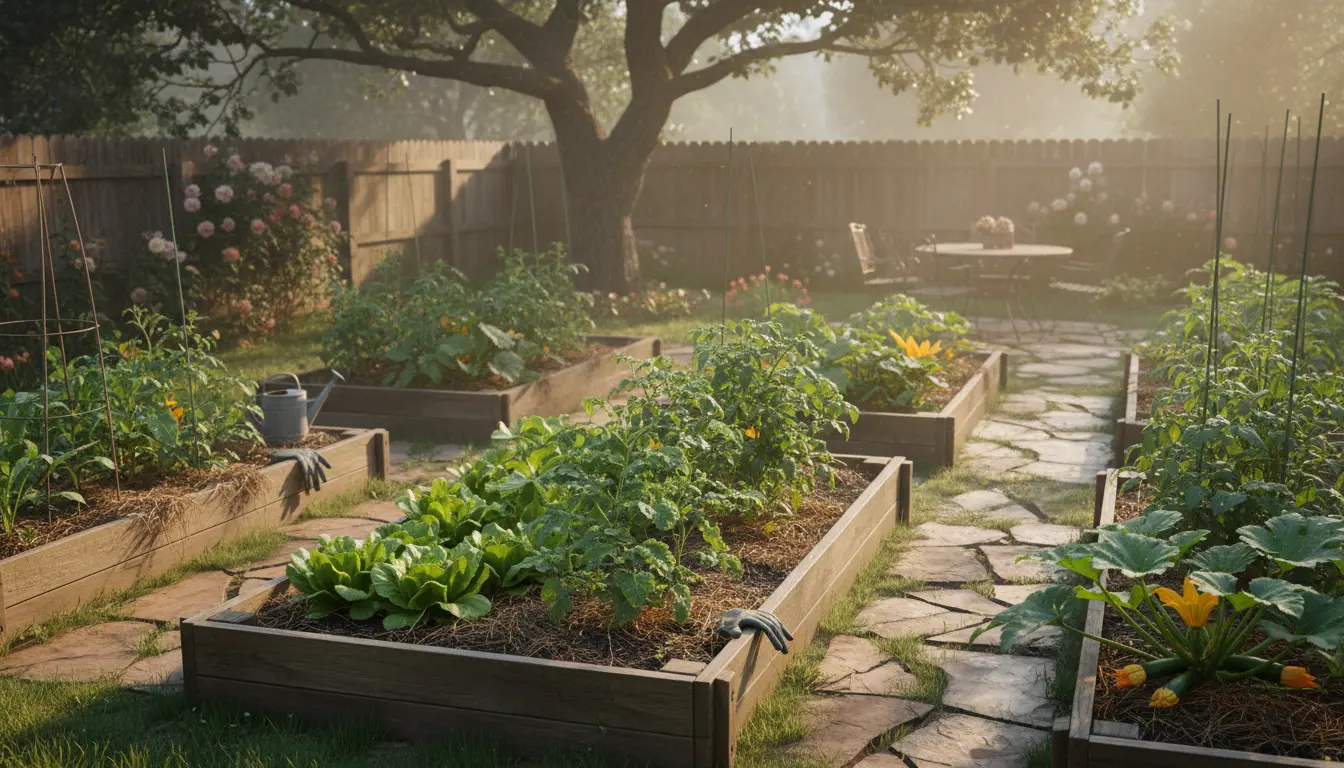
Planning to Start a Vegetable Garden
Starting a vegetable garden begins with a simple plan. Decide on location, space, and what you want to harvest before you dig.
This guide breaks the process into manageable steps so you can start a vegetable garden with confidence and predictable results.
Choose the Right Spot to Start a Vegetable Garden
Select a site that gets at least six hours of direct sunlight for most vegetables. Avoid low spots that stay wet and areas shaded by large trees.
Consider proximity to a water source and how easy it will be to tend the garden during peak season.
Decide What to Grow
Start with easy, high-value crops such as tomatoes, lettuce, radishes, and herbs. These provide quick rewards and build your experience.
Think about how you will use the harvest—fresh salads, canning, or freezer storage—and choose varieties accordingly.
Soil, Beds, and Containers for Vegetable Gardens
Soil quality is the most important factor when you start a vegetable garden. Healthy soil supports steady growth and reduces pest and disease problems.
You can start directly in the ground, use raised beds, or containers depending on space and soil condition.
Testing and Improving Soil
Test soil pH and nutrient levels with a simple home kit or a lab test. Most vegetables prefer a pH of 6.0–7.0.
Improve soil by adding organic matter like compost, aged manure, or leaf mold. Mix 2–4 inches into the top 6–8 inches of soil for quick improvement.
Raised Beds vs Containers vs In-Ground
- Raised beds warm faster and drain better. They are ideal if native soil is poor.
- Containers work well on patios and balconies. Choose large pots and quality potting mix.
- In-ground planting is low-cost if your soil is good and drainage is adequate.
Planting and Seasonal Care to Start a Vegetable Garden
Timing matters. Use your local last frost date to plan planting of transplants and direct-sown seeds.
Follow seed packet or transplant label recommendations for spacing and depth to avoid overcrowding.
Watering and Mulching
Water deeply and less frequently to encourage strong root systems. Aim for about 1 inch of water per week, adjusting for rain.
Apply 2–3 inches of organic mulch like straw or shredded bark to conserve moisture, suppress weeds, and stabilize soil temperature.
Pest and Disease Basics
Start with common-sense prevention: clean tools, crop rotation, and healthy soil. Remove diseased plants promptly to reduce spread.
Use barriers, row covers, and hand-picking for many pests. Reserve chemical controls for persistent outbreaks and follow label instructions.
Simple Schedule and Maintenance Plan to Start a Vegetable Garden
Create a weekly checklist to simplify care. Regular short sessions are more effective than infrequent long efforts.
A basic weekly plan keeps tasks manageable and improves plant health over the season.
Weekly Checklist
- Inspect plants for pests and disease.
- Water deeply when needed; check soil moisture a few inches below the surface.
- Thin seedlings and harvest ripe vegetables regularly.
- Weed small; remove large weeds before they set seed.
Case Study: Small Urban Backyard
Maria converted a 10 ft by 8 ft patch behind her townhouse into three 4 ft by 8 ft raised beds. She used store-bought compost mixed with native soil.
Year one yield: tomatoes, basil, and peppers produced enough for weekly salads and two jars of canned tomatoes. Time investment averaged 2–3 hours per week during the peak season.
Key takeaways: raised beds improved drainage, close plant spacing reduced weeds, and weekly harvesting encouraged continuous production.
Companion planting can reduce pests naturally. For example, planting marigolds near tomatoes helps deter nematodes and some insect pests.
Getting Started Today: Quick Setup Guide
To start a vegetable garden this weekend, follow these steps: pick a sunny site, prepare a 4×4 or 4×8 bed, add compost, and plant quick crops like lettuce and radishes.
Buy seedlings for crops that need a longer season, and space them according to the label. Keep a notebook to track plant varieties, planting dates, and harvests.
Final Tips
- Start small and expand next season.
- Record what works and what fails; gardening improves with practice.
- Join a local gardening group or extension service for region-specific advice.
Starting a vegetable garden is a practical, low-cost way to grow food, learn new skills, and enjoy fresh produce. Use these steps to plan, plant, and maintain a productive garden this season.