
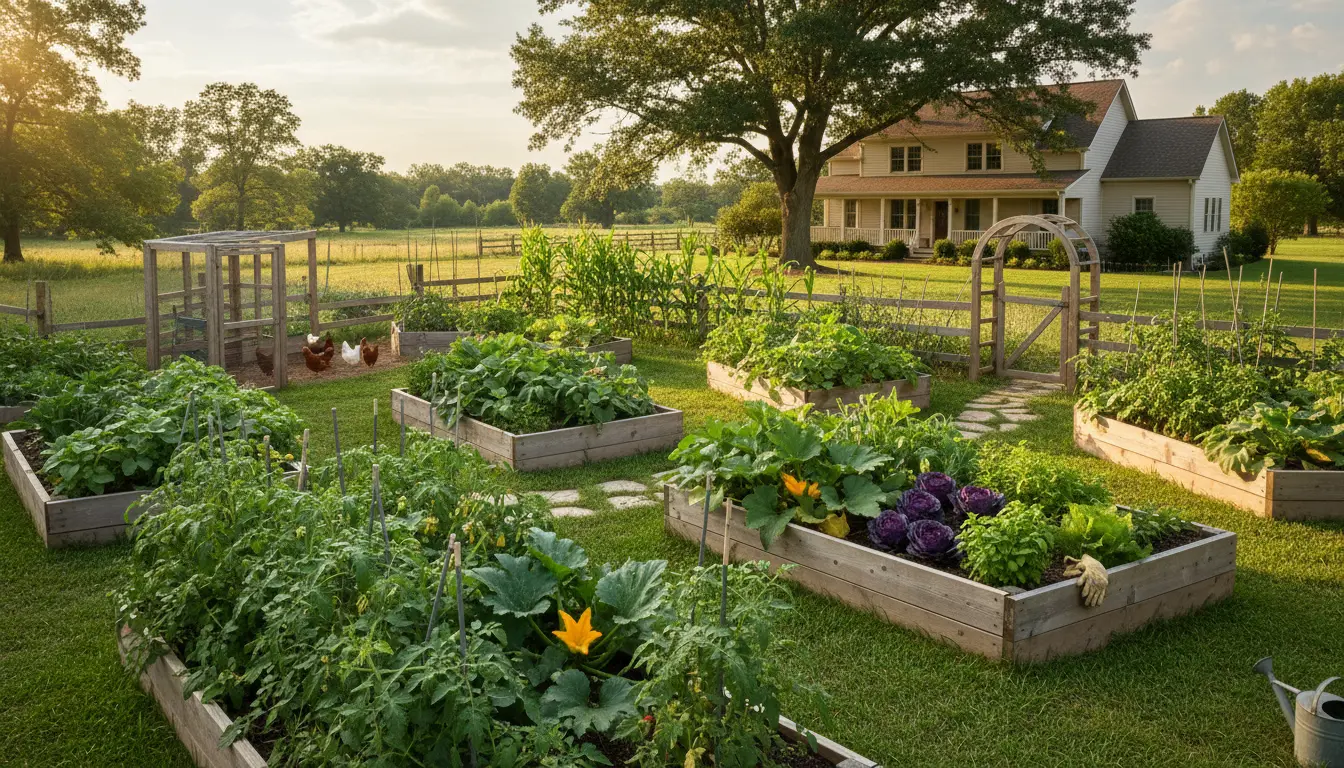
Why Start a Vegetable Garden
Growing your own vegetables saves money and gives you fresher, tastier produce. It also connects you to the season and reduces grocery trips.
This guide explains how to start a vegetable garden with practical steps you can follow in a weekend and maintain through the season.
Choose the Right Location for Your Vegetable Garden
Select a spot that gets at least 6 hours of direct sunlight daily for most vegetables. Observe sun patterns for a few days to confirm light levels.
Consider proximity to water and ease of access. A garden near the house is easier to maintain and harvest from regularly.
Sun, Soil, and Access
- Full sun: vegetables like tomatoes, peppers, and cucumbers.
- Partial shade: leafy greens and root crops can tolerate less light.
- Water access: place garden within 25–50 feet of a spigot if possible.
Plan Garden Size and Layout
For beginners, start small: a 4×8 foot bed or a few large containers. Small spaces are easier to manage and less likely to overwhelm a new gardener.
Decide between in-ground beds, raised beds, or containers based on soil quality and mobility needs.
Layout Tips for a Productive Vegetable Garden
- Use raised beds for better drainage and soil control.
- Position taller plants on the north side to avoid shading shorter crops.
- Leave 18–24 inches between rows or beds for access and maintenance.
Prepare Soil for a Healthy Vegetable Garden
Good soil is the most important factor for successful vegetables. Test soil pH and amend as needed—most vegetables prefer pH 6.0–7.0.
Improve soil fertility by adding organic matter like compost or well-rotted manure. Mix it into the top 6–12 inches of soil.
Soil Preparation Steps
- Remove weeds and large stones from the site.
- Loosen soil to a depth of 8–12 inches for root vegetables.
- Add 2–4 inches of compost and mix thoroughly.
- Apply balanced organic fertilizer if a soil test indicates low nutrients.
Choose Vegetables for Your First Garden
Select easy-to-grow vegetables that match your climate and season. For many beginners, quick wins build confidence and momentum.
Recommended Beginner Vegetables
- Leafy greens: lettuce, spinach, Swiss chard.
- Root crops: radishes, carrots, beets.
- Warm-season: tomatoes, peppers, bush beans, zucchini.
Planting: Seeds vs. Seedlings
Seeds are cheaper and offer more variety, but seedlings (transplants) give a faster start. Use transplants for tomatoes and peppers in spring after frost risk.
Follow seed packet directions for depth and spacing. Proper spacing reduces disease and improves airflow.
Watering and Mulching Best Practices
Water deeply and less frequently to encourage strong roots. Most vegetables need 1–1.5 inches of water per week, including rainfall.
Mulch with straw, shredded leaves, or bark to retain moisture, suppress weeds, and moderate soil temperature.
Simple Watering Rules
- Water at the base of plants to keep leaves dry and reduce disease risk.
- Early morning watering is best to reduce evaporation and leaf wetness at night.
- Use drip irrigation or soaker hoses for efficient delivery.
Pest and Disease Management in Your Vegetable Garden
Inspect plants regularly for pests and early signs of disease. Early action prevents small problems from becoming crop losses.
Use cultural controls like crop rotation, companion planting, and row covers before resorting to chemical controls.
Practical Pest Control Methods
- Hand-pick larger pests like beetles and caterpillars.
- Introduce beneficial insects (ladybugs, lacewings) to reduce aphids.
- Remove and compost diseased plant material away from the garden.
Mixing a 2–3 inch layer of compost into your garden bed can increase water retention and nutrient levels substantially within one season.
Harvesting and Ongoing Care
Harvest regularly to encourage more production. For many vegetables, picking when small and tender yields the best flavor and continued growth.
Keep a simple maintenance schedule: weed weekly, check soil moisture, and add mulch or compost as needed.
Harvest Timing Examples
- Lettuce: harvest outer leaves continuously or cut the whole head at maturity.
- Tomatoes: pick when uniformly colored and slightly soft to the touch.
- Radishes: harvest 3–4 weeks after sowing before they become woody.
Small Case Study: Balcony to Table in One Season
Case: Sarah, an apartment dweller, started a 4-container vegetable garden on her balcony. She chose cherry tomatoes, basil, lettuce, and radishes.
Results: By following a weekly watering and fertilizing schedule, Sarah harvested fresh salad greens and 20 pounds of tomatoes over one summer. The containers fit in partial sun and used a slow-release fertilizer to reduce maintenance.
Quick Checklist to Start Your Vegetable Garden
- Choose a sunny location and measure available space.
- Decide on bed type: in-ground, raised, or containers.
- Test and amend soil; add compost.
- Select easy vegetables suited to your season.
- Plant seeds or transplants and set up watering.
- Mulch, monitor pests, and harvest regularly.
Starting a vegetable garden is practical and rewarding. With a small, well-planned effort you can grow reliable crops and learn the basics of plant care. Begin small, keep notes, and expand as you gain confidence.