
Why Start a Vegetable Garden
Growing your own vegetables saves money and gives you fresher, tastier food. It also helps you control pesticides and supports healthy eating.
This guide explains how to start a vegetable garden in small spaces, using clear steps you can follow today.
Plan Before You Start a Vegetable Garden
Good planning saves time and increases harvest success. Start by choosing location, size, and the vegetables you and your family will eat.
- Pick 1–2 hours of sunlight daily as a minimum; most veggies need 6+ hours.
- Decide bed type: in-ground, raised beds, or containers.
- Start small: a 4×4 or 4×8 raised bed is easier to manage for beginners.
Choose Vegetables That Are Easy for Beginners
Start with fast, forgiving crops to build confidence. Good first vegetables include lettuce, radishes, green beans, tomatoes, and herbs like basil.
Mix leafy greens and a couple of fruiting plants for variety and continuous harvests.
Prepare Soil and Planting Area
Healthy soil is the foundation of a productive garden. Test texture and drainage by digging and squeezing a handful.
If soil is heavy clay or sandy, improve it with organic matter and compost.
- Add 2–4 inches of compost and mix into the top 6–8 inches of soil.
- Use balanced organic fertilizer if a soil test shows nutrient gaps.
- For raised beds, use a blend of topsoil, compost, and coconut coir or peat.
Planting: Seeds vs Transplants
Decide whether to start from seed or buy seedlings (transplants). Seeds are cheaper but take longer and need more care early on.
Transplants give a head start for tomatoes, peppers, and eggplants. Direct-sow carrots, beans, and lettuce for best results.
Basic Planting Steps
- Follow seed packet or plant tag spacing and depth instructions.
- Water gently after planting to settle soil around roots.
- Mulch with straw or shredded leaves to retain moisture and suppress weeds.
Watering and Fertilizing Your Vegetable Garden
Consistent watering is more important than frequent light sprinkling. Aim for deep, infrequent watering to encourage strong roots.
Use a soaker hose or drip irrigation to save water and reduce leaf wetness that spreads disease.
- Water 1–2 times per week deeply, adjusting for rainfall and heat.
- Fertilize lightly every 3–4 weeks with a balanced liquid feed or compost tea.
Common Pests and Disease Management
Early detection and simple controls keep problems small. Inspect plants weekly for chewing, spots, or wilting.
- Handpick large pests like caterpillars and slugs.
- Use row covers to protect seedlings from insects.
- Encourage beneficial insects by planting flowers like marigolds or alyssum.
Many common garden vegetables, like lettuce and radishes, can be harvested within 30 days from sowing. Quick crops let you learn fast and replant multiple times in a season.
Harvesting and Succession Planting
Harvest vegetables when they reach recommended size to encourage continued production. Pick regularly to prevent overripening.
Practice succession planting: sow new rows every 2–3 weeks for continuous harvest through the season.
Small Real-World Example: A Beginner’s Raised Bed
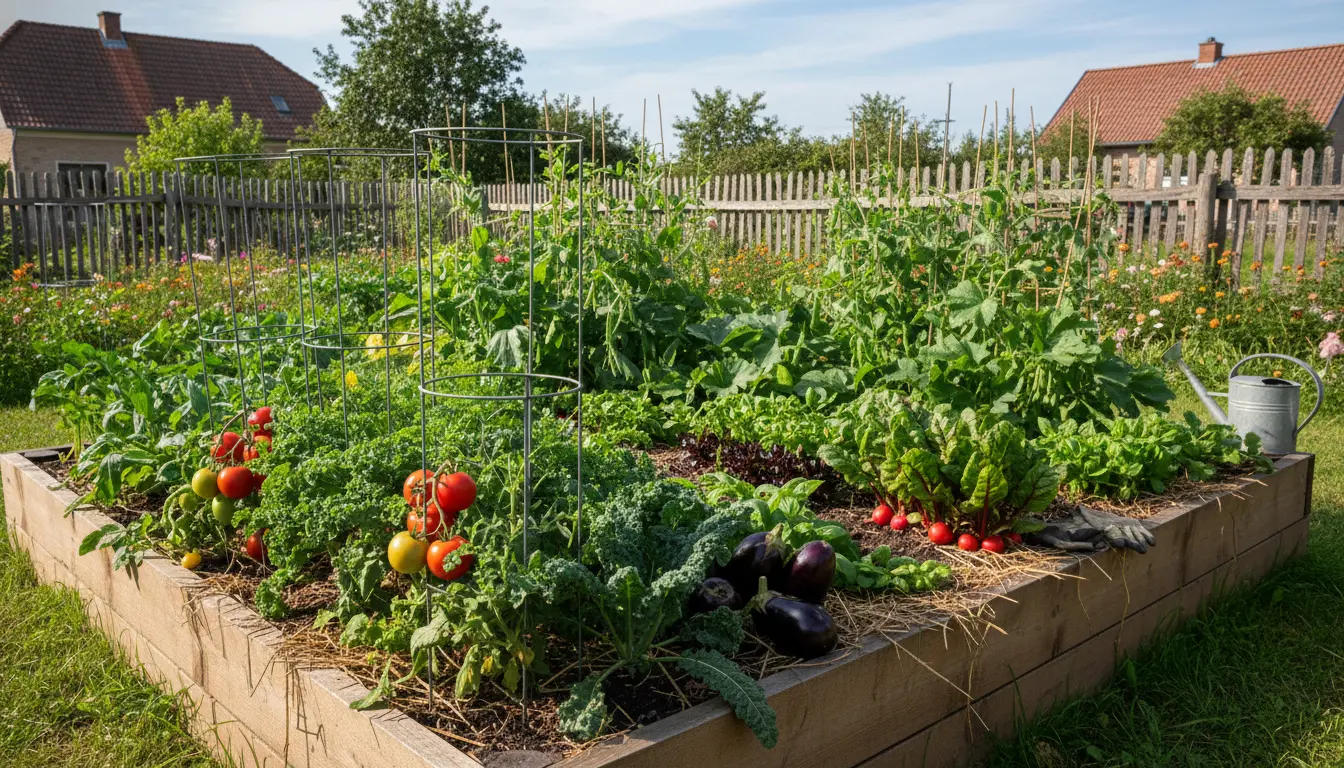
Case study: A family converted a 4×8 raised bed in their sunny backyard. They filled it with a 50/50 mix of topsoil and compost, then planted rows of lettuce, radishes, cherry tomatoes, and bush beans.
In the first season they harvested weekly salads from the lettuce, two rounds of radishes, and steady beans for summer dinners. Their tomato plants produced about 10–15 pounds total, enough for fresh use and a few jars of sauce.
Key takeaways: start small, amend soil well, and choose a mix of quick and long-season crops.
Practical Checklist to Start a Vegetable Garden
- Choose site with 6+ hours sun.
- Decide bed type and size (start small).
- Improve soil with compost and test drainage.
- Pick beginner-friendly crops and planting method.
- Set up watering system and mulch beds.
- Inspect plants weekly and harvest on schedule.
Final Tips to Keep Growing
Keep notes on planting dates, varieties, and harvest yields. That record helps you improve each season.
Join a local garden group or online forum to share tips and swap seeds. Practical experience and community support shorten the learning curve.
With planning, good soil, and steady care, you can successfully start a vegetable garden that feeds your family and builds gardening confidence season after season.