
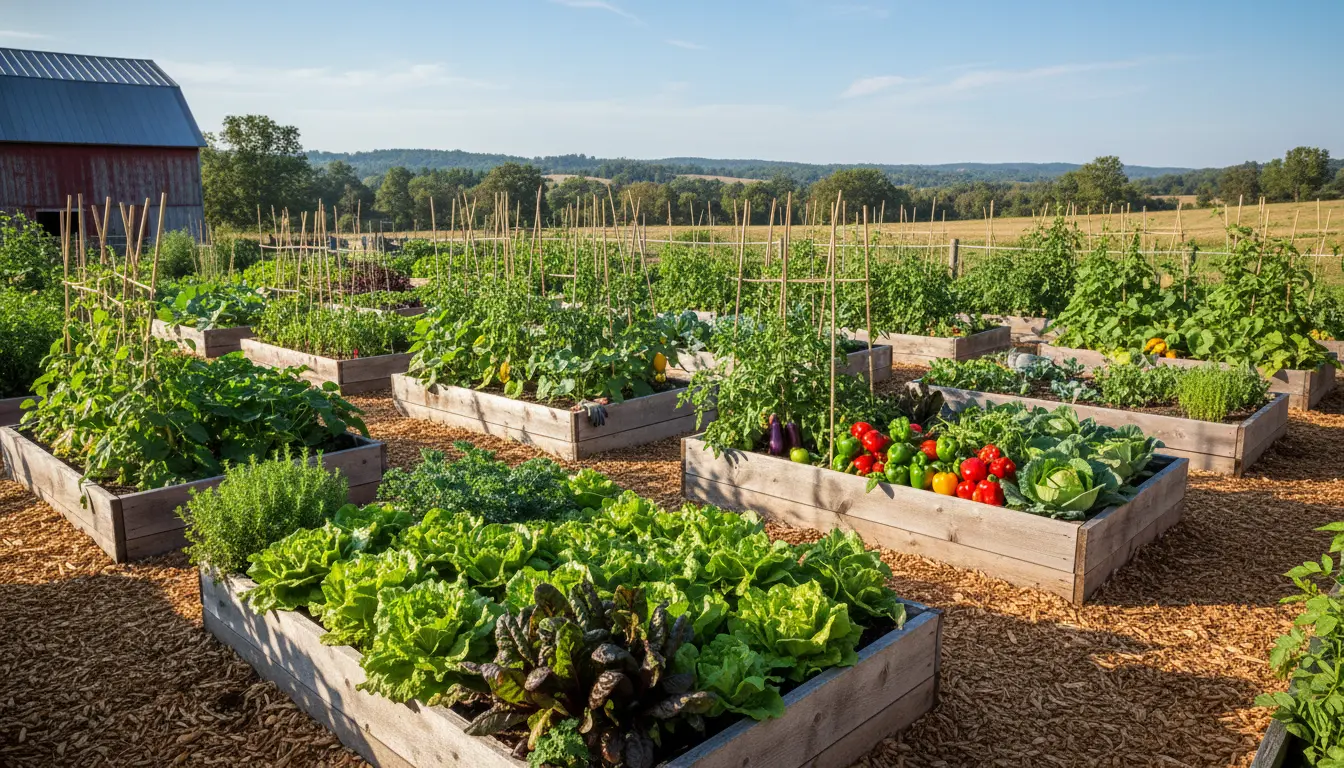
Overview: How to Start a Vegetable Garden
Starting a vegetable garden is an accessible way to grow fresh food and learn practical skills. This guide explains how to start a vegetable garden with clear, step-by-step instructions for beginners.
Step 1: Choose a Site for Your Garden
Pick a location that receives at least 6 hours of direct sunlight daily. Vegetables need sun to produce fruit and roots that are high quality.
Also consider access to water, soil drainage, and proximity to your home for easy maintenance. Avoid low spots that collect standing water.
Site checklist for how to start a vegetable garden
- Full sun (6–8 hours) for tomatoes, peppers, and beans
- Flat or gently sloping for good drainage
- Close to a water source for regular watering
- Protected from strong winds when possible
Step 2: Decide Garden Type and Size
Choose between in-ground beds, raised beds, or containers based on your site and budget. Raised beds warm faster and have fewer compaction issues.
For beginners, a 100 square foot area (for example, 10 x 10 feet) is manageable and productive. Start small to avoid feeling overwhelmed.
Common layouts
- Single 4 x 8 raised bed — easy to reach and maintain
- Two 4 x 8 beds — allows crop rotation year two onward
- Containers on a patio — good for herbs and salad greens
Step 3: Prepare the Soil

Healthy soil is the foundation of a productive vegetable garden. Test soil pH and nutrient levels with a kit or local extension service.
Improve texture and fertility by adding compost, aged manure, or well-rotted organic matter. Mix amendments into the top 6–8 inches of soil.
Soil tips for how to start a vegetable garden
- Ideal pH: 6.0–7.0 for most vegetables
- Work in 2–4 inches of compost annually
- Avoid walking on beds to prevent compaction
Step 4: Choose Vegetables to Grow
Select vegetables suited to your climate and the season. Beginners should pick a mix of quick wins and reliable producers.
Easy starter vegetables include lettuce, radishes, bush beans, cherry tomatoes, and zucchini. These provide fast feedback and steady harvests.
Step 5: Planting and Spacing
Follow seed packet or plant label spacing and depth instructions. Overcrowding reduces air flow and increases disease risk.
Use a planting plan that staggers plantings for continuous harvests. For example, sow lettuce every 2–3 weeks.
Example planting plan
- Early spring: radishes, spinach, peas
- Late spring: tomatoes, peppers, basil
- Summer: beans, cucumbers, squash
Step 6: Watering and Mulching
Water deeply and less frequently to encourage strong roots. Most vegetables need about 1 inch of water per week, more in hot weather.
Apply a 2–3 inch mulch layer to reduce evaporation, suppress weeds, and moderate soil temperature. Use straw, shredded leaves, or composted bark.
Step 7: Basic Maintenance and Pest Management
Regular weeding, monitoring for pests, and removing diseased plants keep yields high. Inspect plants weekly to catch problems early.
Use physical controls like row covers, hand-picking pests, and promoting beneficial insects. Reserve organic pesticides for persistent issues.
Simple maintenance checklist
- Weed 1–2 times per week during peak growth
- Stake or cage tall plants like tomatoes
- Rotate crops annually to reduce disease buildup
Harvesting and Storage
Harvest vegetables at peak ripeness for the best flavor and nutrition. Regular harvesting also encourages more production in many plants.
Store crops appropriately: leafy greens cool and moist, root vegetables in a dark, cool place, and tomatoes at room temperature until ripe.
Small Real-World Case Study
Case study: A beginner gardener, Sarah, converted a 4 x 10 foot lawn strip into two raised beds. She added compost and planted tomatoes, lettuce, bush beans, and herbs.
In her first season she harvested enough salad greens weekly and several bushels of tomatoes. Her careful watering and mulching reduced water use and weed pressure.
Quick Troubleshooting for New Gardeners
- Yellow leaves: check soil moisture and pH, test for nutrient deficiency
- Slow growth: assess sunlight and soil quality
- Small fruits: ensure pollinators have access and avoid overfertilizing nitrogen
Final Tips for How to Start a Vegetable Garden
Start small, observe, and learn a little each season. Keep a simple garden journal to record planting dates, varieties, yields, and problems.
Join local gardening groups or extension services for region-specific advice. Practical experience is the best teacher for long-term success.