
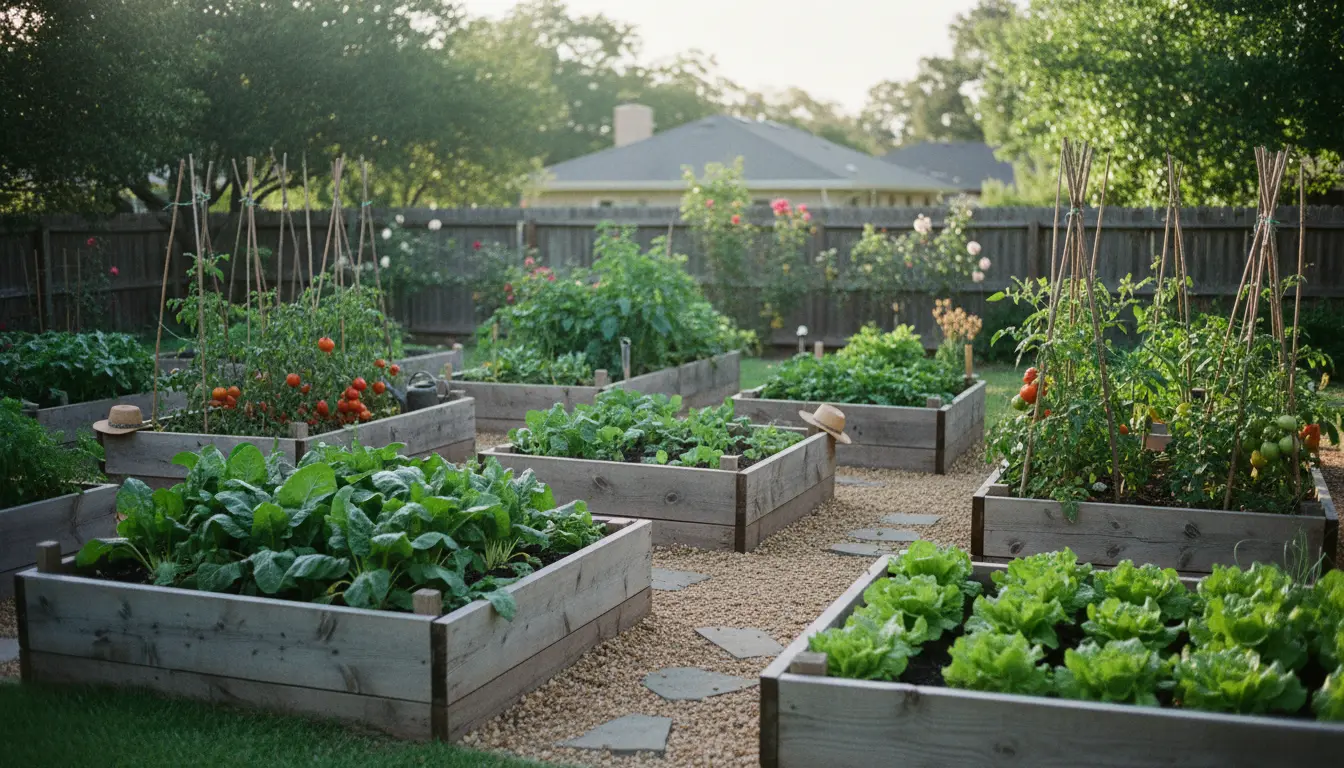
Starting a vegetable garden is a practical way to grow fresh food, save money, and enjoy time outdoors. This guide gives clear steps you can follow whether you have a yard, patio, or balcony.
Plan Your Vegetable Garden
Good planning saves time and reduces mistakes. Decide where you will grow, how much space you need, and what vegetables you want to harvest.
Consider these points when you plan your vegetable garden:
- Sun: Most vegetables need 6 to 8 hours of direct sun each day.
- Space: Measure available space and choose beds or containers that fit.
- Access: Place beds where you can reach them easily for watering and harvest.
- Rotation: Plan to rotate crops across seasons to reduce pests and disease.
Choose the Right Location
Pick a level spot with good drainage and full sun if possible. Avoid low areas that collect water or spots shaded by large trees.
If you have a small balcony or shade, select shade-tolerant vegetables like leafy greens and herbs.
Prepare Soil and Beds
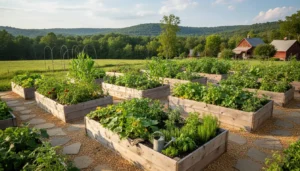
Healthy soil is the foundation of a productive vegetable garden. Start by testing and improving your soil.
Follow these steps to prepare soil for your vegetable garden:
- Test soil pH with a kit or local extension service; most vegetables prefer pH 6.0 to 7.0.
- Add organic matter such as compost or aged manure to improve texture and fertility.
- Use raised beds or wide rows if your native soil is poor or compacted.
- Work the soil to a depth of 8–12 inches for root vegetables and deeper for larger plants.
Build Raised Beds or Use Containers
Raised beds warm faster in spring and drain well. They are especially helpful in small spaces and heavy clay soils.

Standard raised bed size is 4 feet wide for easy access; keep lengths flexible. Use quality potting mix for containers and choose pots at least 12 inches deep for most vegetables.
Select Vegetables and Planting Times
Choose vegetables suited to your climate and growing season. Start with easy crops to build confidence.
- Fast starters: radishes, lettuce, spinach, and dill.
- Warm-season crops: tomatoes, peppers, cucumbers, and squash need warm soil.
- Root crops: carrots and beets prefer loose soil and consistent moisture.
Use a Planting Calendar
Check your last frost date and use a planting calendar to schedule seeds and transplants. Plant cool-season crops before the last frost and warm-season crops after the danger of frost has passed.
Watering and Fertilizing Your Vegetable Garden
Consistent watering and balanced nutrition keep plants healthy. Aim for deep, infrequent watering rather than shallow daily sprinkling.
Tips for watering and feeding:
- Water early in the morning to reduce evaporation and leaf wetness at night.
- Use drip irrigation or soaker hoses to deliver water to roots and reduce disease.
- Feed with compost or a balanced organic fertilizer according to the package or soil test.
- Mulch around plants to retain soil moisture and suppress weeds.
Pest and Disease Management
Preventive measures reduce pest and disease problems. Observe plants regularly to catch issues early.
Practical management steps:
- Rotate families of crops each year to prevent soil-borne diseases.
- Use row covers to protect young plants from insects and birds.
- Remove diseased leaves promptly and dispose of them away from the garden.
- Encourage beneficial insects by planting flowers like marigolds and dill.
Adding a 2 to 3 inch layer of organic mulch can reduce evaporation by up to 70 percent and significantly lower weed growth in vegetable beds.
Harvesting and Ongoing Care
Harvest regularly to encourage more production. Pick vegetables at their peak ripeness for best flavor and yield.
Ongoing care includes weeding, staking tall plants, and checking irrigation. Keep a simple garden log to note planting dates and problems.
Simple Schedule Example
- Daily: Check for pests, drooping, or wilting.
- Weekly: Weed, water deeply if needed, and remove spent flowers.
- Monthly: Add compost or side-dress with fertilizer for heavy feeders like tomatoes.
Small Real-World Case Study
Maya had a 6×4 foot balcony and wanted fresh herbs and salad greens. She built two 2×3 foot raised boxes and used a high-quality container mix.
She planted lettuce, spinach, cherry tomatoes, basil, and parsley. By following a simple watering routine and using a drip irrigation timer, she harvested salad greens within five weeks and continuous basil all summer. Her investment produced better-tasting food and cut grocery trips by half.
Common Mistakes to Avoid
- Starting too many different crops at once—focus on a few reliable varieties.
- Planting too deep or too shallow—follow seed packet depth instructions.
- Overwatering, which causes root rot, and underwatering, which stresses plants.
Starting a vegetable garden is a step-by-step process that rewards planning and regular care. Begin small, learn each season, and expand as you gain experience.
Use the tips above to plan your first bed, choose the right plants, and keep them healthy through watering, feeding, and simple pest control. Happy gardening!