
Beginner Guide: How to Start a Vegetable Garden
Starting a vegetable garden can be simple and rewarding if you follow clear steps. This guide gives practical, actionable instructions for first-time gardeners to get growing quickly.
Choose the Right Site to Start a Vegetable Garden
Selecting the right spot is the first major decision when you start a vegetable garden. Most vegetables need at least six hours of direct sunlight each day, so pick a sunny location if possible.

Also consider access to water and soil drainage. Avoid low spots that stay wet after rain and try to place beds near a water source to make watering easier.
Tips for Small Spaces
If you have limited space, you can start a vegetable garden in containers or raised beds. Use south-facing balconies, patios, or window boxes to maximize sun exposure.
Choose compact varieties labeled as suitable for containers or urban gardening.
Prepare Soil Before You Plant
Healthy soil is the backbone of a productive garden, so spend time improving it before planting. Test soil pH and nutrient levels using a simple kit; many vegetables prefer a pH between 6.0 and 7.0.
Add organic matter such as compost or well-rotted manure to improve texture and fertility. Work amendments into the top 6–8 inches of soil for optimal root development.
Soil Preparation Checklist
- Remove weeds, roots, and debris.
- Loosen compacted soil with a fork or tiller.
- Incorporate 2–4 inches of compost.
- Adjust pH if needed with lime (to raise) or sulfur (to lower).
Pick Easy Vegetables for New Gardeners
Choose crops that are forgiving and produce quickly to stay motivated. Good starter vegetables include lettuce, radishes, bush beans, cherry tomatoes, and zucchini.
Start with seedlings from a local nursery for a smoother beginning, or sow direct seeds for fast growers like radishes and beans.
Planting Schedule and Spacing
Follow seed packet instructions for depth and spacing; proper spacing reduces disease and improves yields. Stagger plantings (succession planting) to extend harvest over several weeks.
Example schedule: sow lettuce every 2–3 weeks for continuous leaves; plant tomatoes once the danger of frost is past.
Watering, Mulching, and Ongoing Care
Consistent watering is crucial, especially during establishment and fruit development. Water deeply once or twice a week rather than shallow daily watering to encourage deep roots.
Apply mulch to retain moisture and suppress weeds. Use straw, shredded leaves, or wood chips, leaving a small gap around stems to prevent rot.
Pest and Disease Management
Monitor plants weekly for signs of pests or disease. Early detection helps you respond before problems spread.
Use physical barriers like row covers for insects, encourage beneficial insects with flowering plants, and remove damaged leaves promptly. Apply organic controls such as insecticidal soap if needed.
Simple Harvesting and Storage Tips
Harvest crops at peak ripeness for best flavor and nutrition. Leafy greens are often best when young, while tomatoes and peppers are sweeter when fully colored.
Store harvests properly: cool greens in the refrigerator, blanch and freeze surplus beans or peas, and preserve tomatoes via canning or freezing for later use.
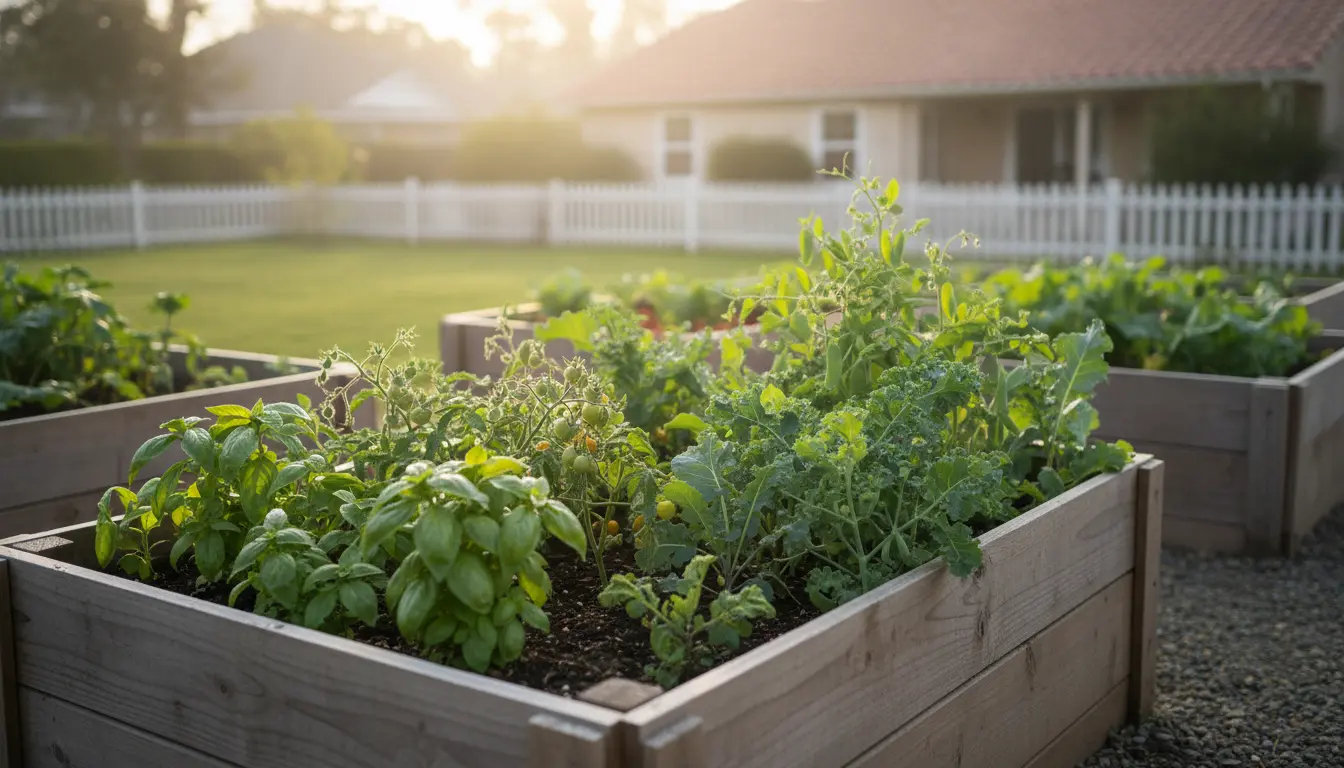
Raised beds warm earlier in spring, allowing you to start planting up to 2–3 weeks sooner than in-ground beds. This can extend your harvest season and increase yields.
Small Real-World Case Study
Case study: Sarah, a new gardener in a small urban backyard, started with two 4×4 raised beds. She improved compacted soil with compost and planted tomatoes, lettuce, and bush beans.
In her first season she harvested salad greens weekly and grew 12 pounds of tomatoes. Simple practices—consistent watering, mulching, and regular harvesting—kept pests low and production steady.
Quick Checklist to Start a Vegetable Garden
- Choose a sunny site near water.
- Test and amend soil with compost.
- Select easy, space-appropriate vegetables.
- Plant according to spacing and season.
- Mulch, water deeply, and monitor for pests.
Maintain Momentum as Your Garden Grows
Keep a simple gardening journal to note planting dates, varieties, and harvest amounts. This record helps you refine timing and choices in future seasons.
Start small and expand as you learn. Even a few well-cared-for plants deliver fresh produce and valuable experience for larger projects later.
Follow these steps and you’ll have a productive vegetable garden that fits your space and schedule. With proper site choice, soil care, and simple maintenance, growing your own vegetables is an achievable and rewarding goal.