
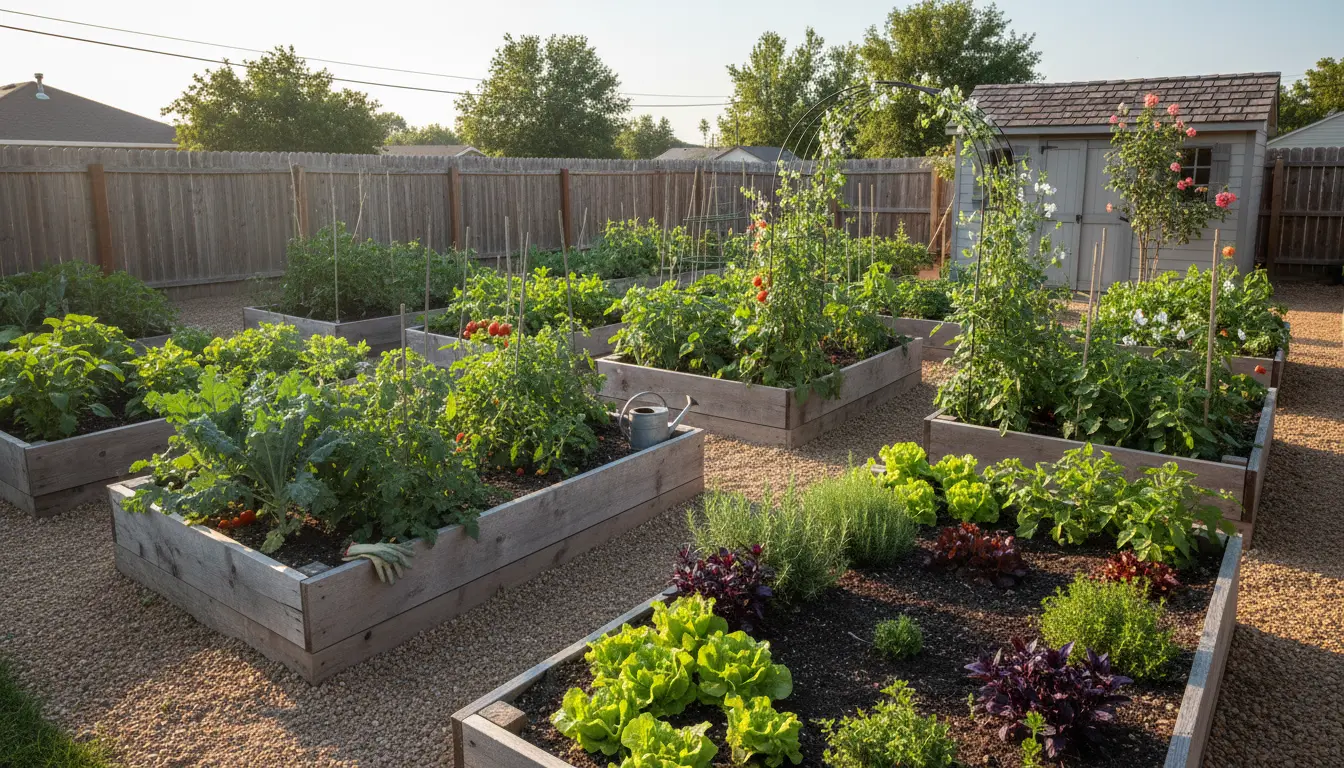
Starting a vegetable garden is a practical way to grow fresh food, save money, and enjoy time outdoors. This guide explains clear steps to start a vegetable garden that even a beginner can follow.
Plan Before You Start a Vegetable Garden
Good planning reduces common mistakes. Begin by deciding what you want to grow and how much time you can commit each week.
- Choose 3–6 easy vegetables for your first season.
- Decide between in-ground beds, raised beds, or containers.
- Estimate weekly care time: watering, weeding, harvesting.
Choose a Location to Start a Vegetable Garden
The right location sets the foundation for success. Most vegetables need at least six hours of direct sunlight daily.
Look for flat ground with good drainage and easy access to water. Avoid low spots where water collects.
Sunlight, Soil, and Space When You Start a Vegetable Garden
Test sunlight through the day and mark spots with consistent sun. Note nearby trees or structures that cast shade.

Check soil type by digging a small hole and feeling the texture. Sandy soil drains quickly; clay holds water. Both can work with amendments.
Prepare Soil to Start a Vegetable Garden
Healthy soil provides nutrients and structure. If you use raised beds or containers, choose a quality mix to start strong.
- Add compost to feed plants and improve soil texture.
- For heavy clay, mix in coarse sand and organic matter to loosen it.
- For sandy soil, add compost and a small amount of coconut coir or peat to retain moisture.
Simple Soil Test
Do a quick pH test with a kit or at a local extension office. Most vegetables prefer slightly acidic to neutral soil (pH 6.0–7.0).
Adjust pH with lime to raise it or sulfur to lower it, following product instructions.
Select Plants and Seedlings to Start a Vegetable Garden
Begin with vegetables that are forgiving and quick to yield. Good starter choices include tomatoes, lettuce, radishes, beans, and zucchini.
Consider planting a mix of fast growers (radishes), steady producers (tomatoes), and greens (lettuce) to harvest throughout the season.
When to Plant
Check your local frost dates and plant accordingly. Use seed packets and plant tags for spacing and timing guidance.
Start seeds indoors for slow growers like tomatoes, and sow direct for quick crops like radishes and beans.
Watering and Maintenance for Your Vegetable Garden
Consistent watering is crucial. Deep, infrequent watering encourages strong roots better than daily shallow watering.
- Water early morning to reduce evaporation and disease risk.
- Use 1–2 inches of water per week as a general guideline, adjusted for weather.
- Mulch around plants to retain moisture and suppress weeds.
Weeding and Pest Control
Pull weeds when small to prevent competition. Use mulch and hand-weeding as primary defenses.
Inspect plants weekly for pests and disease. Remove affected leaves and use organic controls like insecticidal soap when needed.
Companion planting, such as growing marigolds near tomatoes, can reduce certain pests and improve pollination without chemicals.
Harvesting and Seasonal Care When You Start a Vegetable Garden
Harvest regularly to encourage further production. Pick lettuce leaves, snap beans, and zucchinis when they reach usable size.
At season end, remove spent plants and add them to a compost pile. Prepare the garden for next season with a soil amendment plan.
Record Keeping
Keep a simple journal of planting dates, varieties, and problems encountered. This will improve success in future seasons.
Small Case Study: One Beginner’s First Season
Maria, a beginner gardener, converted a 4×8 raised bed into a vegetable garden. She planted tomatoes, lettuce, bush beans, and radishes.
By following basic steps—six hours of sunlight, weekly compost application, and deep watering once every three days—Maria harvested fresh salad greens within five weeks and tomatoes by week ten.
Her key wins: raised bed improved drainage, mulch cut weed time in half, and staggered planting extended harvests through the season.
Checklist to Start a Vegetable Garden
- Choose location with 6+ hours sunlight.
- Decide bed type: in-ground, raised, or containers.
- Amend soil with compost and test pH.
- Select easy crops and check planting dates.
- Water deeply, mulch, and monitor pests weekly.
- Keep a simple garden journal.
Starting a vegetable garden is manageable with planning, basic soil care, and consistent maintenance. Follow these steps to grow fresh produce and build confidence season by season.