
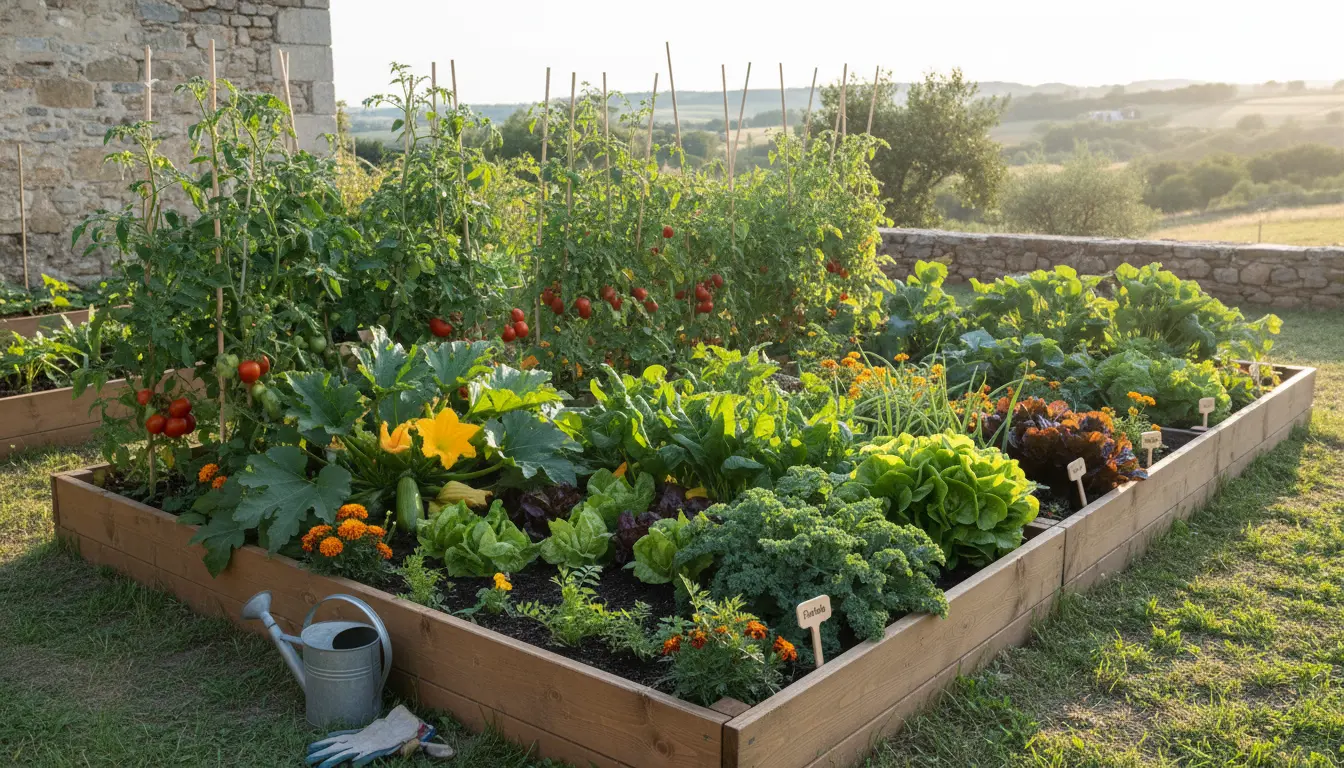
Why Start a Vegetable Garden
Starting a vegetable garden gives you fresh produce, saves money, and connects you with the seasons. It also improves your outdoor space and can be adapted to nearly any backyard or balcony.
This guide explains how to start a vegetable garden in clear, practical steps you can follow this season.
Step 1: Choose a Location for Your Vegetable Garden

Pick a spot with at least 6 hours of sunlight a day for most vegetables. Consider proximity to a water source and how visible the area is for regular care.
Check for good drainage and avoid low spots that stay soggy after rain.
Step 2: Decide Garden Type and Size
Choose between in-ground beds, raised beds, containers, or vertical setups. For beginners, a single raised bed 4 feet by 8 feet is a manageable size.
- Raised beds: Better soil control and drainage.
- In-ground beds: Cost-effective for larger yards.
- Containers: Great for patios and balconies.
- Vertical gardens: Save space for vining crops.
Step 3: Prepare Soil for Your Vegetable Garden
Healthy soil is the foundation of a productive vegetable garden. Test soil pH and amend as needed; most vegetables prefer a pH of 6.0 to 7.0.
Work in compost and organic matter to improve texture and fertility. A simple mix is 60 percent garden soil and 40 percent compost for raised beds.
Soil Preparation Checklist
- Remove weeds and grass from the area.
- Loosen soil to a depth of 8–12 inches.
- Add 2–3 inches of compost and mix it in.
- Adjust pH with lime (to raise) or sulfur (to lower) if testing indicates a need.
Step 4: Choose Vegetables and Plan Layout
Select vegetables that match your climate, season, and cooking preferences. Start with easy crops like tomatoes, lettuce, radishes, beans, and peppers.
Plan spacing and companion planting to reduce disease and maximize yield. Use rows, blocks, or mixed beds depending on access and care needs.
Beginner Vegetable Suggestions
- Leafy greens: Lettuce, spinach, arugula
- Root crops: Radishes, carrots, beets
- Warm-season plants: Tomatoes, peppers, squash
- Quick crops: Green beans, bush peas
Step 5: Planting Your Vegetable Garden
Plant seeds or seedlings following the seed packet or plant tag directions for depth and spacing. Water gently after planting to settle soil around roots.
Stagger plantings of quick crops (like lettuce) every 2–3 weeks for continuous harvest through the season.
Step 6: Watering and Daily Care
Water deeply and less often to encourage strong roots. Aim for consistent moisture rather than light daily watering.
- Early morning watering reduces evaporation and disease risk.
- Use drip irrigation or soaker hoses for efficiency.
- Mulch with straw or shredded leaves to retain moisture and suppress weeds.
Step 7: Pest and Disease Management
Monitor plants weekly for signs of pests or disease. Early action prevents larger problems later in the season.
Use integrated pest management: hand-pick pests, introduce beneficial insects, and use row covers when needed.
Common Problems and Solutions
- Aphids: Spray with water or introduce ladybugs.
- Blight on tomatoes: Improve air flow and rotate crops next year.
- Slug damage: Use traps or barrier methods at night.
Adding a 2 inch layer of mature compost each year can increase vegetable yields by up to 20 percent and improve soil water retention.
Harvesting and Storage
Harvest vegetables at peak ripeness for best flavor and nutrition. Many greens can be picked leaf-by-leaf, while fruits and roots are harvested whole.
Store produce properly: cool leafy greens quickly, cure root crops if needed, and refrigerate tomatoes only after ripening.
Small Case Study: A Beginner’s First Season Vegetable Garden
Maria started a 4×8 raised bed in spring. She added 12 wheelbarrows of compost and planted tomatoes, lettuce, carrots, and bush beans.
By midsummer she harvested enough lettuce for weekly salads, 8 pounds of tomatoes per month, and consistent beans. Total harvest saved her about $150 in grocery produce the first season.
Key actions that helped: consistent watering, mulching, and weekly pest checks.
Simple Weekly Checklist for Your Vegetable Garden
- Inspect plants for pests or disease (10 minutes).
- Water early if soil is dry to 2 inches depth.
- Harvest ripe vegetables and remove spent plants.
- Add compost or mulch where needed.
Final Tips to Keep Your Vegetable Garden Productive
Start small, learn from one season, and expand gradually. Keep a garden journal to track planting dates, varieties, and problems so you can improve next year.
With basic planning and weekly care, a home vegetable garden can provide fresh food and satisfaction all season long.