
Getting Ready: Why Start a Vegetable Garden
Growing your own vegetables saves money and gives you fresher food. It also helps you learn seasonal rhythms and build a healthier lifestyle.
This guide breaks down how to start a vegetable garden into clear steps you can follow over a weekend and the growing season that follows.
How to Start a Vegetable Garden: Plan and Prepare
Start with a simple plan. Decide what you want to grow, how much space you have, and how much time you can commit each week.
Good planning reduces wasted effort and increases the chance of a productive garden.
Choose the Right Location
Pick a spot with at least 6 hours of direct sunlight for most vegetables. Ensure the area has good drainage and is close to a water source.

Avoid low spots that collect water and places shaded by tall buildings or trees.
Decide Between Beds, Containers, or Rows
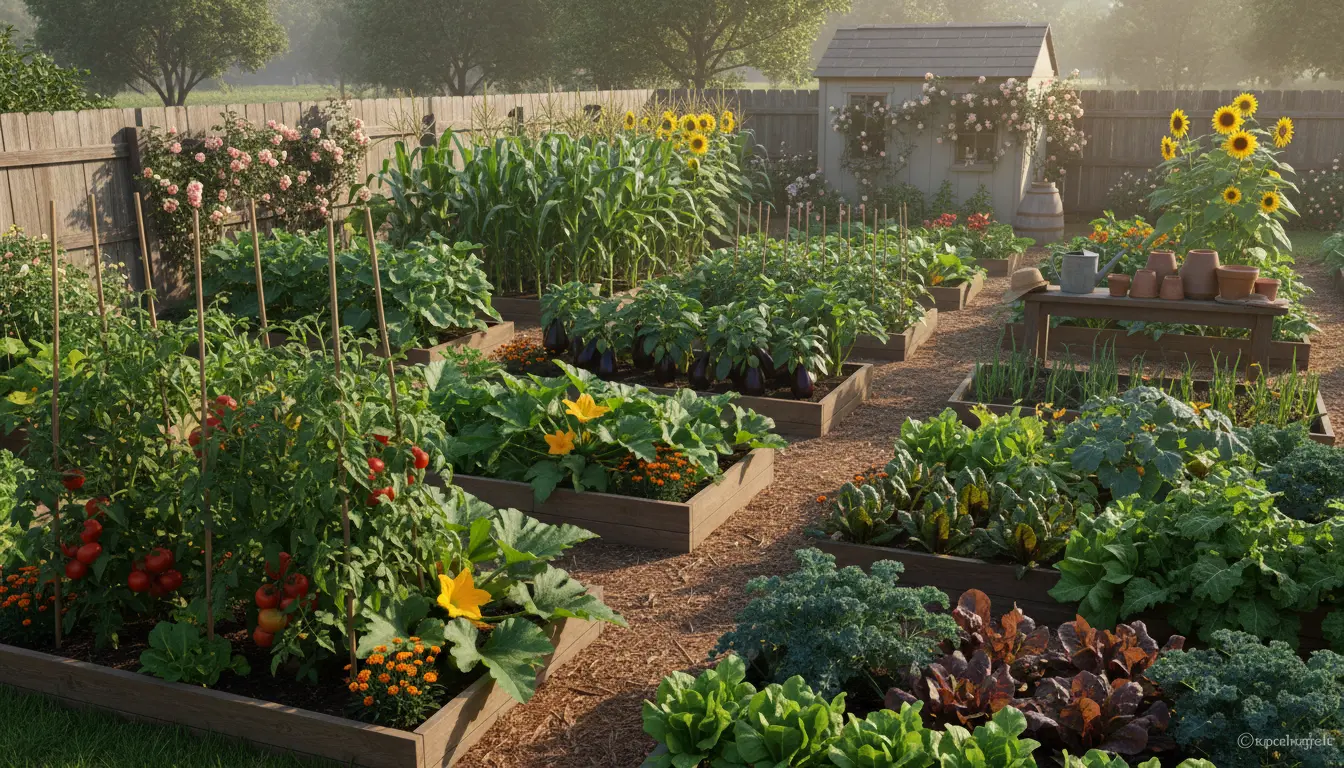
Raised beds are easier to manage and warm up faster in spring. Containers work well on patios or balconies. In-ground rows suit larger spaces.
- Raised beds: good soil control and easier weeding.
- Containers: ideal for herbs, tomatoes, and peppers.
- In-ground rows: best for larger scale plantings like potatoes or corn.
Soil and Soil Preparation
Healthy soil is the foundation for a productive garden. Test the soil and improve it before planting.
Test and Amend Soil

Use a simple home soil test or send a sample to a local extension service. Aim for a slightly acidic to neutral pH (6.0–7.0) for most vegetables.
Work in organic matter like compost or well-rotted manure to improve texture and fertility.
Simple Soil Mix for Raised Beds
- 50% topsoil
- 30% compost
- 20% coarse sand or perlite for drainage
This mix balances nutrients, water retention, and drainage for most vegetables.
What to Plant First
Start with easy, fast-growing vegetables. They give quick wins and build confidence.
- Leafy greens: lettuce, spinach, arugula
- Root crops: radishes, carrots, beets
- Warm-season starters: tomatoes, peppers, bush beans
Check your frost dates to know when to plant seeds or seedlings safely outdoors.
Planting Techniques and Spacing
Follow seed packet or plant label spacing to avoid overcrowding. Proper spacing improves air circulation and reduces disease risk.
Use staggered plantings for continuous harvests. For example, sow lettuce every 2–3 weeks in spring and fall.
Watering and Mulching
Consistent moisture matters more than frequent shallow waterings. Aim for deep, less frequent watering to encourage strong roots.
Mulch with straw, leaves, or wood chips to retain moisture and suppress weeds.
Watering Tips
- Water early in the morning to reduce evaporation and fungal problems.
- Use drip irrigation or soaker hoses for efficient delivery.
- Check soil moisture by pressing a finger into the soil; it should feel moist 1–2 inches down.
Companion planting, such as growing basil near tomatoes, can improve flavor and reduce pest problems naturally.
Maintenance: Weeding, Feeding, and Pest Control
Spend a short time each week removing weeds and checking plants for pests. Small, consistent efforts prevent big problems later.
Feed heavy feeders like tomatoes with a balanced fertilizer every 4 6 weeks during the growing season.
Natural Pest Control
Attract beneficial insects with flowers like calendula and nasturtium. Hand-pick larger pests and use row covers to protect young plants.
Harvesting and Storing
Harvest vegetables at their peak to encourage more production. For many crops, regular harvesting increases yield and flavor.
- Leafy greens: pick outer leaves as needed.
- Tomatoes: harvest when fully colored and slightly soft.
- Carrots and beets: pull when roots reach desired size.
Store produce properly—cool, dry places for root crops and refrigeration for most harvested vegetables.
Small Real-World Case Study
Maria, a beginner gardener in Ohio, started a 10 710 raised bed in April. She planted lettuce, radishes, cherry tomatoes, and bush beans.
By June she was harvesting weekly salad greens and a steady supply of tomatoes by late summer. Her upfront investment in compost and drip irrigation reduced watering time to 20 minutes twice a week.
Her tips: start small, keep a planting calendar, and record yields to plan next season.
Common Mistakes and How to Avoid Them
- Planting too much at once — start small and expand each year.
- Poor soil prep — invest time in compost and testing before planting.
- Overwatering or underwatering — learn to check soil moisture rather than rely on a schedule.
Next Steps and Seasonal Care
Make a simple seasonal calendar: sow dates, transplant dates, fertilizing, and expected harvest windows. This reduces guesswork and helps you manage time.
Visit local extension resources or gardening groups for region-specific advice on varieties and timing.
Follow these steps, start small, and treat the garden as a learning project. With basic planning and weekly care, you can grow fresh vegetables successfully in your first season.