
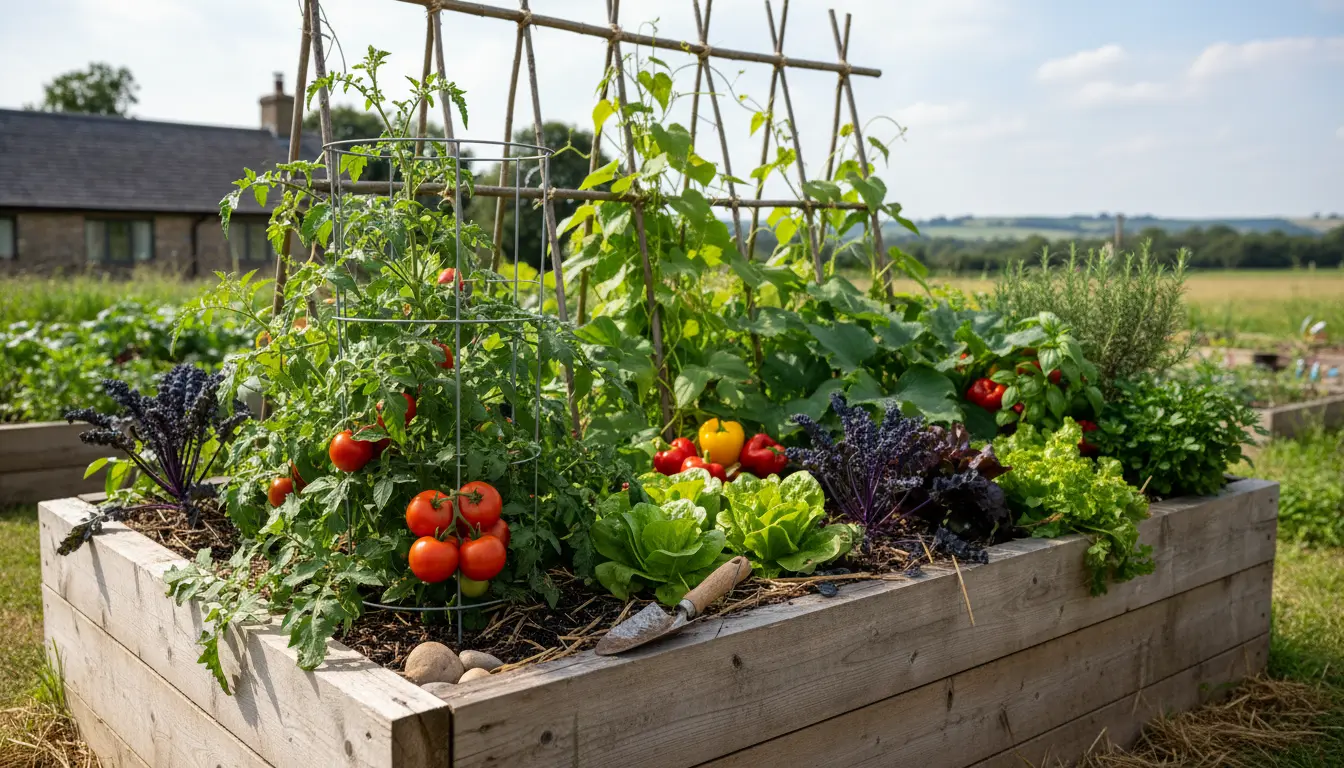
Prepare to Start a Vegetable Garden
Starting a vegetable garden is a manageable project when you break it into clear steps. This guide focuses on practical actions you can take this weekend to get your first beds planted.
Choose the Right Location to Start a Vegetable Garden
Pick a spot with at least six hours of sunlight daily for most vegetables. Consider ease of access to water and how close the bed is to your home.
Avoid low spots that collect water and places with heavy shade from trees or buildings. Good light and water access reduce maintenance and improve yields.
Most common vegetables need 6 to 8 hours of direct sunlight. Leafy greens tolerate less light, while tomatoes and peppers need the most.
Test and Improve Soil Before You Start a Vegetable Garden
Healthy soil is the foundation of a productive garden. Use a simple soil test kit to check pH and nutrient levels.
Work in organic matter such as compost or well-rotted manure to improve soil texture, drainage, and fertility before planting.
Plan What to Grow
Plant vegetables you and your family will eat and that suit your climate and season. Start small to avoid being overwhelmed in the first year.
Select Easy Veggies for Beginners
Choose reliable, low-maintenance crops. Good starter options include:
- Lettuce and salad greens — quick harvest and tolerant of partial shade
- Radishes — fast results and space-saving
- Tomatoes (determinate varieties) — high yield from containers or beds
- Beans and peas — fix nitrogen and are easy to grow
- Herbs like basil and parsley — reward effort and protect crops
Layout and Planting When You Start a Vegetable Garden
Decide on beds, rows, or containers depending on space. Raised beds are efficient for small yards and improve drainage.
Plan for proper spacing to reduce disease and ensure good airflow. Label rows or use a simple map to remember planting dates and varieties.
Planting Tips
Follow seed packet or plant tag instructions for depth and spacing. Start seeds indoors for a head start in cool climates.
Stagger planting for continuous harvests. For example, sow lettuce every two weeks to avoid a single large harvest.
Care: Watering, Feeding, and Mulching
Consistent care keeps plants productive. Water deeply and less frequently to encourage strong roots.
Watering and Mulching
- Water early in the morning to reduce fungal disease risk.
- Use drip irrigation or soaker hoses to deliver water to the root zone.
- Mulch with straw or wood chips to retain moisture and suppress weeds.
Feeding and Fertilizing
Apply a balanced organic fertilizer at planting and side-dress with compost midseason. Avoid over-fertilizing, which can reduce flavor and increase pests.
Pest and Weed Management
Use physical barriers, hand-pulling, and crop rotation to manage pests and weeds. Integrated pest management (IPM) relies on monitoring and targeted actions.
Introduce beneficial insects with habitat plants, and remove diseased leaves promptly to prevent spread.
Seasonal Tasks and Harvesting
Keep a simple calendar of planting, feeding, and expected harvest dates. Regular harvesting encourages continued production in many crops.
Store or preserve excess produce through freezing, drying, or canning to reduce waste and enjoy your harvest longer.
Small Case Study: Backyard 3-Bed Garden
Maria has a 10-by-10-foot sunny backyard and wanted fresh vegetables for her family. She built three raised beds, each 4-by-2 feet, and filled them with a mix of topsoil and compost.
Year 1 plan:
- Bed 1: tomatoes and basil
- Bed 2: lettuce, radishes, and carrots (staggered planting)
- Bed 3: bush beans and a small row of peppers
Results: Maria harvested continuous salad greens for three months and 10–12 pints of tomatoes. Her strategy of succession planting and weekly watering saved time and produced reliable yields.
Checklist to Start a Vegetable Garden
- Choose a sunny site with water access
- Test and amend the soil with compost
- Select 3–6 easy crops for your first season
- Use raised beds or containers if space is limited
- Mulch, water deeply, and monitor pests weekly
Starting a vegetable garden is about small, consistent actions: prepare the site, choose the right crops, and maintain them with routine care. With basic planning and a weekend of work, you can begin harvesting fresh produce in one season.