
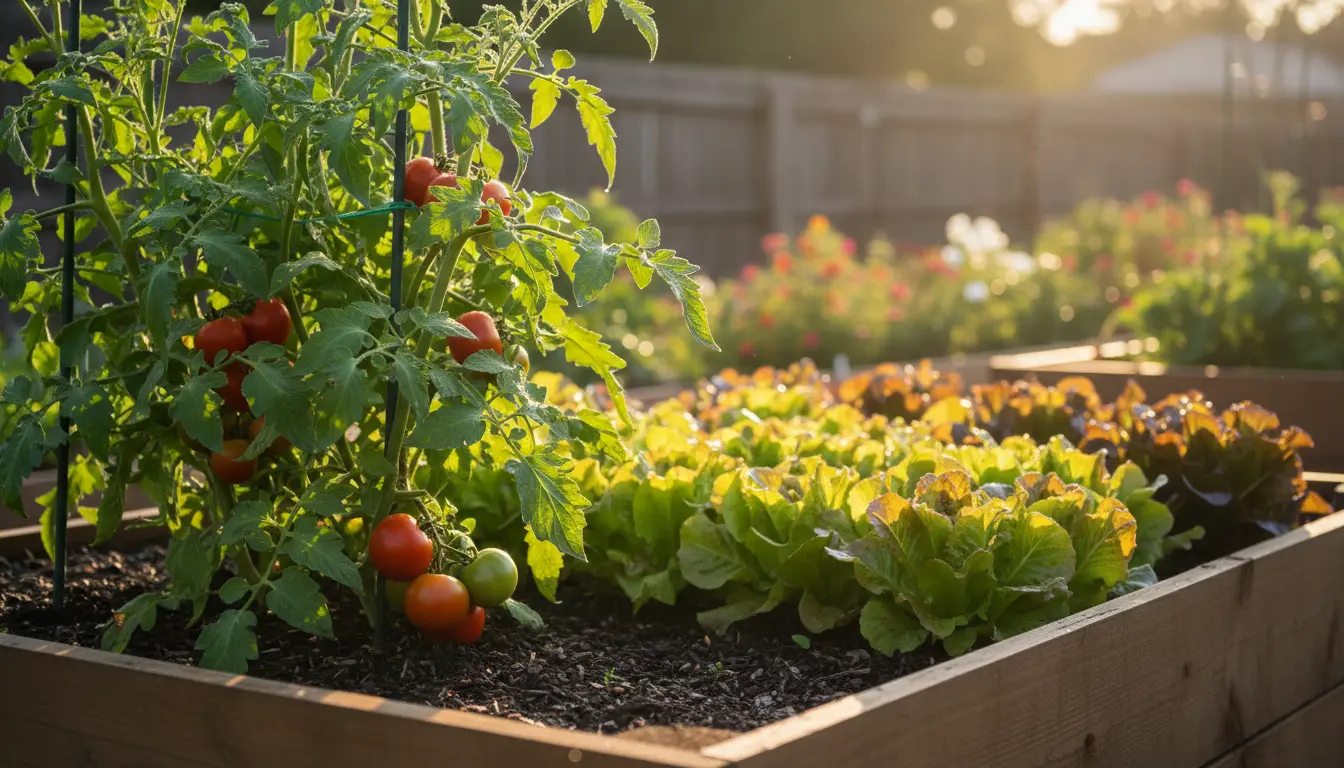
Starting a vegetable garden can be simple and rewarding. This guide explains how to start a vegetable garden with clear planning, easy steps, and common-sense tips for beginners.
Why start a vegetable garden?
A vegetable garden gives fresh produce, saves money, and connects you to where food comes from. It also supports mental well-being through outdoor activity and seasonal progress you can see every week.
Planning your site and layout for how to start a vegetable garden
Good planning reduces effort later. Choose a spot with enough sunlight, access to water, and space that matches how much time you want to spend gardening.
Sunlight and location
Most vegetables need 6–8 hours of direct sun a day. Observe the yard for a week to find the sunniest location. South-facing spots often work best in temperate climates.
Soil, raised beds, and containers
Decide between in-ground beds, raised beds, and containers. Raised beds warm earlier and drain well, while containers work for patios and balconies.
What to plant first when you start a vegetable garden

Begin with easy, low-maintenance crops. These give quick success and teach basic care routines.
- Leafy greens: lettuce, spinach, Swiss chard
- Root vegetables: radishes, carrots, beets
- Warm-season staples: tomatoes, peppers, bush beans
- Herbs: parsley, basil, chives
Choose varieties labeled “beginner” or “disease-resistant” when available. Check seed packets or plant tags for days-to-harvest to fit your season.
Step-by-step instructions on how to start a vegetable garden
Follow this sequence to move from planning to harvest-ready beds. Each step is short and actionable.
- Measure and map your space. Sketch a simple plan showing bed shapes, paths, and water source. Keep bed widths between 3–4 feet so you can reach the center.
- Test and improve soil. Buy a basic soil test kit or send a sample to a local extension service. Add compost and balanced fertilizer as recommended.
- Build beds or prepare ground. For in-ground beds, clear grass and loosen soil 8–12 inches deep. For raised beds, fill with a mix of topsoil, compost, and well-draining material.
- Plant at the right time. Use your local frost dates to schedule sowing or transplanting. Cool-season crops go in earlier; warm-season crops wait until soil warms.
- Water consistently. New plants need regular moisture. Water deeply 1–2 times per week depending on weather. Use drip irrigation or soaker hoses to save time and reduce disease.
- Mulch and weed. Apply a 2–3 inch mulch layer to retain moisture and suppress weeds. Pull weeds early to prevent competition for nutrients.
- Monitor and feed. Inspect plants weekly for pests and nutrient needs. Side-dress with compost or balanced fertilizer during the growing season as needed.
Care and maintenance tips after you start a vegetable garden

Regular but brief maintenance sessions keep the garden productive. Aim for 15–30 minutes three times a week during peak season.
- Prune only when necessary: remove dead leaves and suckers on indeterminate tomatoes.
- Stake or trellis vining plants early to avoid tangles.
- Rotate crops yearly to reduce pests and soil depletion.
Common problems and quick fixes when you start a vegetable garden
Expect some setbacks. Most are manageable with observation and simple corrections.
- Pest damage: hand-pick large insects and use row covers for young plants.
- Yellow leaves: often sign of nutrient deficiency or overwatering—check drainage and add compost.
- Poor germination: thin sowing depth or sow fresh seed; soil that is too cold delays sprouting.
Simple case study: Community gardener starts a small plot
Maria, a new gardener in a community plot, began with one 4×8 raised bed. She chose lettuce, radishes, cherry tomatoes, and basil. Within 10 weeks she harvested baby greens and radishes, gaining confidence to expand next season.
Key actions that helped: testing soil once, installing a soaker hose, and using a calendar to track planting and harvest dates. Small, steady tasks produced visible results and kept maintenance under an hour a week.
Final checklist before you start a vegetable garden
Use this short checklist to confirm readiness before planting.
- Sunny spot identified (6–8 hours/day)
- Water access and simple irrigation plan
- Soil amended with compost
- Seed/seedlings chosen for your season
- Mulch and basic tools on hand
Starting a vegetable garden is a practical project anyone can do with modest time and planning. Begin small, learn what grows well in your area, and expand in later seasons based on what you enjoy eating and harvesting.
Ready to begin? Sketch a small plan today, choose two or three easy crops, and schedule a short prep day this weekend.