
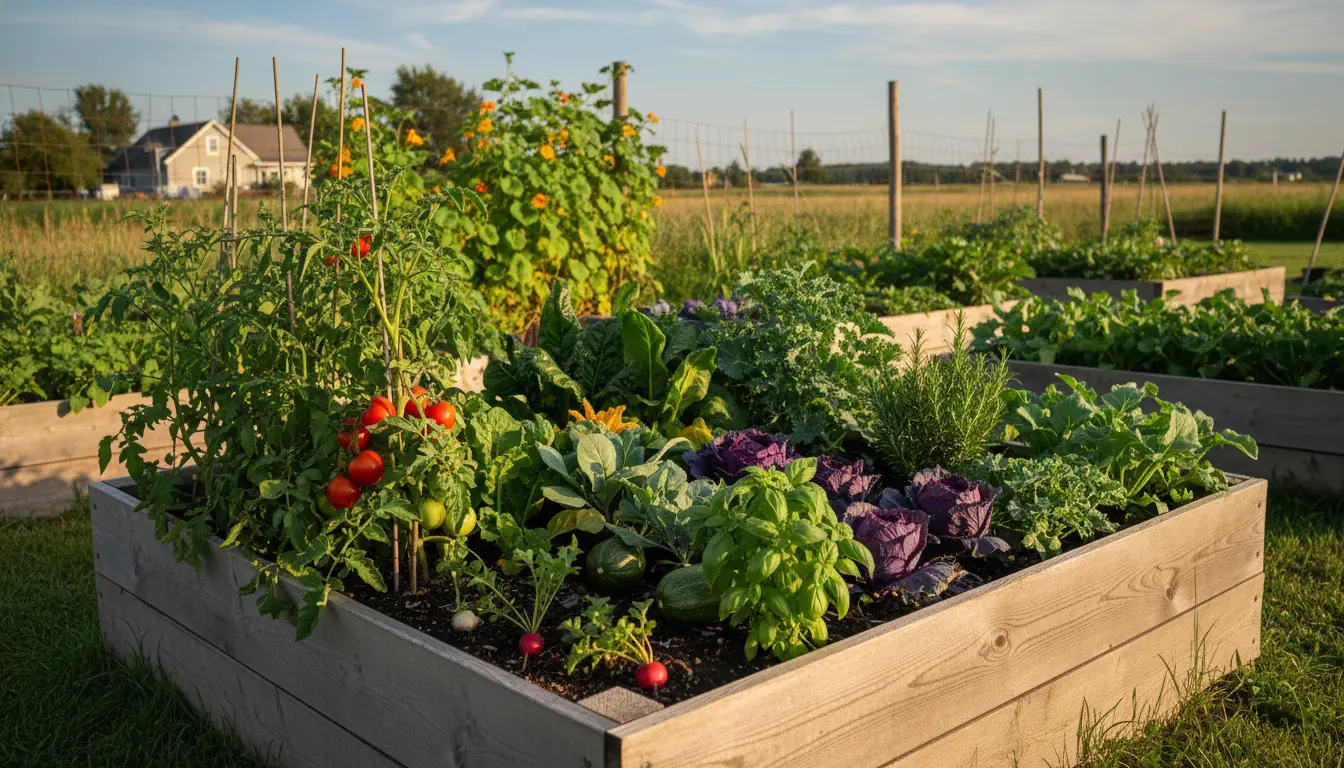
Start Smart: Overview of How to Start a Vegetable Garden
Starting a vegetable garden is a practical way to grow fresh food and learn new skills. This guide breaks the process into simple steps you can follow, whether you have a small balcony or a backyard plot.
Plan Your Vegetable Garden
Good planning saves time and effort later. Decide what you want to grow based on climate, space, and how much time you can commit.
- List vegetables your household eats often.
- Choose quick-win crops for your first season, such as lettuce, radishes, and bush beans.
- Decide on bed type: in-ground, raised beds, or containers.
Size and Layout

Start small to keep tasks manageable. A 4×8 foot raised bed or a few containers can provide plenty of produce for a small family.
Sketch a simple layout showing sun exposure and plant spacing to avoid overcrowding.
Choose the Best Location for a Vegetable Garden
Sunlight, drainage, and access determine the best spot. Most vegetables need 6 to 8 hours of direct sun daily.
- Observe your yard through a full day to map sun and shade.
- Avoid low areas where water pools after rain.
- Place beds near a water source for easy watering.
Soil and Soil Testing
Soil quality has the biggest impact on yields. Test soil pH and nutrients with a kit or local extension service.
Amend soil with compost to improve structure and fertility. Aim for loose, well-drained soil rich in organic matter.
Tools and Materials to Start a Vegetable Garden
You don’t need every tool to begin. Start with a few essentials and add more as your garden grows.
- Hand trowel and spade
- Garden fork or rake
- Watering can or hose with a gentle nozzle
- Quality compost and mulch
Planting: Seeds vs Seedlings
Decide whether to sow seeds directly or plant nursery seedlings. Seeds are cheaper, but seedlings give a head start for a shorter season.
Follow packet directions for depth and spacing. Mark rows to keep things organized as plants emerge.
Succession Planting
Stagger plantings of quick crops like lettuce every 2 to 3 weeks to extend your harvest. Use a calendar to track sowing dates.
Watering and Maintenance for a Vegetable Garden
Consistent watering is crucial. Most vegetables need about 1 inch of water per week, more in hot weather.
- Water at the base of plants to keep leaves dry and reduce disease.
- Use mulch to retain soil moisture and suppress weeds.
- Inspect plants weekly for pests, disease, and nutrient signs.
Fertilizing
Use compost or balanced organic fertilizer according to soil test recommendations. Over-fertilizing can harm plants and the environment.
Pest and Disease Management in a Vegetable Garden
Manage pests with an integrated approach: prevention, monitoring, and targeted control.
- Encourage beneficial insects by planting flowers and herbs nearby.
- Hand-pick larger pests like caterpillars and slugs.
- Use row covers for young plants to prevent insect damage.
Harvesting and Storage
Harvest vegetables at peak ripeness for best flavor and nutrition. Regular harvesting also encourages more production.
- Pick leafy greens early in the morning for crispness.
- Store root crops in a cool, dark place and tomatoes at room temperature.
Simple Seasonal Checklist to Start a Vegetable Garden
- Plan layout and choose crops.
- Test and amend soil with compost.
- Set up beds or containers and plant seeds/seedlings.
- Water consistently and mulch.
- Monitor for pests and harvest when ready.
Adding one inch of compost per year can increase soil organic matter and improve yields by helping the soil retain water and nutrients.
Real-World Example: Small Backyard Success
Case study: A 10×10 foot backyard patch converted into three raised beds yielded a steady supply of salad greens, tomatoes, and beans in the first season.
The gardener started by testing soil, adding two wheelbarrows of compost, and planting starter seedlings. With 20 minutes of maintenance every other day, they harvested salads twice weekly and saved money on groceries.
Final Tips to Start a Vegetable Garden
Begin with low-maintenance crops and expand as you gain confidence. Keep records of planting dates and varieties to refine your approach next season.
Gardening is a learning process; mistakes are part of progress. Stay observant and adjust routines based on results.
If you follow these steps, you can start a vegetable garden that delivers fresh food and enjoyment throughout the growing season.