
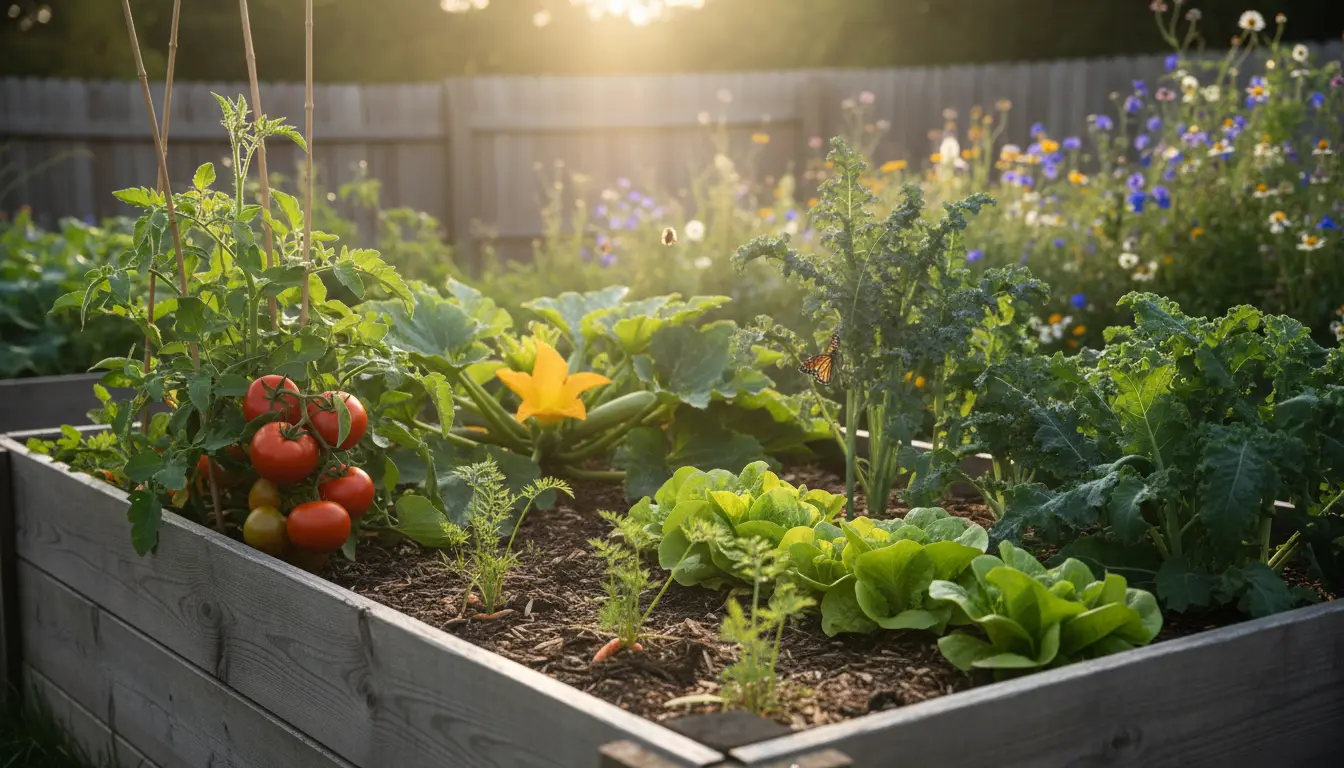
Why Start a Vegetable Garden
Starting a vegetable garden gives you fresh produce, saves money, and connects you to the seasons. It is a practical hobby that improves health and reduces grocery trips.
This guide explains how to start a vegetable garden step by step, using simple methods suitable for small yards, balconies, or community plots.
Planning Your Vegetable Garden

Good planning reduces waste and avoids common pitfalls. Choose a location with at least 6 hours of direct sunlight for most vegetables.
Consider access to water, soil condition, and protection from wind or pests when planning your garden layout.
Decide Size and Layout for Your Vegetable Garden
Start small to build confidence. A 4×4 or 4×8 raised bed or a few containers can produce a surprising amount of food.
- Raised beds: Better drainage and control of soil quality.
- Containers: Ideal for balconies and patios.
- In-ground rows: Good for larger yards with native fertile soil.
Choose Vegetables for Your Garden
Pick plants you and your family will eat and those suited to your climate. Beginners should choose easy crops that grow quickly.
- Easy starters: lettuce, radishes, cherry tomatoes, bush beans, and herbs.
- Longer-term: carrots, beets, peppers, and squash.
Soil and Soil Preparation for a Vegetable Garden
Soil quality determines long-term success. Aim for loose, well-draining soil rich in organic matter.
Test your soil pH with a kit or local extension service. Most vegetables prefer pH 6.0–7.0.
Improve Soil for Your Vegetable Garden
Add compost and well-rotted manure to improve fertility and structure. Work amendments into the top 6–12 inches of soil.
For raised beds and containers, use a mix of topsoil, compost, and a light mineral material like perlite or coarse sand for drainage.
Planting and Timing in Your Vegetable Garden
Follow planting dates for your zone. Use seed packets or plant labels to check days to maturity and frost sensitivity.
Start cool-season crops (lettuce, peas, spinach) early in spring and warm-season crops (tomatoes, peppers) after the last frost.
Succession Planting and Crop Spacing
Stagger plantings every 2–3 weeks for continuous harvest. Respect spacing to reduce disease and allow airflow.
- Example: Plant radishes every 2 weeks, and replace harvested radishes with a second crop.
- Leave walking paths to avoid compacting soil and damaging roots.
Watering and Maintenance for a Vegetable Garden
Consistent watering encourages steady growth and reduces stress. Water deeply once or twice a week rather than frequent shallow watering.
Use drip irrigation or soaker hoses to deliver water to the root zone and reduce leaf wetness that causes disease.
Pest and Disease Management in Your Vegetable Garden
Monitor plants weekly for pests and signs of disease. Early intervention prevents large losses.
Use crop rotation, companion planting, and physical barriers like row covers to deter pests. Apply organic controls such as insecticidal soap when necessary.
Harvesting Tips for Your Vegetable Garden
Harvest vegetables at peak ripeness for best flavor and nutrition. Frequent harvesting encourages more production, especially in lettuces and beans.
Use clean tools and cut rather than pull when harvesting to avoid disturbing the plant or soil.
Simple Case Study: A First-Time Gardener
Backyard Raised Bed Example
Maria used a 4×8 raised bed in a sunny corner of her yard. She filled it with a mix of topsoil and compost and planted cherry tomatoes, bush beans, lettuce, and basil.
She watered twice weekly with a soaker hose, mulched to retain moisture, and planted radishes between lettuce rows for fast harvests. In one season she harvested enough salad greens to cut grocery salad purchases by half.
Key wins: small initial investment, steady weekly tasks, and crops chosen for ease and frequent harvest.
Planting marigolds near tomato plants can reduce nematode damage. Many gardeners use simple companion plants to improve pest resistance naturally.
Quick Checklist to Start Your Vegetable Garden
- Pick a sunny spot and measure available space.
- Decide raised beds, containers, or in-ground planting.
- Test and amend soil with compost.
- Select easy crops for your climate and tastes.
- Set up a simple watering plan and mulch to conserve soil moisture.
- Monitor plants weekly and harvest regularly.
Final Tips for a Successful Vegetable Garden
Start small and keep a simple journal of planting dates and harvest yields. Learning from a few seasons is the fastest way to improve.
Join a local gardening group or extension service for region-specific advice and seed swapping. Consistency and observation beat complicated techniques for beginners.