
Starting a vegetable garden is simple when you break it into clear steps. This guide shows how to start a vegetable garden with practical, actionable advice for beginners and busy homeowners.
How to Start a Vegetable Garden: Plan First
Every successful garden begins with a plan. Decide what you want to grow and how much time you can commit each week.
- List vegetables you and your family eat frequently.
- Prioritize easy crops like lettuce, radishes, tomatoes, and beans.
- Choose a garden type: in-ground, raised beds, or containers.
Start a Vegetable Garden: Choose the Right Location
Pick a site with at least 6 hours of direct sunlight for most vegetables. Good drainage and easy water access are important.
Consider proximity to your kitchen — more convenient spots get more attention.
Sunlight and Soil Basics
Most veggies need full sun. If you have partial shade, grow leafy greens and root crops instead.

Test the soil texture: sandy soils drain fast, clay holds water. Aim for loamy soil for best results.
Test and Improve Soil Before You Plant
Testing soil pH and nutrients helps you add the right amendments. Many local extension offices offer low-cost testing.
- Target pH 6.0 to 7.0 for most vegetables.
- Incorporate 2–4 inches of compost before planting.
- Use organic matter to improve structure and drainage.
How to Start a Vegetable Garden: Choose Plants and Timing
Choose varieties suited to your climate and season. Consult a local planting calendar or extension service for frost dates.
Start cool-season crops early (peas, lettuce). Plant warm-season crops (tomatoes, peppers) after the last frost.
Seed vs. Transplant
Seeds are cheaper but need more time and care early on. Transplants give a head start for crops like tomatoes and peppers.
- Use seeds for carrots, beans, and radishes.
- Buy healthy transplants for tomatoes, eggplants, and peppers.
Planting and Spacing
Follow seed packet or plant tag spacing to avoid overcrowding. Proper spacing improves airflow and reduces disease risk.
Use rows or raised beds to maximize yield in small spaces.
Watering and Mulching
Water deeply and less frequently to encourage strong roots. Aim for consistent moisture, especially during flowering and fruit set.
- Water early in the day to reduce fungal risk.
- Apply 2–3 inches of organic mulch to retain moisture and suppress weeds.
Start a Vegetable Garden: Common Pest and Disease Control
Monitor plants weekly for pests and signs of disease. Use integrated pest management (IPM) methods first.
- Handpick large pests like caterpillars and beetles.
- Introduce beneficial insects such as ladybugs for aphid control.
- Use row covers to protect young plants from insects and birds.
Organic Treatment Options
Try neem oil, insecticidal soap, or diatomaceous earth for many pests. Always follow product labels and test on a few leaves first.
Tomatoes and basil planted together can improve tomato flavor and may help repel certain pests. Companion planting can increase yield and reduce pest pressure.
Practical Maintenance Tasks
Regular maintenance keeps a garden productive. Spend short, consistent times each week to weed, water, and inspect plants.
- Weed weekly before they set seed.
- Thin seedlings to recommended spacing to avoid competition.
- Rotate crops each year to reduce soil-borne diseases.
Harvesting Tips
Harvest regularly for best flavor and continued production. Pick lettuce and greens young; harvest tomatoes when fully colored but still firm.
Small Real-World Example
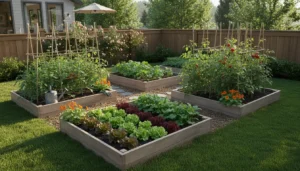
Case Study: Sarah’s 10×4 Raised Bed. Sarah converted a 10-by-4-foot patch into a raised bed. She planted tomatoes, basil, lettuce, and bush beans.
After testing soil and adding compost, she used trellises for tomatoes and staggered planting dates for continuous harvest. In her first summer she harvested enough greens for salads two to three times a week and a steady supply of tomatoes in July and August.
This modest setup required about 30 minutes of weekly care and paid off with fresh produce and reduced grocery costs.
How to Start a Vegetable Garden: Final Checklist
- Pick a sunny site and test the soil.
- Amend soil with compost and choose appropriate varieties.
- Plant at correct times and provide consistent water.
- Monitor pests and use organic controls when needed.
- Harvest regularly and rotate crops each season.
Ready to begin? Start with a small, manageable space and grow what you will eat. With planning and simple weekly care, anyone can start a productive vegetable garden.