
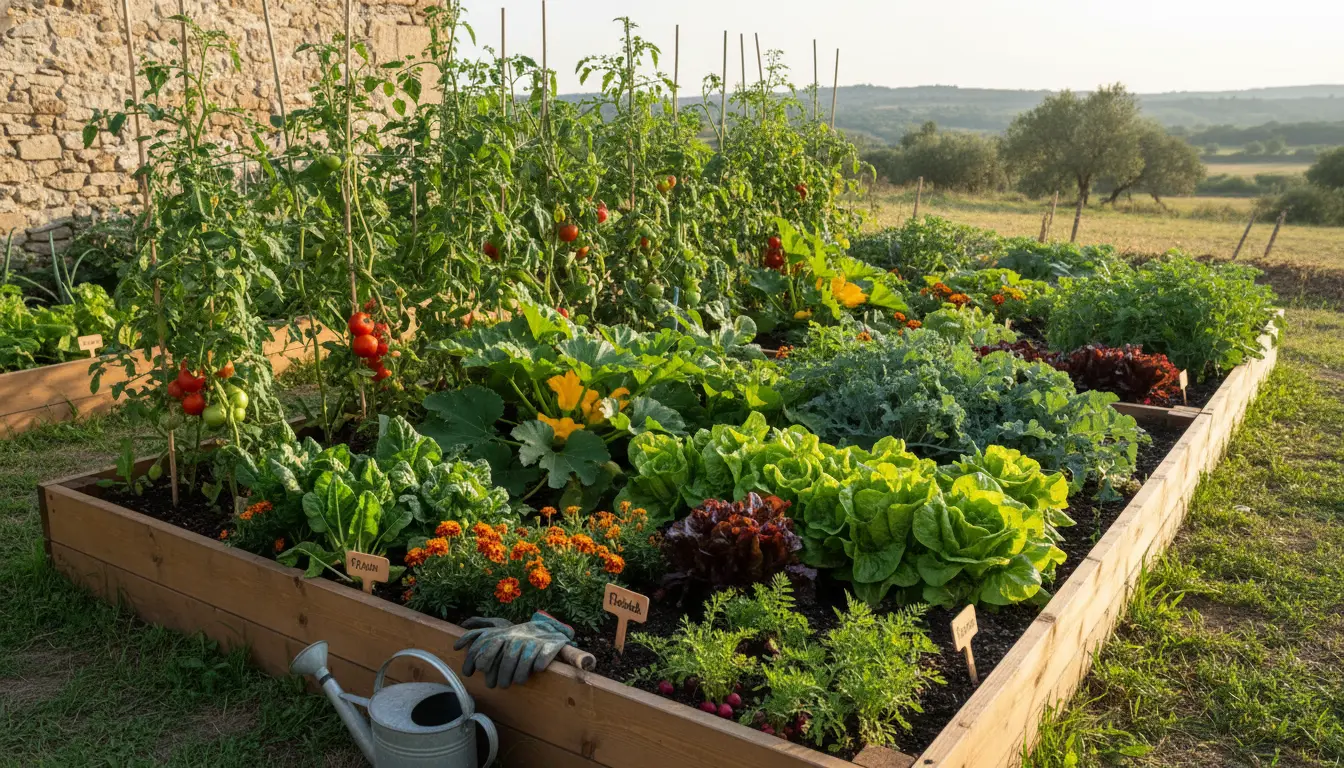
Starting a vegetable garden is a practical way to grow fresh food, save money, and enjoy outdoor activity. This guide breaks the process into clear steps so you can plan, plant, and maintain a productive garden.
Choose the Right Site for Your Vegetable Garden
Good site selection is the foundation of a successful vegetable garden. Aim for a spot that gets at least six hours of direct sunlight per day and has easy access to water.
Also consider wind exposure, slope, and convenience. A flat area near your kitchen and water source simplifies daily care and harvesting.
Plan the Layout of Your Vegetable Garden
Planning helps you use space efficiently and reduces problems later. Decide between in-ground rows, raised beds, or container gardening based on your soil, budget, and mobility needs.
Sketch a simple layout showing bed sizes, paths, and what you plan to plant. Leave 18–24 inches between beds for comfortable access.
Crop Selection for a Vegetable Garden

Choose vegetables that match your climate, season, and skill level. Start with reliable, easy crops like tomatoes, lettuce, radishes, and beans.
Mix quick-growing crops (lettuce, radishes) with longer-season plants (tomatoes, peppers) to maximize harvests. Consider companion planting to improve yields and deter pests.
Prepare Soil for a Vegetable Garden
Soil quality determines plant health and yields. Test your soil pH and nutrient levels with a simple kit or local extension service.
Amend soil with compost and organic matter to improve structure and fertility. For heavy clay or poor soil, raised beds filled with a well-draining mix provide faster results.
Soil Preparation Tips for Vegetable Garden Success
- Remove weeds and debris before planting.
- Work in 2–4 inches of compost per season to boost organic content.
- Adjust pH to the recommended range (most vegetables prefer pH 6.0–7.0).
Planting and Watering Your Vegetable Garden
Follow seed packet or plant tag instructions for spacing, depth, and timing. Transplant seedlings after hardening them off for a week to reduce shock.
Water deeply and less frequently to encourage deep root growth. Aim for consistent moisture; most vegetables need about 1 inch of water per week during the growing season.
Practical Planting Schedule for a Vegetable Garden
- Early spring: peas, radishes, lettuce.
- After frost: tomatoes, peppers, cucumbers.
- Succession planting: sow small patches of lettuce or radishes every 2–3 weeks.
Maintain Your Vegetable Garden
Routine care keeps plants healthy and productive. Tasks include weeding, mulching, monitoring pests, and feeding plants as needed.
Mulch conserves moisture and suppresses weeds. Use organic mulches like straw or shredded leaves and maintain a 2–3 inch layer around plants, keeping mulch away from stems.
Pest and Disease Management in a Vegetable Garden
Inspect plants weekly for pests and disease signs. Early removal of affected leaves and handpicking pests reduces the need for chemical controls.
Use row covers, beneficial insects, and crop rotation to limit pests. Rotate families of crops (e.g., nightshades, brassicas) each year to break disease cycles.
Harvesting and Extending the Season
Harvest vegetables at peak ripeness for best flavor and continued production. Frequent picking of beans, zucchini, and tomatoes encourages more fruiting.
To extend the season, use cold frames, row covers, or move containers to protected areas. Choose fast-maturing varieties for late-season planting.
Interplanting flowers like marigolds and nasturtiums with vegetables can attract pollinators and deter some pests, improving yields without chemicals.
Simple Case Study: A Small Raised Bed Vegetable Garden
Case: Maria, a busy homeowner, started a 4×8 ft raised bed in spring. She used a mix of compost, topsoil, and peat-free potting mix to fill the bed.
Maria planted cherry tomatoes at the back, basil and peppers in the middle, and lettuce and radishes at the front for quick harvests. She watered twice a week and applied compost tea once midseason.
Result: By midsummer she had regular salads and enough tomatoes to share, and minimal pest issues due to companion planting and weekly checks.
Quick Checklist to Start a Vegetable Garden
- Choose a sunny site and measure available space.
- Decide bed type: in-ground, raised, or containers.
- Test and amend soil; add compost.
- Select easy crops for your climate and season.
- Water deeply, mulch, and monitor pests weekly.
Final Tips for New Vegetable Gardeners
Start small to build confidence and learn local conditions. A 4×8 bed or a few containers are easier to manage than a large plot.
Keep a simple garden journal to record planting dates, varieties, and issues. Over seasons, this log becomes a valuable guide for better yields.
With thoughtful site selection, soil preparation, and routine care, a vegetable garden can be productive and rewarding. Use the steps above to plan your first season and adjust as you learn what works for your space and climate.