
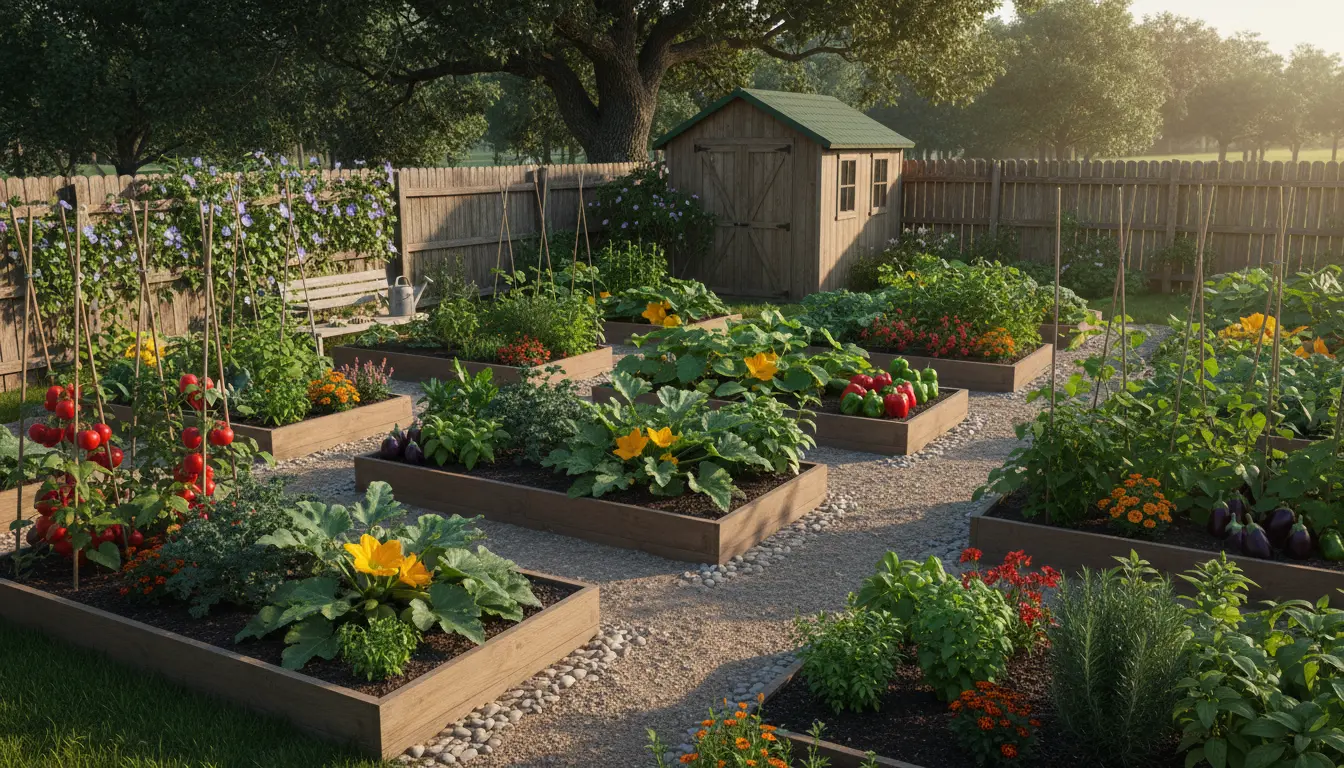
Starting a vegetable garden is one of the most rewarding ways to grow fresh food, save money, and learn new skills. This guide walks you through each step in plain language so you can plan, plant, and maintain a productive garden even if you have limited space.
Plan Your Garden: Where and What to Grow
Before you dig, sketch a simple plan. Note how much sun your yard gets, how much time you can spend, and what vegetables your household enjoys eating.
Choose the Right Location to Start a Vegetable Garden

Most vegetables need at least 6 hours of direct sun daily. Aim for a spot with good drainage and easy access to water. If sunlight is limited, pick a south- or west-facing area.
Pick Easy Vegetables for Beginners
Start with low-maintenance, high-reward crops. Good first vegetables include:
- Leafy greens: lettuce, spinach, and Swiss chard
- Root vegetables: radishes and carrots
- Fruiting crops: cherry tomatoes and bush beans
- Herbs: basil, parsley, and chives
These plants tolerate minor mistakes and produce quickly, which keeps motivation high for new gardeners.
Prepare Soil and Beds to Start a Vegetable Garden
Healthy soil is the foundation of a productive garden. Spend time improving soil quality before planting to reduce problems later.
Soil Testing and Improvement
Test the soil pH with a simple kit or local extension service. Most vegetables prefer pH 6.0 to 7.0. Add compost to boost organic matter and improve structure.
- Mix 2–4 inches of compost into the top 6–8 inches of soil.
- For clay soil, add coarse sand and compost to improve drainage.
- For sandy soil, add compost to improve moisture retention.
Raised Beds, Containers, or In-Ground Planting
Choose a planting method that fits your space and physical ability. Raised beds warm faster in spring and offer better drainage. Containers work well on balconies and patios.
Example bed sizes: a 4×8 foot raised bed yields a lot while keeping edges reachable from both sides.
Planting, Watering, and Care to Start a Vegetable Garden
Follow planting guides on seed packets or plant tags to know spacing and depth. Proper planting helps reduce disease and competition among plants.
Planting Tips
- Direct sow seeds for carrots, radishes, and beans at recommended depths.
- Transplant seedlings for tomatoes and peppers after the last frost date.
- Stagger plantings of lettuce and greens every 2–3 weeks for continuous harvest.
Watering and Mulching
Water deeply and less often rather than frequent shallow watering. Aim for 1–1.5 inches of water per week from rain and irrigation combined.
- Use soaker hoses or drip irrigation to deliver water to the root zone.
- Apply 2–3 inches of organic mulch to conserve moisture and suppress weeds.
Maintenance, Pests, and Harvesting When You Start a Vegetable Garden
Regular maintenance is quick and prevents big problems. Spend 15–30 minutes a few times a week checking for pests, watering needs, and new growth.
Simple Pest Management
Use prevention first: clean up debris, rotate crops yearly, and encourage beneficial insects with flowers like marigolds and alyssum. Handpick large pests like caterpillars and slugs in the early morning.
If pests persist, use targeted organic controls such as neem oil or insecticidal soap. Always follow label directions and avoid broad-spectrum pesticides that harm pollinators.
Harvesting Tips
Harvest often to encourage continuous production. Pick leafy greens when young for tenderness and tomatoes when fully colored for flavor.
- Beans: harvest every few days to extend production.
- Tomatoes: pick at peak color and let finish indoors if needed.
- Herbs: pinch flower buds to keep leaves vigorous.
Companion planting can reduce pests and boost yield. For example, planting basil near tomatoes may improve flavor and deter some insects.
Case Study: A Small City Backyard
Maria converted a 10×10 foot sunny corner of her city yard into two raised beds. She filled them with a 50/50 mix of compost and topsoil and planted cherry tomatoes, bush beans, lettuce, and basil.
In the first season she spent about four hours per week on watering and weeding. Her harvest provided fresh salad greens for two adults and enough tomatoes for salsa and freezing.
Key takeaways: choosing compact varieties, improving soil before planting, and regular light maintenance made the garden productive without high effort.
Quick Checklist to Start a Vegetable Garden
- Pick a sunny location with good drainage.
- Test and improve soil with compost.
- Choose easy crops and appropriate planting methods.
- Water deeply, mulch, and check plants regularly.
- Use simple organic pest controls when needed.
Starting a vegetable garden is a step-by-step process. With basic planning, modest effort, and seasonal adjustments, even small spaces can yield fresh, nutritious produce.