
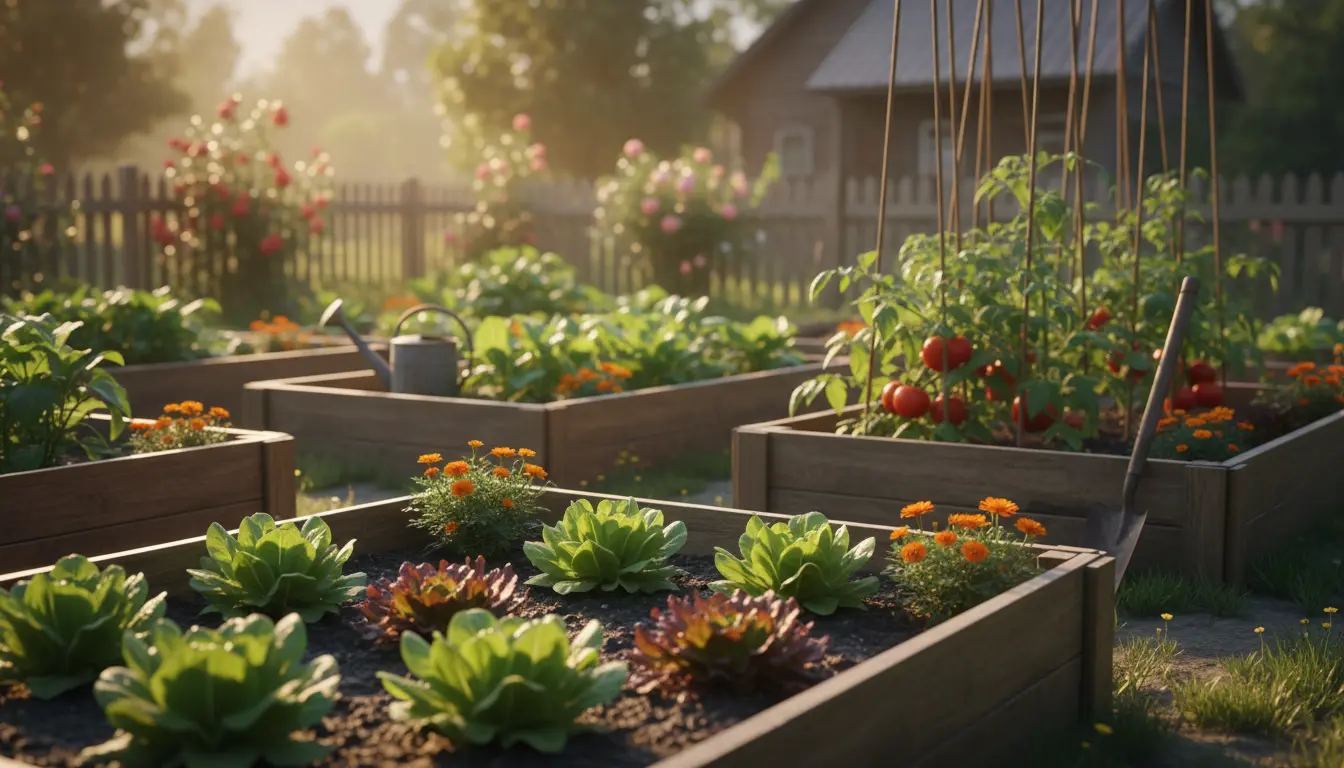
Starting a vegetable garden is a practical way to grow fresh food, save money, and enjoy outdoor activity. This guide gives clear, step-by-step instructions you can apply whether you have a small balcony or a backyard plot.
How to Start a Vegetable Garden: Choose the Right Location
Pick a spot that gets at least six hours of direct sunlight for most vegetables. A level area with good drainage reduces watering problems and soil erosion.

Consider proximity to water and convenience for daily care. If space is limited, containers or raised beds near the kitchen make harvests easier.
Site checklist
- 6+ hours of sun for sun-loving crops
- Easy access to a water source
- Protection from strong winds or heavy shade
- Room to expand or rotate crops next season
How to Start a Vegetable Garden: Plan What to Grow
Start with 4–6 varieties you and your family actually eat. Choose quick-growing, beginner-friendly vegetables such as lettuce, radishes, tomatoes, bush beans, and zucchini.
Check your USDA hardiness zone and local frost dates to schedule planting and avoid losses from cold snaps.
Beginner plant suggestions
- Lettuce and spinach — fast and harvestable multiple times
- Radishes — ready in 3–4 weeks
- Tomatoes (determinant) — consistent harvest, manageable size
- Beans (bush) — high yield with low care
How to Start a Vegetable Garden: Prepare Soil and Beds
Healthy soil is the most important factor for a productive garden. Test the soil pH and nutrient levels with a simple kit or local cooperative extension service.
Improve structure and fertility by adding organic matter: compost, well-rotted manure, or leaf mold work well.
Soil preparation steps
- Remove weeds and debris from the area.
- Loosen soil to 8–12 inches for most vegetables.
- Mix in 2–4 inches of compost across the bed.
- Rake smooth and form rows or plant holes.
How to Start a Vegetable Garden: Planting and Spacing
Follow seed packet or plant label spacing to avoid overcrowding. Proper spacing reduces disease risk and improves air circulation.
Mulch around plants to conserve moisture, suppress weeds, and keep soil temperatures steady.
Planting tips
- Sow seeds at the depth recommended on the packet.
- Water gently after planting to settle soil.
- Thin seedlings to the strongest specimens when true leaves appear.
How to Start a Vegetable Garden: Watering and Maintenance
Consistent watering is critical. Aim for deep, infrequent watering rather than shallow, frequent sprinkling.
Use soaker hoses or drip irrigation to deliver water directly to roots and reduce leaf wetness that can cause disease.
Routine tasks
- Check soil moisture twice a week; increase in hot weather.
- Remove weeds before they set seed.
- Monitor for pests and treat early with physical removal or targeted organic controls.
How to Start a Vegetable Garden: Fertilizing and Crop Rotation
Apply a balanced fertilizer at planting if compost is limited. Side-dress heavy feeders like tomatoes and corn with compost or fertilizer midseason.
Rotate crops each year to reduce build-up of pests and diseases. Avoid planting the same family (e.g., nightshades) in the same bed consecutively.
Small Real-World Case Study
Sarah, a beginner gardener, converted a 10-by-10 foot patch in her sunny backyard into three raised beds. She started with lettuce, tomatoes, bush beans, and radishes.
After testing soil and adding compost, she followed a simple schedule: sow lettuce and radishes early, transplant tomatoes after frost, and mulch to conserve moisture. By midsummer she was harvesting salads weekly and saved seed for next year.
Her lesson: small scale, consistent care, and choosing familiar vegetables led to steady success without fancy tools.
Common Problems and Quick Fixes
Yellow leaves often mean nutrient deficiency or overwatering. Check soil moisture and consider a light feeding of balanced fertilizer.
Slugs and snails can be controlled by handpicking, beer traps, or copper barriers. For aphids, blast them off with water or introduce beneficial insects like ladybugs.
Quick troubleshooting checklist
- Wilting in midday sun: likely temporary; water deeply if persistent
- Stunted growth: check soil fertility and root health
- Leaf spots or powdery mildew: improve air flow, remove affected leaves
Next Steps and Seasonal Planning
Keep a simple garden journal: planting dates, varieties, successes and failures. This record will improve planning in subsequent seasons.
Expand gradually. Add a few new varieties each year and experiment with succession planting to extend harvests.
With planning, soil care, and simple routine maintenance you can start a vegetable garden that supplies fresh produce and teaches reliable skills. Begin small, be consistent, and learn from each season.