
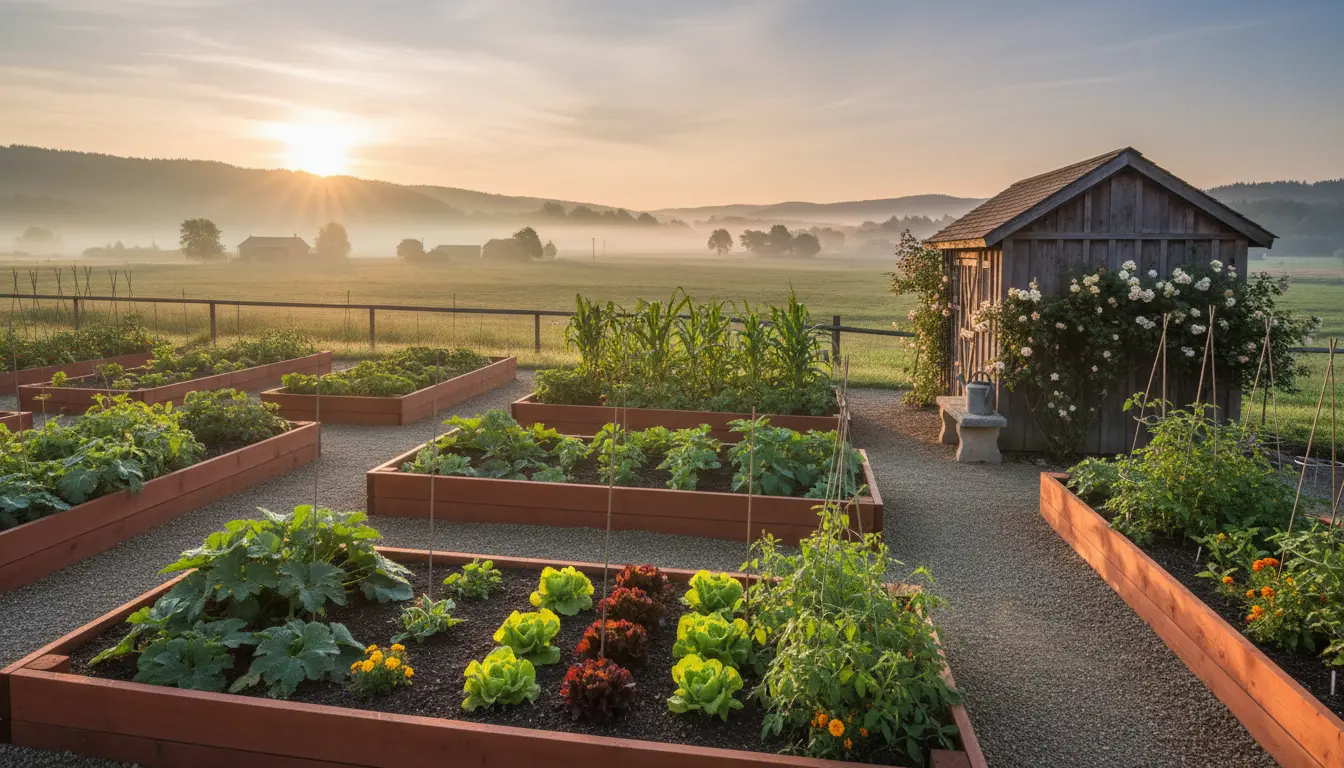
How to Start a Vegetable Garden: Overview
Starting a vegetable garden is a practical way to grow fresh food, save money, and enjoy time outdoors. This guide explains clear steps to plan, plant, and care for a productive garden.
Choose the Right Site to Start a Vegetable Garden
Good site selection is the first step to success. Vegetables need at least six hours of direct sunlight each day and a level area with good drainage.
Consider proximity to water, ease of access for daily care, and protection from strong winds or heavy foot traffic. If ground space is limited, raised beds or containers work well.
Sunlight and Space
Map sunlight on your chosen spot at different times of day to confirm exposure. Many vegetables perform best in full sun but some leafy greens tolerate partial shade.
Soil and Drainage
Soil should be loose and drain well. Avoid compacted or clay-heavy sites unless you plan to amend or use raised beds.
Prepare Soil Before You Plant

Healthy soil is the foundation of a productive vegetable garden. Test your soil pH with a home kit or local extension service to determine needed amendments.
Improve soil structure by adding organic matter like compost or well-rotted manure. This increases fertility, water retention, and microbial life.
- Test soil pH; most vegetables prefer pH 6.0–7.0.
- Add 2–4 inches of compost and mix into top 6–8 inches of soil.
- Use raised beds if drainage or soil quality is poor.
Decide What to Plant
Pick vegetables suited to your climate, season, and skill level. Start with easy crops that give reliable yields for beginners.
Beginner-Friendly Vegetables
- Leafy greens: lettuce, spinach, Swiss chard
- Root crops: radishes, carrots, beets
- Fruit-bearing: cherry tomatoes, bush beans, peppers
Choose varieties labeled for your region and note days to maturity to plan succession planting.
Planting: Seeds vs. Transplants
Decide between sowing seeds directly and planting seedlings bought from a nursery. Seeds are cheaper but transplants give a head start.
Follow seed packet or plant tag instructions for spacing and depth. Crowding leads to poor airflow and more disease problems.
Timing
Refer to your local frost dates and planting calendar. Cool-season crops go in earlier; warm-season crops wait until after the last frost.
Watering and Mulching
Water consistently to keep soil evenly moist, especially during germination and flowering. Deep, infrequent watering encourages strong roots.
Mulch around plants to conserve moisture, reduce weeds, and moderate soil temperature. Use straw, shredded leaves, or bark chips.
Pest and Disease Management
Prevent problems by keeping plants healthy and practicing good sanitation. Inspect plants regularly for pests or disease and remove affected parts promptly.
- Use row covers to protect seedlings from insects.
- Rotate crops yearly to reduce soil-borne diseases.
- Encourage beneficial insects like ladybugs and lacewings.
Harvesting and Ongoing Care
Harvest vegetables when they reach peak ripeness for the best flavor and to encourage further production. Regular picking increases yield for many crops.
Continue to amend soil with compost each season and plan crop rotation to maintain fertility and reduce pests.
Small Case Study: Backyard 10×6 Raised Bed
Maria converted a 10 ft by 6 ft sunny corner into two raised beds with 8-inch soil depth. She filled beds with a mix of topsoil and compost and planted cherry tomatoes, basil, lettuce, and bush beans.
During the first season she harvested weekly salads, three tomato flushes, and multiple bean pickings. Compost top-ups and regular watering were the keys to her success.
Planting flowers such as marigolds or calendula near vegetable beds can attract beneficial insects and reduce pests naturally.
Checklist: How to Start a Vegetable Garden
Use this short checklist to move from planning to planting quickly and confidently.
- Choose a sunny, well-drained site near water access.
- Test soil and add compost or adjust pH if needed.
- Select easy vegetables suited to your season and taste.
- Decide between seeds or transplants and follow spacing rules.
- Mulch, water deeply, and monitor for pests.
- Harvest regularly and add compost each season.
Final Tips for Beginners
Start small: a single raised bed or a few containers can teach you the basics without overwhelming effort. Expand as you gain confidence and knowledge.
Keep a simple garden journal to note planting dates, varieties, and problems encountered. This record helps improve your decisions each year.
With consistent care and a bit of planning, anyone can start a vegetable garden that provides fresh produce and gardening satisfaction.