
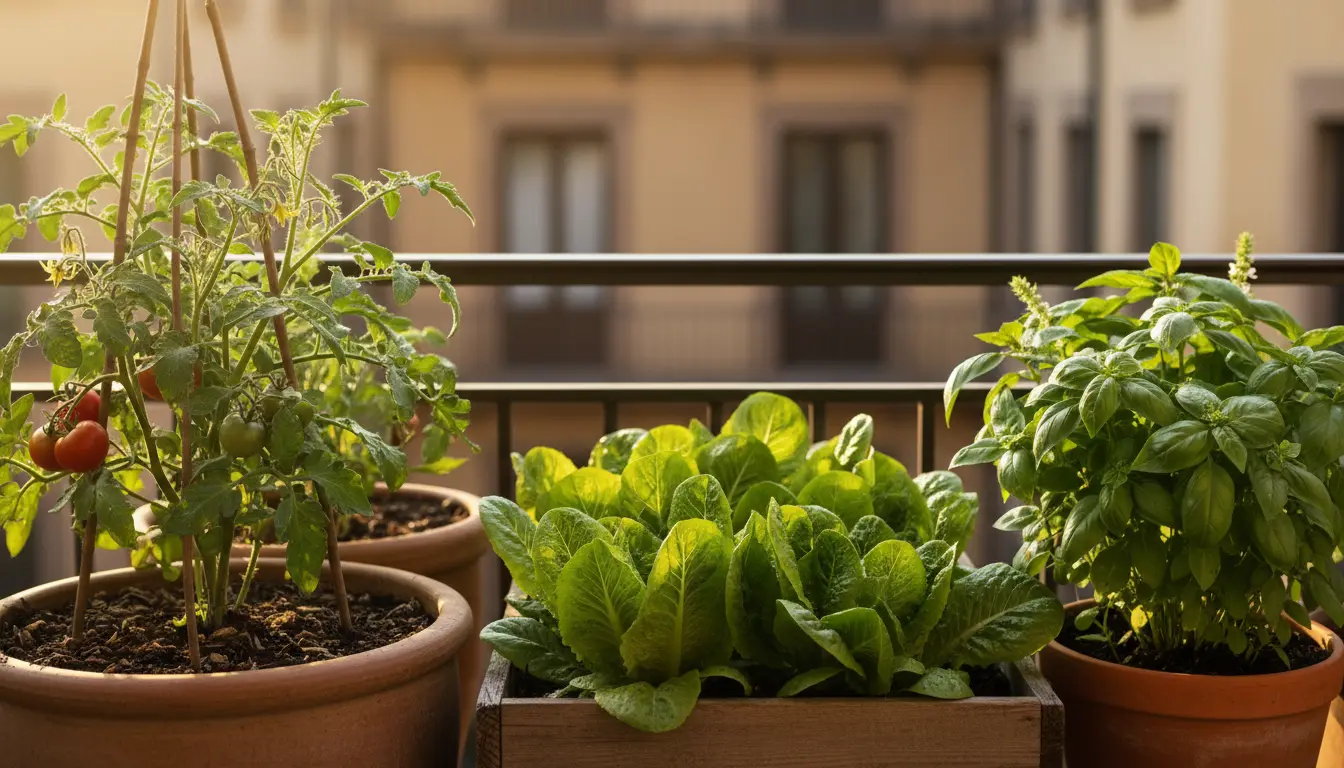
Plan Your Vegetable Container Garden
Start by choosing where you will place containers. Consider sunlight, wind exposure, and access to water for daily care.
Decide what vegetables you want to grow based on space and light. Many vegetables will do well in containers if you match plant needs to conditions.
Choose the Right Containers for a Vegetable Container Garden
Select containers that hold at least the minimum soil volume each plant needs. Larger containers retain moisture better and reduce watering frequency.
- Small pots (under 5 gallons): herbs, lettuce, radishes
- Medium pots (5–10 gallons): peppers, bush tomatoes, dwarf beans
- Large pots (10+ gallons): indeterminate tomatoes, potatoes
Drainage is essential. Ensure each pot has drainage holes and use saucers to protect surfaces from overflow.
Materials and placement
Terracotta, plastic, and fabric pots each have pros and cons. Terracotta breathes but dries faster. Plastic retains moisture but can overheat in direct sun. Fabric pots encourage healthy roots.
Place containers where they get the required sunlight: full-sun crops need 6–8 hours, partial-sun crops 4–6 hours.
Use the Best Soil for a Vegetable Container Garden
Do not use garden soil in pots—it compacts and drains poorly. Use a high-quality potting mix designed for containers.
Look for mixes with peat or coco coir, perlite for drainage, and a starter fertilizer. You can amend with compost for added nutrients.
Plant Selection and Spacing in a Vegetable Container Garden
Choose compact or container varieties when possible. Read seed packets and plant tags for recommended spacing and pot size.
Consider vertical growing for small spaces: trellised beans, cucumbers, and indeterminate tomatoes save floor space.
- Companion planting: basil near tomatoes, marigolds to deter pests
- Succession planting: sow quick greens every few weeks to extend harvest
Examples of good container vegetables
Tomatoes (container or patio varieties), peppers, salad greens, spinach, bush beans, and radishes are reliable choices.
Watering and Fertilizing Your Vegetable Container Garden
Containers dry out faster than garden beds. Water deeply and regularly, checking soil moisture with your finger. Water when the top inch feels dry.
Use a balanced liquid fertilizer every 1–2 weeks for heavy feeders, or use slow-release granules mixed into the potting mix at planting.
Watering tips
- Water in the morning to reduce evaporation and disease risk.
- Use drip irrigation or wicking setups for consistent moisture if you travel often.
- Mulch the surface with straw or shredded bark to slow evaporation.
Pest and Disease Management in a Vegetable Container Garden
Containers can still attract pests. Inspect leaves weekly for aphids, slugs, or caterpillars and remove pests by hand when possible.
Use insecticidal soap or a targeted organic spray for infestations, and rotate crops in pots or refresh the potting mix yearly to reduce soil-borne problems.
Seasonal Care and Winter Tips for a Vegetable Container Garden
Know your hardiness and the first/last frost dates for your area. Many container vegetables are seasonal and will not survive a hard frost.
Before winter, harvest remaining edible crops, and either store or discard spent potting mix. You can sterilize pots and refill with fresh mix in spring.
Small Case Study: Balcony Tomatoes and Herbs
Maria started with three 10-gallon fabric pots on a sunny balcony. She planted one determinate patio tomato, one basil, and salad greens in the third pot.
She used a commercial potting mix, watered daily in hot weather, and fed plants with liquid fertilizer every 10 days. By mid-summer she harvested consistent salads and several dozen small tomatoes.
Key results: larger pots reduced wilting, strategic feeding improved fruit set, and basil repelled some pests near tomatoes.
Quick Checklist to Start Your Vegetable Container Garden
- Choose a sunny spot and measure available space.
- Select appropriate container sizes and ensure drainage.
- Buy or mix quality potting soil with compost.
- Pick suitable vegetable varieties for containers.
- Set a watering and feeding schedule and monitor plants weekly.
Many vegetables grown in containers mature faster than in-ground plants because roots warm up quicker and drainage is better. This can mean earlier harvests on balconies and patios.
Final Tips for a Successful Vegetable Container Garden
Start small and expand after success. Good records make it easier to repeat what worked and avoid past mistakes.
With the right containers, soil, and simple routines, even limited spaces can produce steady vegetable harvests.