
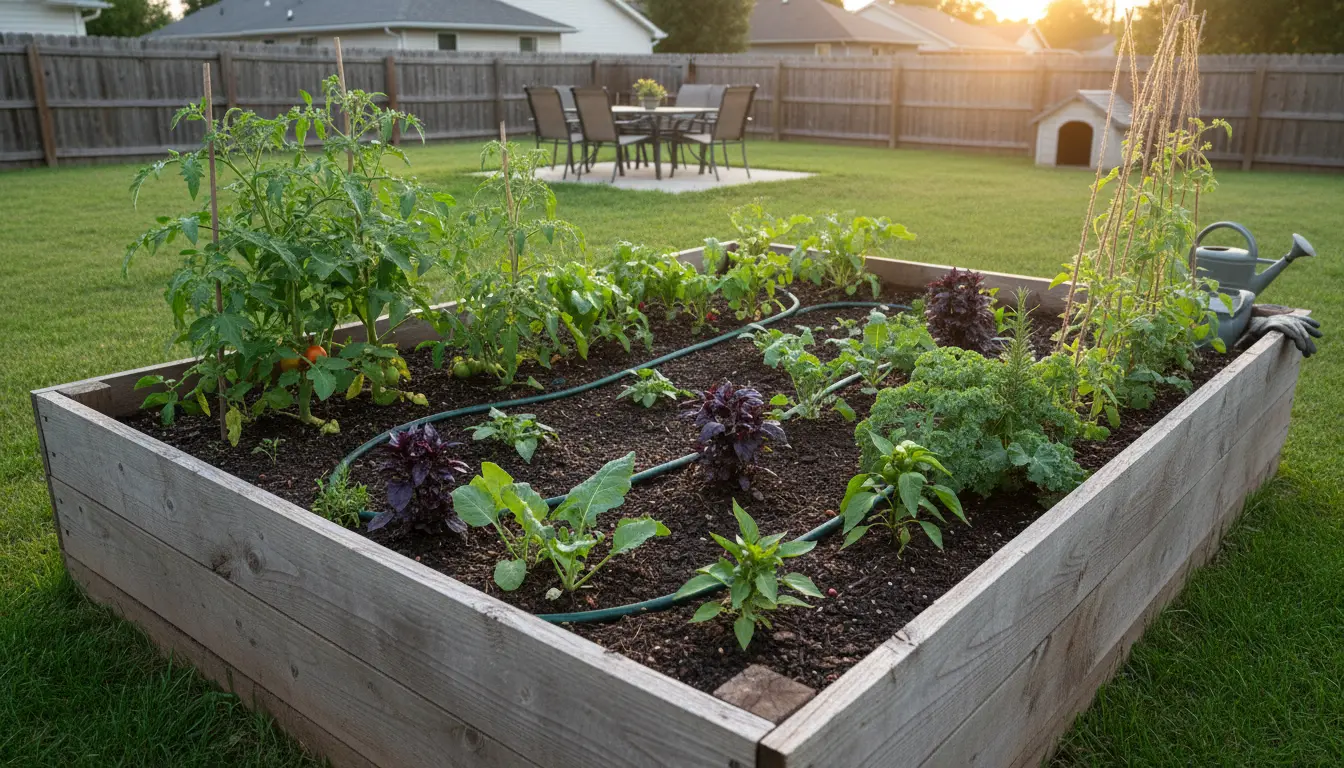
Why Start a Small Vegetable Garden
Starting a small vegetable garden gives you fresh produce, saves money, and connects you with nature. It is also manageable for busy people and those with limited space.
This guide explains how to start a small vegetable garden with clear steps and practical tips you can use right away.
Choose the Right Site for Your Small Vegetable Garden

Pick a spot that gets at least 6 hours of direct sunlight per day. Most vegetables need full sun to produce well.
Consider proximity to water and convenience for daily care. A site near your door increases the chance you will tend the garden regularly.
Sunlight Needs for a Small Vegetable Garden
Observe your site at different times to check sunlight. Morning sun is often cooler and less stressful for plants than intense afternoon sun.
If full sun is not possible, choose vegetables that tolerate partial shade like leafy greens, herbs, and some root vegetables.
Prepare Soil and Containers for a Small Vegetable Garden
Good soil is the foundation of a healthy small vegetable garden. If you use ground beds, loosen the soil and add organic matter.
Raised beds or containers work well in small spaces and give you control over soil quality and drainage.
Soil Mix and Fertility
For containers, use a quality potting mix with compost added. For raised beds, mix native soil with compost and a little coarse sand for drainage.
Test your soil pH if possible. Most vegetables prefer a pH between 6.0 and 7.0. Amend with lime or sulfur only if tests show a need.
Choose Easy Vegetables for a Small Vegetable Garden
Start with fast-growing, low-maintenance crops. They give quick rewards and build confidence.
- Leafy greens: lettuce, spinach, arugula
- Root crops: radishes, carrots, beets
- Container-friendly: cherry tomatoes, peppers, bush beans
- Herbs: basil, parsley, chives
Plan for Succession and Space
Use succession planting to keep harvests steady. Sow quick crops between slower ones or plant in stages every two weeks.
Pay attention to mature plant sizes and use vertical supports to save space for vining crops like beans and tomatoes.
Watering and Feeding a Small Vegetable Garden
Consistent moisture is key. Water deeply and less often rather than frequent shallow sprays to encourage strong roots.
Mulch reduces evaporation and keeps soil temperature stable. Use straw, shredded leaves, or wood chips around plants.
Fertilizing Tips for a Small Vegetable Garden
Begin with compost in the soil and supplement with a balanced fertilizer when plants show rapid growth or start to flower.
Follow package directions and avoid overfeeding; too much nitrogen can reduce fruiting in some crops like tomatoes.
Manage Pests and Diseases in a Small Vegetable Garden
Prevention is the best strategy. Keep plants healthy with proper spacing, rotation, and cleanliness to reduce pest and disease pressure.
Use physical controls first: hand-pick pests, apply row covers, or use traps. Reserve organic sprays like neem or insecticidal soap for outbreaks.
Rotate and Diversify in a Small Vegetable Garden
Rotate families of vegetables each season to reduce soil-borne diseases. Planting flowers and herbs also attracts beneficial insects.
Companion planting can deter pests and improve pollination. Examples include basil near tomatoes and marigolds near many vegetables.
Harvesting and Maintaining a Small Vegetable Garden
Harvest regularly to encourage continued production. Pick leafy greens before they bolt and harvest beans when pods are young and tender.
Keep a small calendar or notes on what you planted and when. This helps plan succession planting and track successes or problems.
End-of-Season Care for a Small Vegetable Garden
Remove spent plants and compost healthy material. Clean up diseased plants by disposing of them in the trash, not the compost pile.
Cover beds with mulch or a winter cover crop to protect and build soil for the next season.
Radishes can mature in as little as 21 days, making them a fast crop to boost confidence for new gardeners.
Simple Case Study: A Small Urban Balcony Garden
Maria had a sunny balcony and wanted fresh herbs and a few vegetables. She used three 12-inch containers and one raised planter box.
She planted basil, cherry tomatoes on a small stake, lettuce in succession, and a pot of peppers. Watering twice weekly and adding compost once a month kept plants healthy.
By mid-summer she harvested herbs daily and tomatoes weekly. The small, organized setup proved productive and low-effort.
Quick Checklist to Start Your Small Vegetable Garden
- Choose a sunny site with easy water access.
- Decide between containers, raised beds, or ground beds.
- Improve soil with compost and test pH if possible.
- Select easy vegetables suited to your space and climate.
- Water deeply, mulch, and fertilize lightly as needed.
- Use prevention and light interventions for pests and diseases.
- Keep notes and plant in succession for steady harvests.
Starting a small vegetable garden is practical and rewarding. With a little planning, basic soil care, and consistent maintenance, you can enjoy fresh produce even in limited space.