
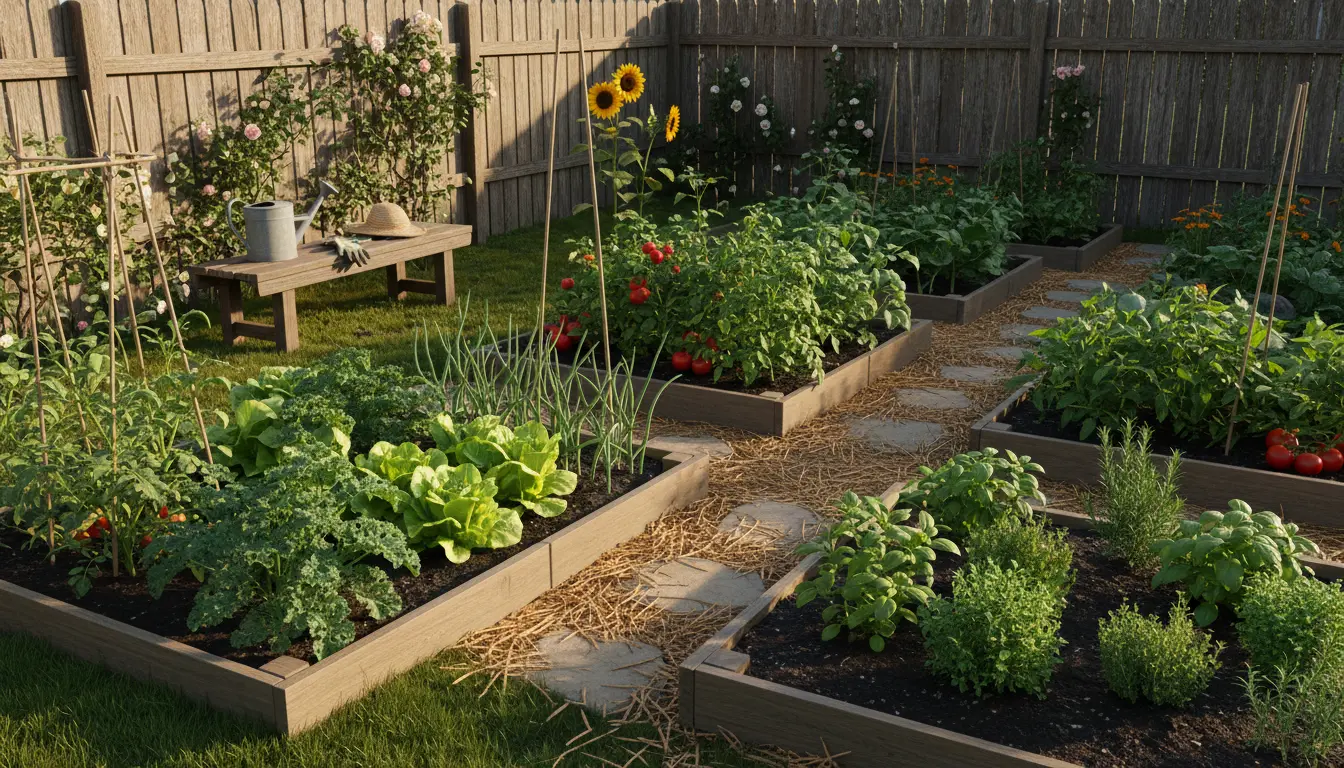
How to Start a Small Vegetable Garden
Starting a small vegetable garden is a practical way to grow fresh food, save money, and learn basic gardening skills. This guide gives clear steps you can follow, whether you have a small yard, balcony, or community plot.
Choose a Site for Your Small Vegetable Garden
Pick a location that gets at least six hours of direct sunlight each day for most vegetables. Watch the spot at different times to confirm sunlight and avoid areas under large trees that drop roots and compete for water.
Consider access to water and convenience. A garden near a tap or hose saves time and makes daily care easier.
Plan Plants and Layout for a Small Vegetable Garden
Decide whether to use raised beds, containers, or in-ground rows. For very small spaces, containers or a single raised bed provide control over soil and drainage.
Choose compact, high-yield varieties suited to small spaces. Some easy options for beginners include:
- Leaf lettuce and spinach (fast, continuous harvest)
- Bush beans and dwarf peas (space-efficient)
- Cherry tomatoes and patio peppers (container-friendly)
- Herbs like basil, parsley, and chives (multipurpose)
Prepare Soil for a Small Vegetable Garden

Healthy soil is the foundation of a productive small vegetable garden. Test soil pH with a simple kit or take a sample to a local extension service for analysis.
Improve poor soil by adding organic matter. A basic mix for raised beds is equal parts compost, topsoil, and well-rotted manure or leaf mold.
Planting Schedule and Seed Starting for a Small Vegetable Garden
Follow planting dates for your climate zone. Start seeds indoors for tomatoes and peppers, and sow quick crops like lettuce or radishes directly outdoors.
Stagger plantings every two to three weeks to extend harvest and make the most of limited space. Keep a simple calendar or notebook to track sowing and harvest dates.
Watering and Fertilizing Your Small Vegetable Garden
Water deeply and less often rather than shallow daily watering. This encourages stronger roots and reduces disease risk. Aim for consistent moisture, especially during germination and fruit set.
Use a balanced organic fertilizer or compost tea every 3–6 weeks during the growing season. Pay attention to signs of nutrient deficiency like yellowing leaves, and adjust feeding accordingly.
Pest Control and Disease Management in a Small Vegetable Garden
Start with prevention: rotate crops each season, remove plant debris, and space plants to improve air circulation. Use row covers to protect young plants from insects.
When pests appear, try hand removal, neem oil, or insecticidal soap before moving to stronger controls. For fungal diseases, prune infected leaves and avoid overhead watering.
Small Space Techniques for Higher Yield
Use vertical supports, companion planting, and intercropping to maximize production in a small vegetable garden. Trellises allow vining crops like peas and beans to grow upward rather than outward.
Succession planting and container stacking increase output. Even a narrow strip can produce a surprising quantity of salad greens and herbs with good management.
Case Study: A Small Balcony Garden That Fed a Family
Maria, a renter with a 6×4 foot balcony, converted three medium containers and a raised planter into a productive garden. She chose cherry tomatoes, basil, lettuce, and dwarf beans for continuous harvest.
By staggering plantings and using a simple drip irrigation bottle system, Maria harvested fresh salad greens twice a week and tomatoes through the summer. Her expenses were under 100 dollars for soil and plants, and she estimates saving 30–40 dollars per month on produce.
Maintenance Checklist for a Small Vegetable Garden
- Check soil moisture every 2–3 days and water deeply when the top inch is dry.
- Remove weeds weekly before they set seed.
- Monitor for pests and signs of disease — act early.
- Pinch or prune plants to encourage bushiness and airflow.
- Harvest regularly to promote new growth.
Some compact tomato varieties can produce over 50 cherry tomatoes per plant in a single season when grown in containers with consistent watering and feeding.
Examples of Small Vegetable Garden Layouts
Here are two simple layouts depending on your space and style:
- Single Raised Bed (4×4 ft): divide into quarters for leafy greens, root crops, one support for vining plants, and herbs.
- Balcony Container Setup: two large pots for tomatoes and peppers, three shallow containers for lettuce/herbs, and a vertical trellis for beans.
Final Tips to Start a Small Vegetable Garden
Start small and learn one season at a time. Keep records of what worked, including varieties, planting dates, and yields.
Join a local gardening group or online forum to exchange tips and get quick answers. Gardening is a skill built through practice and observation.
With simple planning, good soil, and regular care, your small vegetable garden will reward you with fresher food and useful experience.